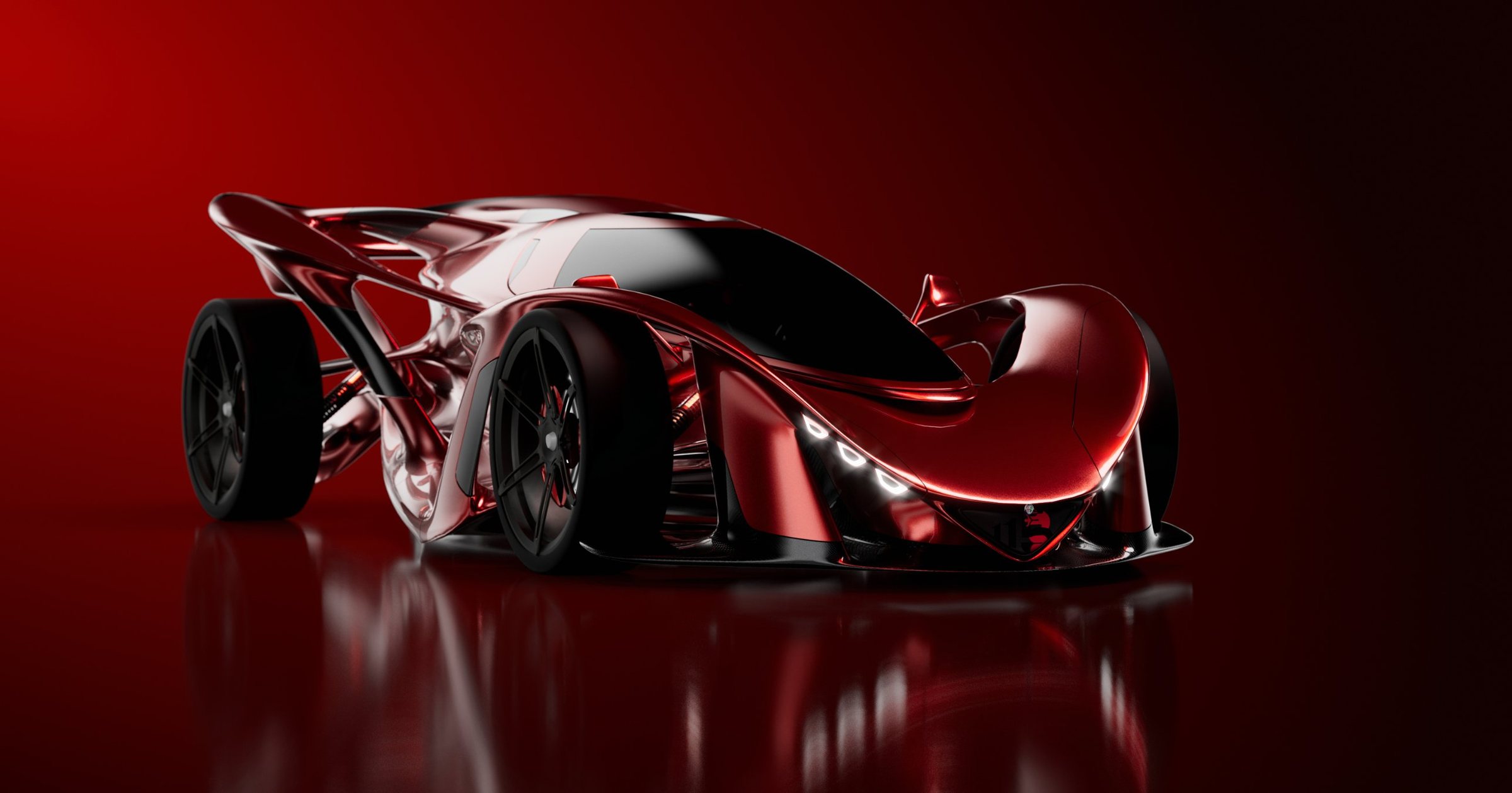
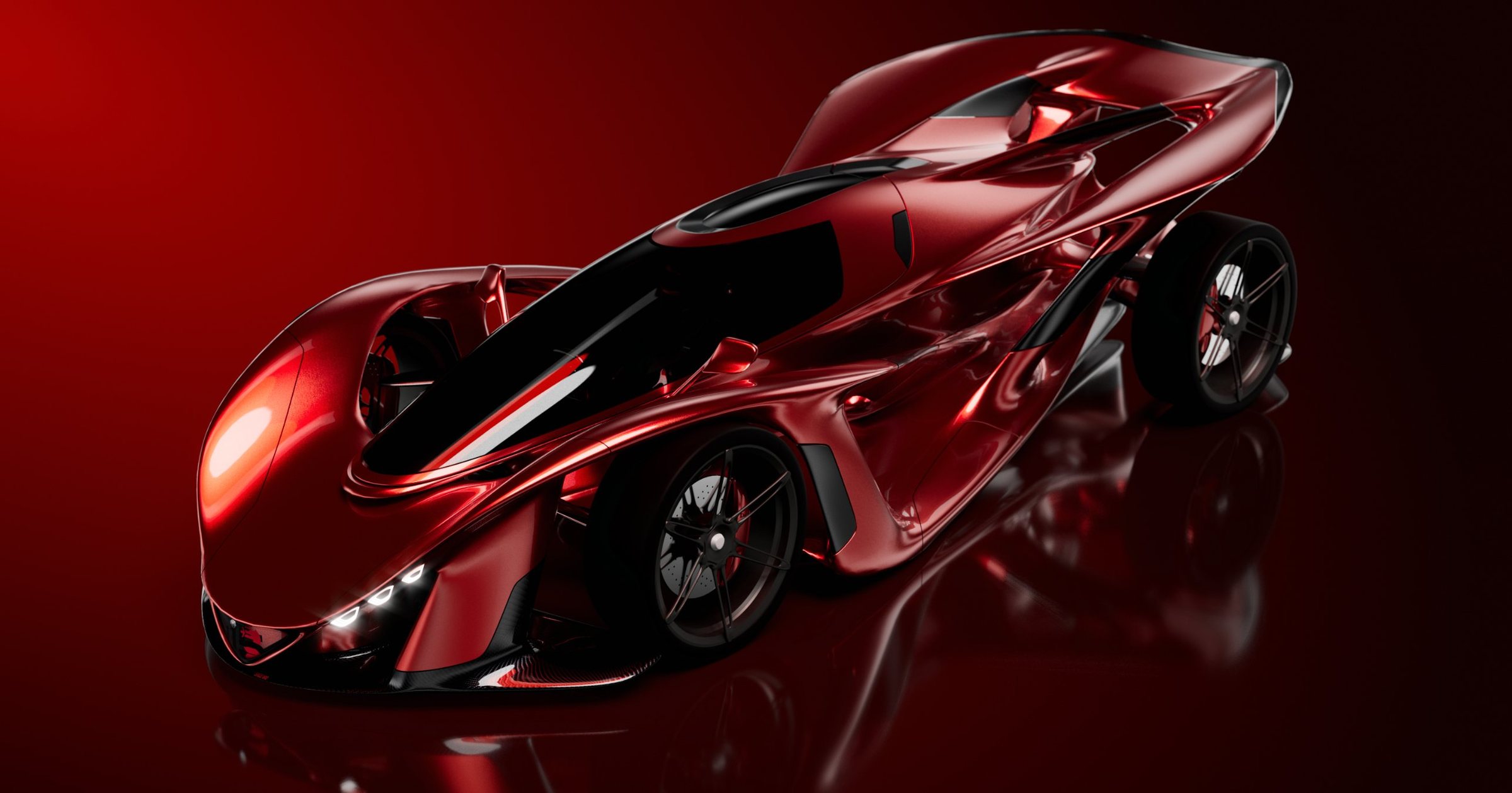
STUDIO · FRONT 3/4
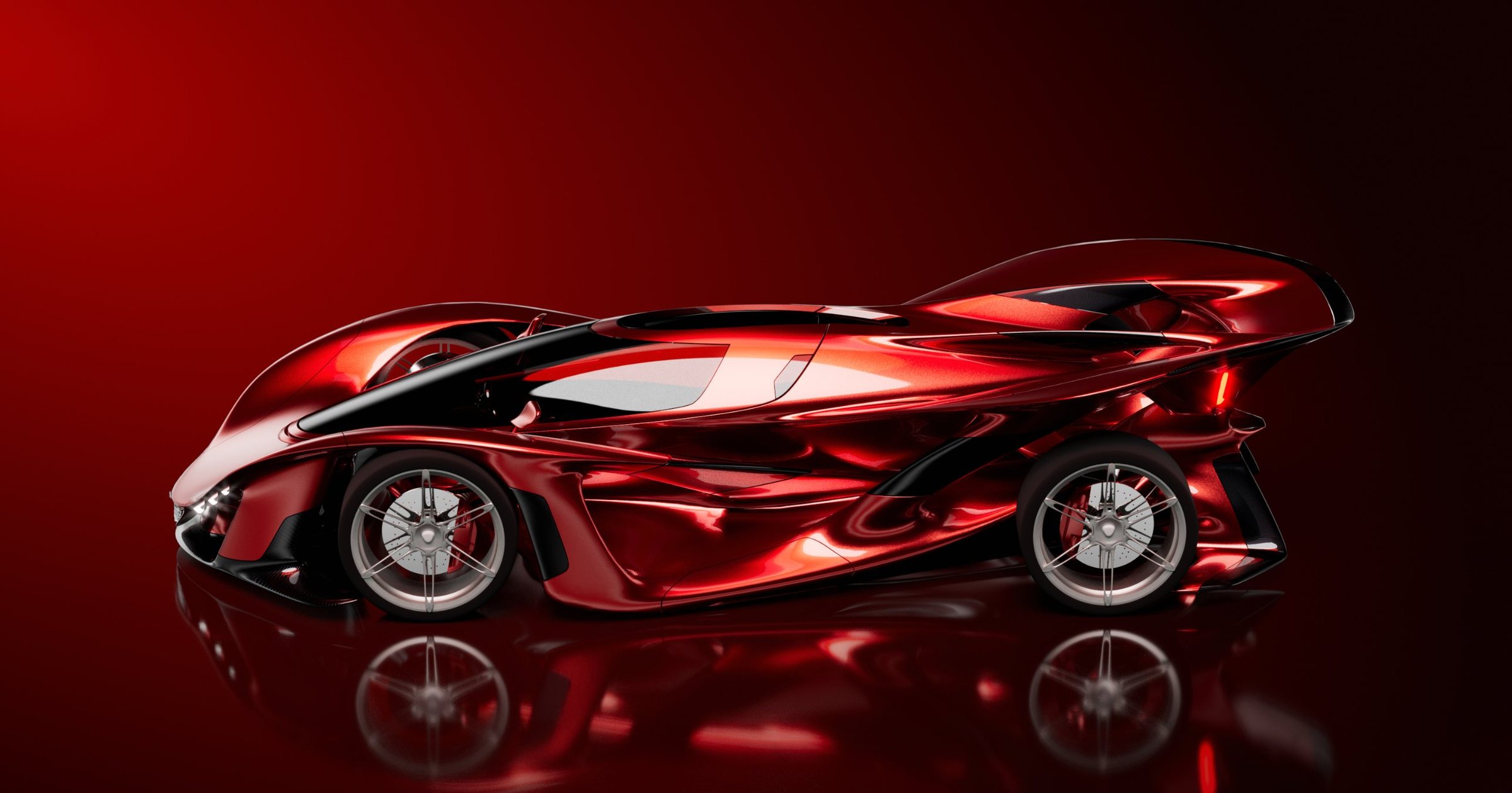
STUDIO · PROFILE
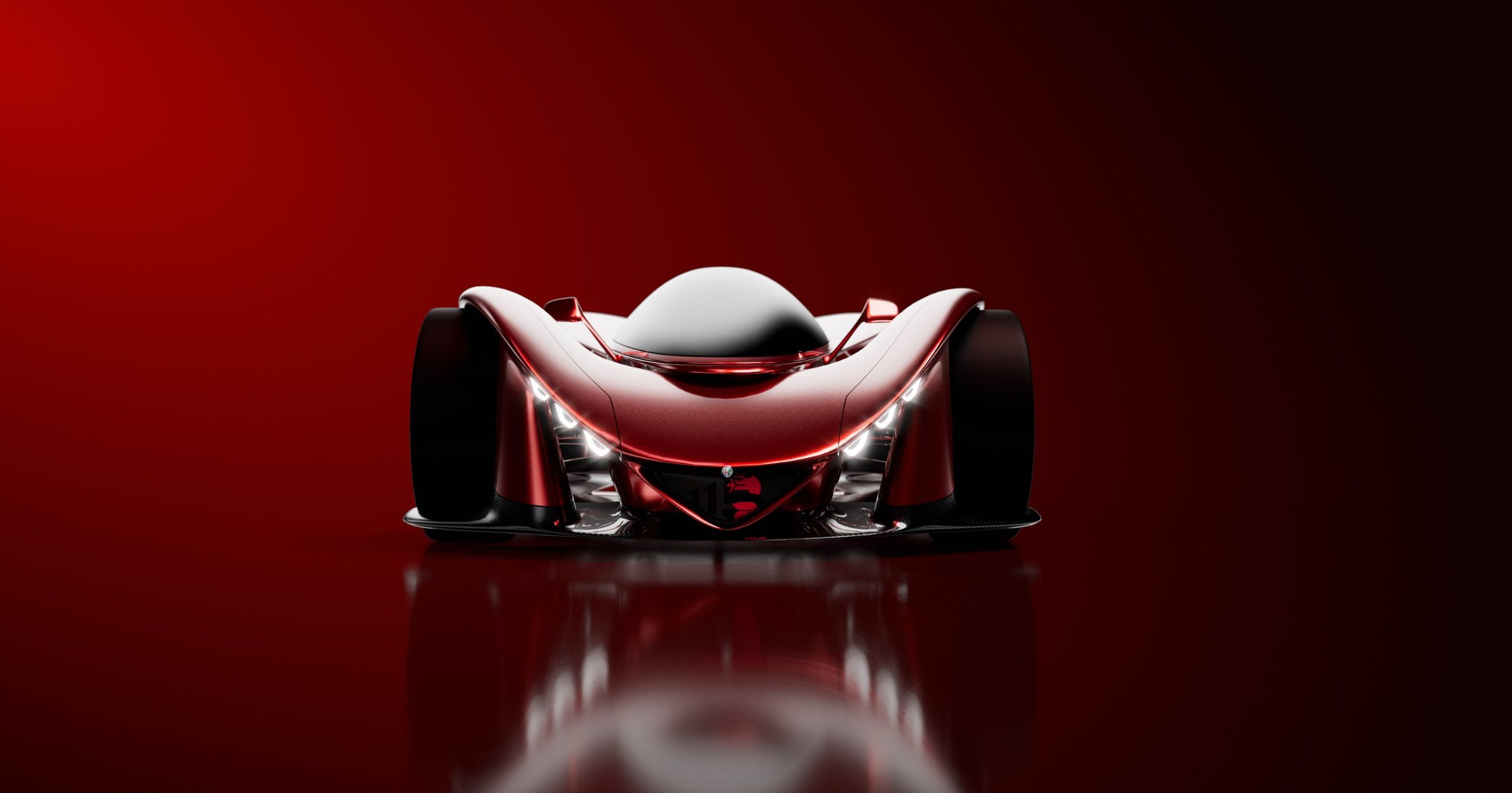
FRONT
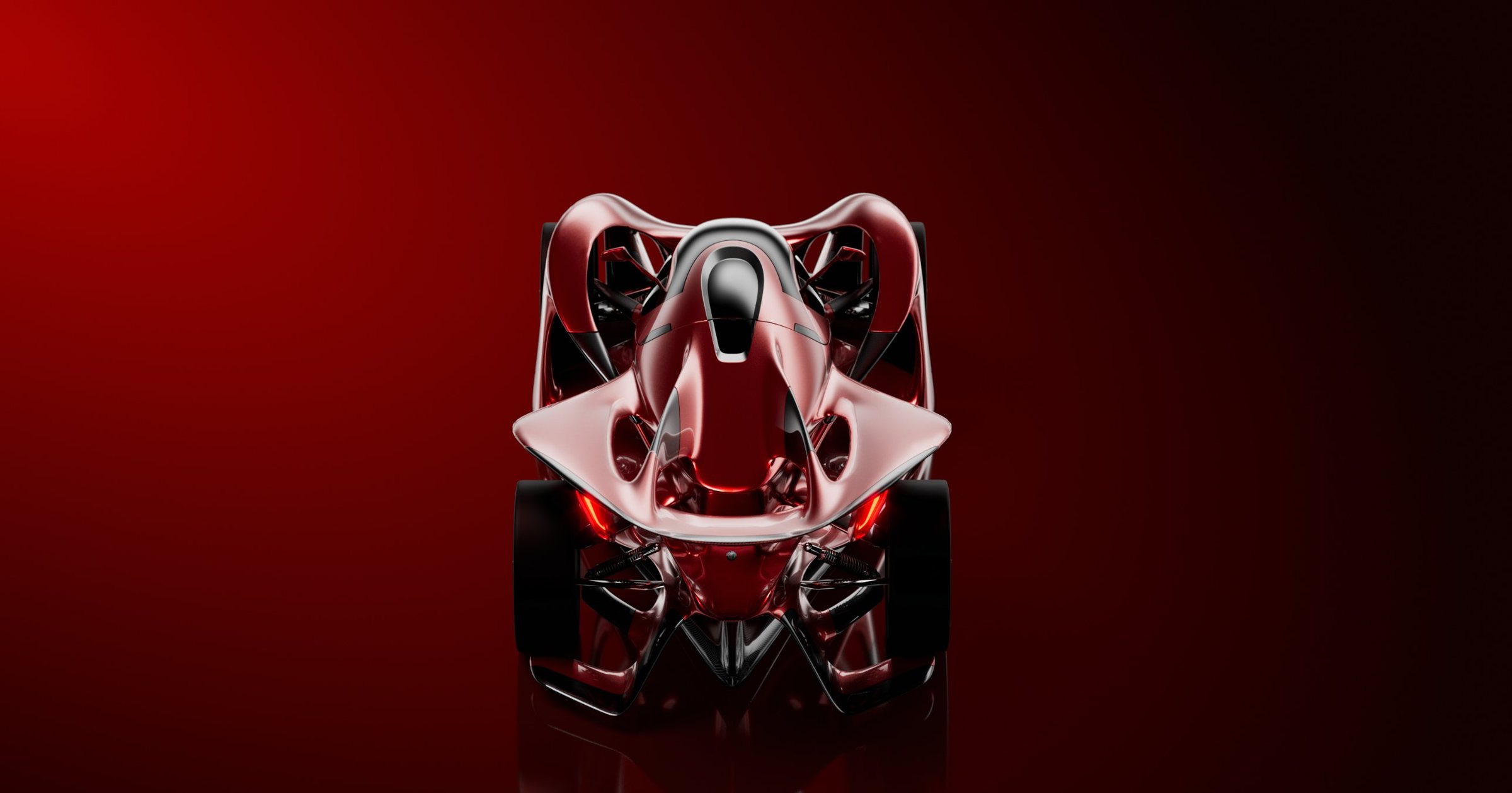
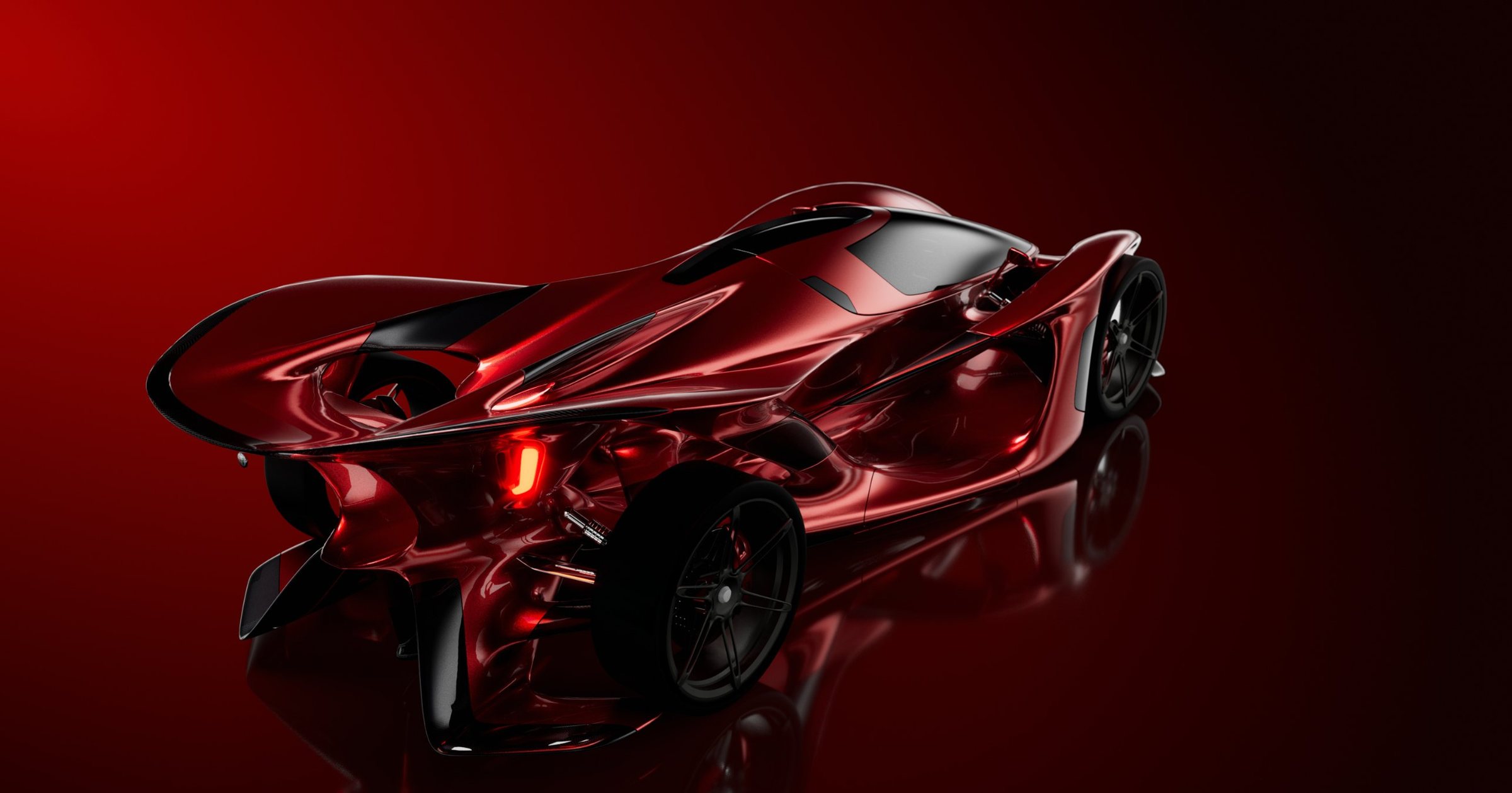
REAR
HIGH 3/4
REAR 3/4
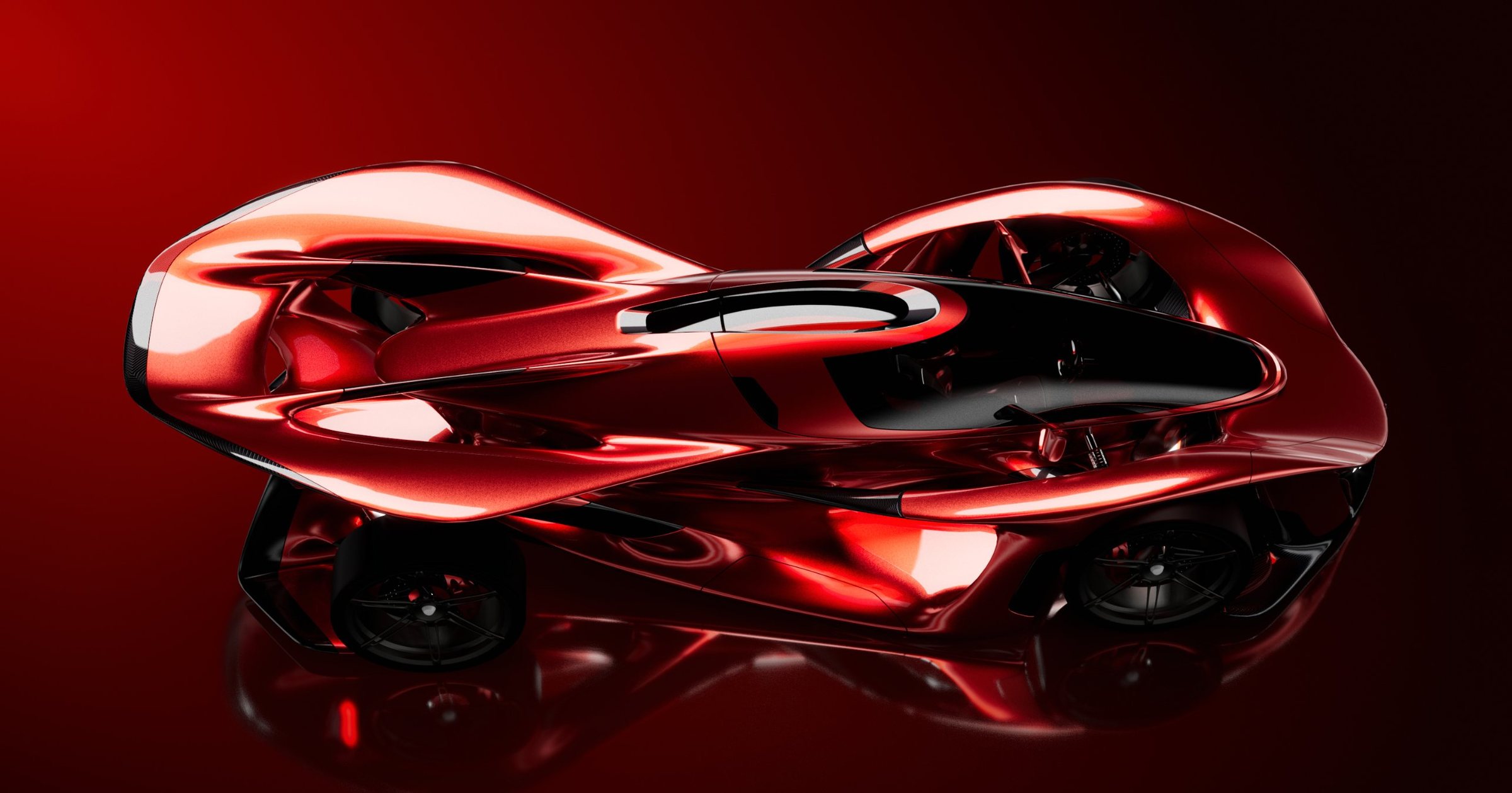
PLAN
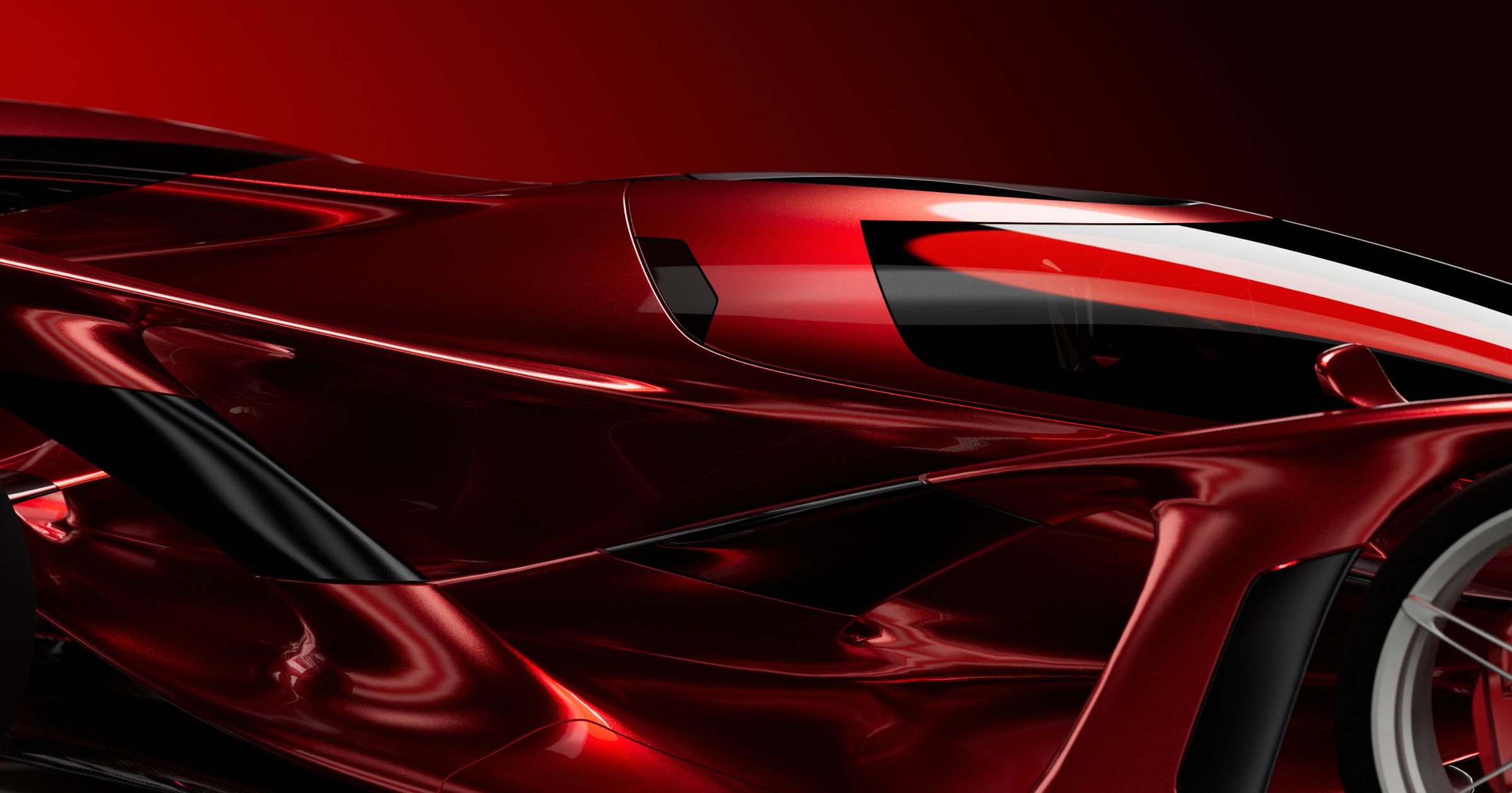
DETAIL
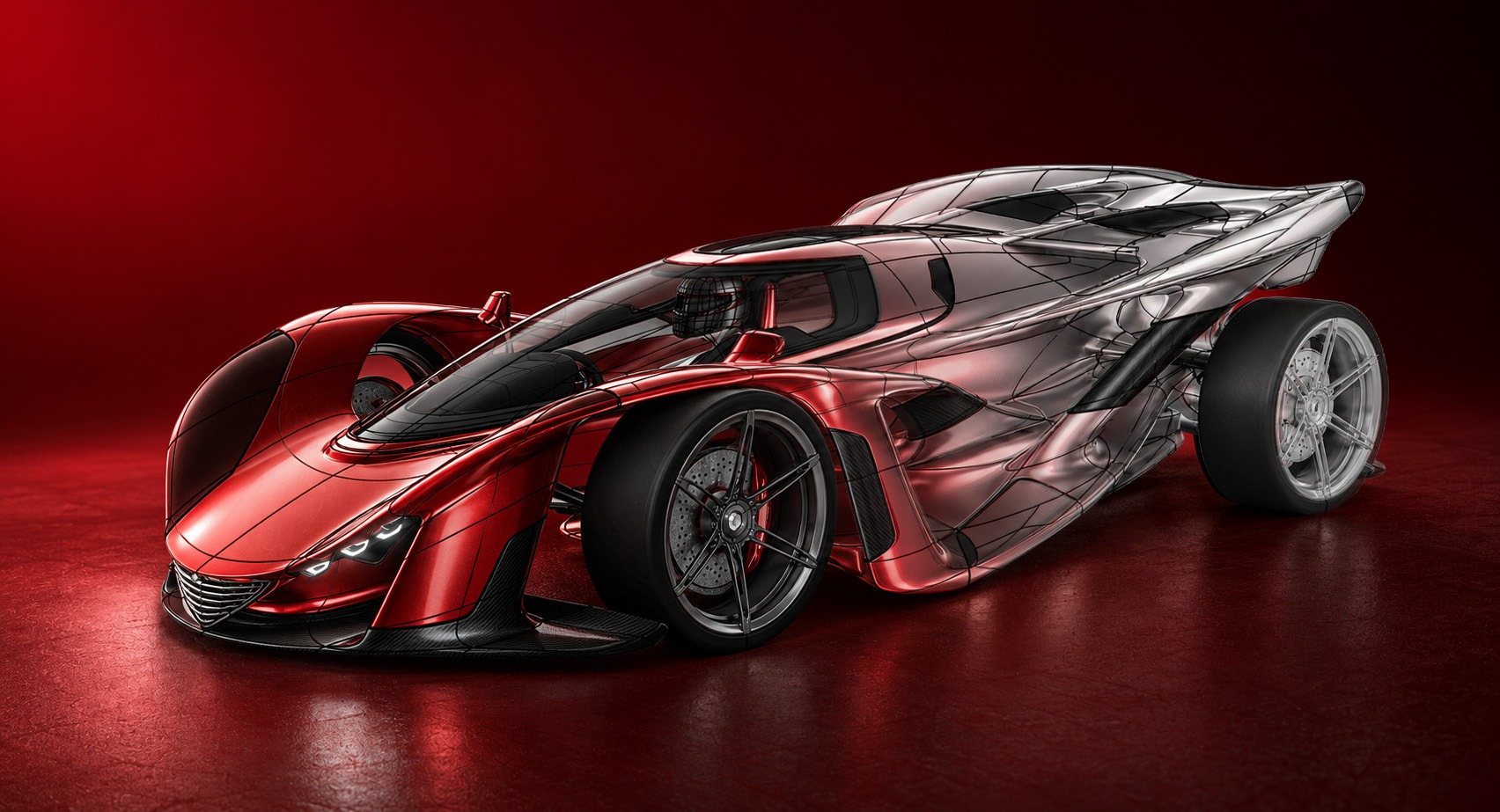
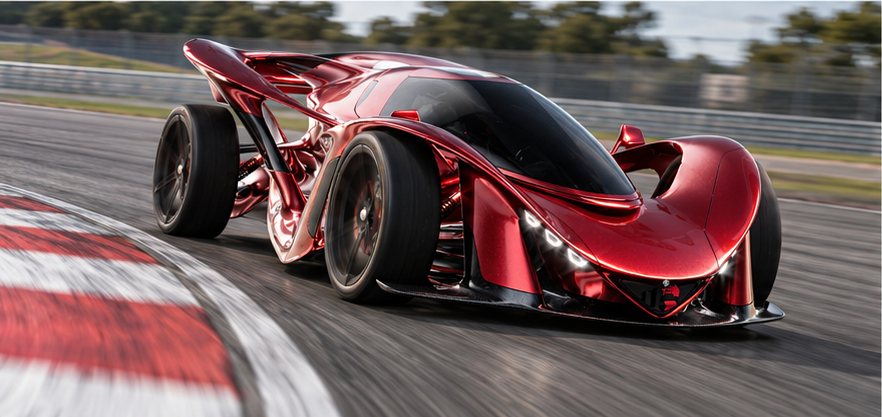
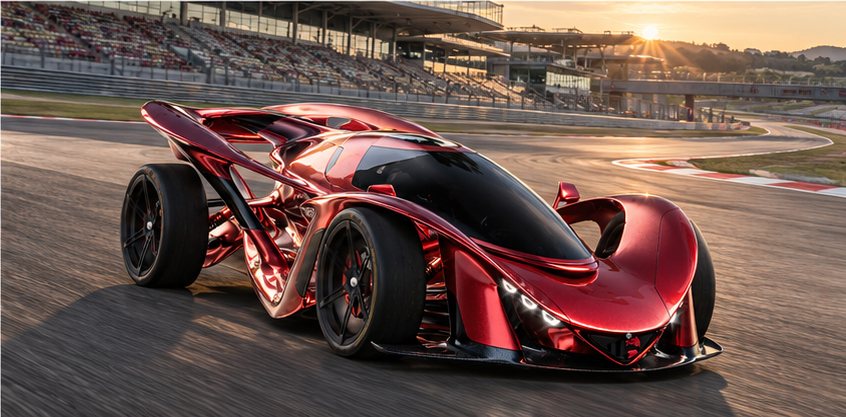
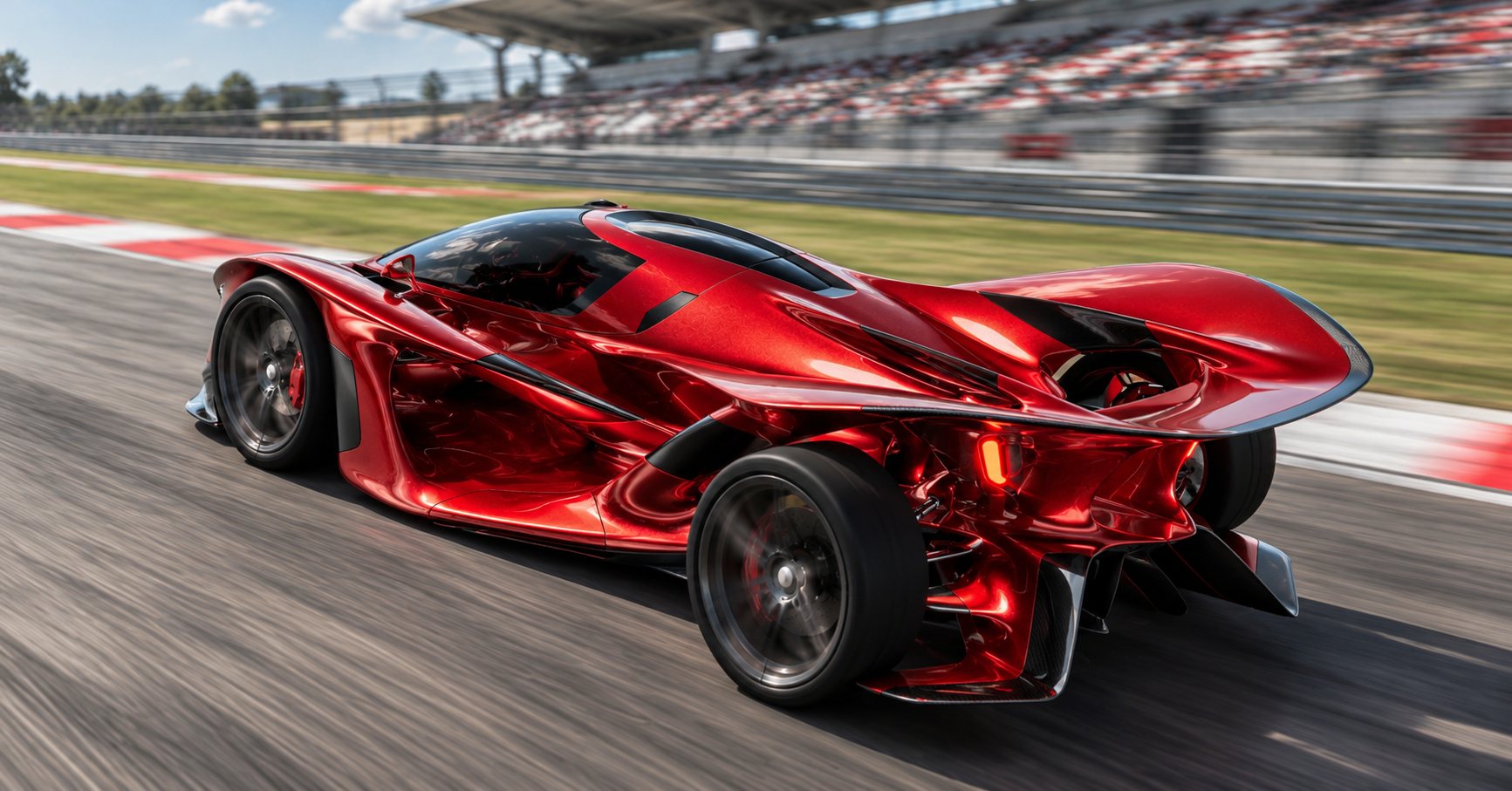
A single-seat hypercar concept — an open-wheel body pulled around a central canopy, with front pods that float free of the nose and a rear wing grown out of the bodywork. Modelled in Rhino SubD, rendered in Light Tracer.
Alfa 2040 imagines an Italian hypercar two decades out: a low, single-seat cell under a dark glass canopy, wrapped by a body that reads more like a sculpture than a shell. The front pods sit apart from the nose so the air can run between them, the sidepods are carved deep under the cockpit, and the bodywork flows rearwards into a wide, open rear wing.
Up front, the brand face is cut directly into the surface — a triangular grille flanked by three-element headlamps — so the identity is part of the form rather than added onto it.
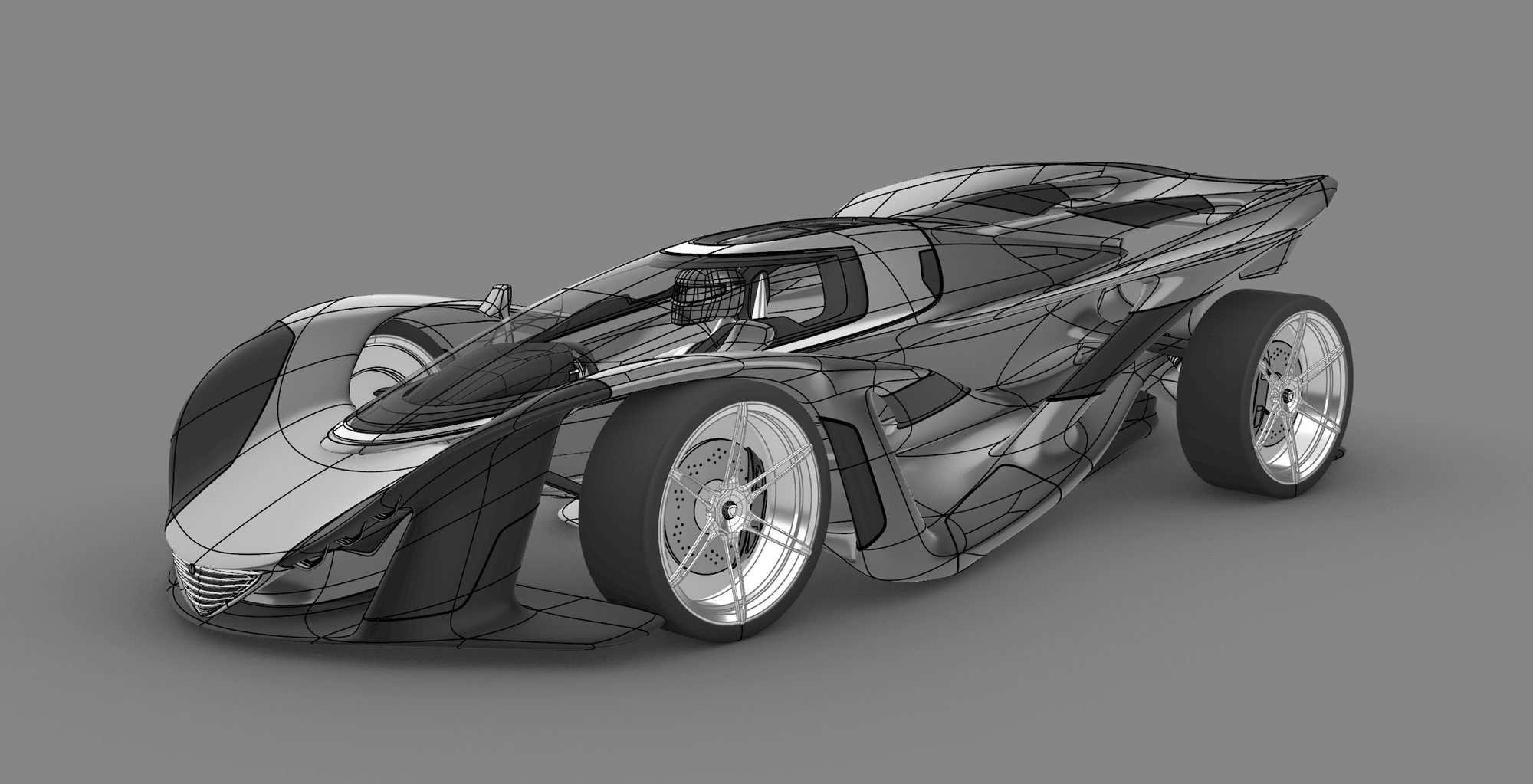
The whole car is one Rhino SubD model, developed in five passes before it ever leaves the modelling viewport. Then it is lit in Light Tracer and taken into motion.
One continuous SubD body in Rhino. Canopy, front pods and rear wing are blocked out on a light cage — proportions first, nothing else yet.
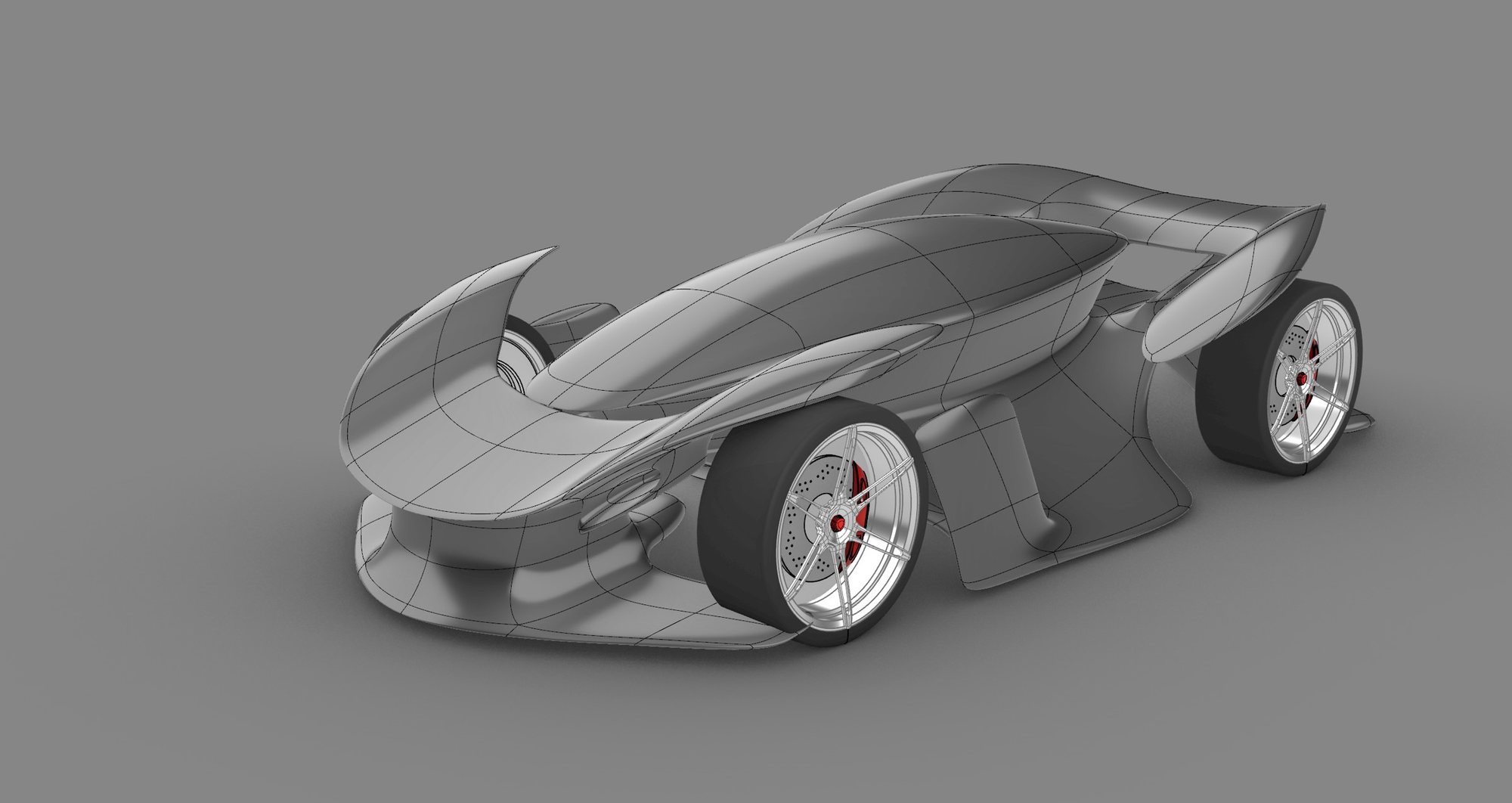
The front pods break away from the body and the sidepods carve in under the canopy. Every edge loop follows where the air wants to go.
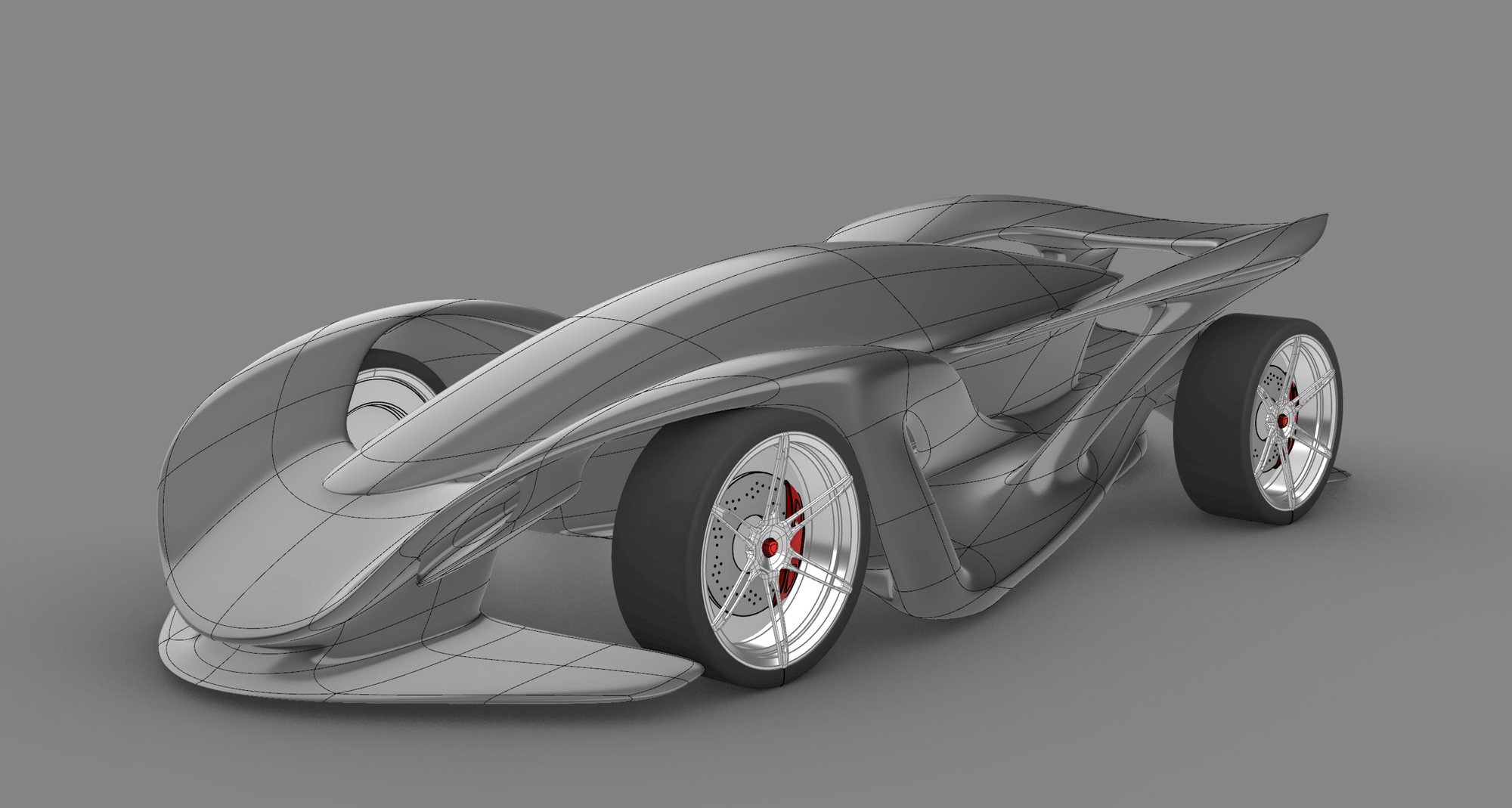
The brand face appears: the nose cut into the front surface, the splitter lip and the brake intakes take their final line.
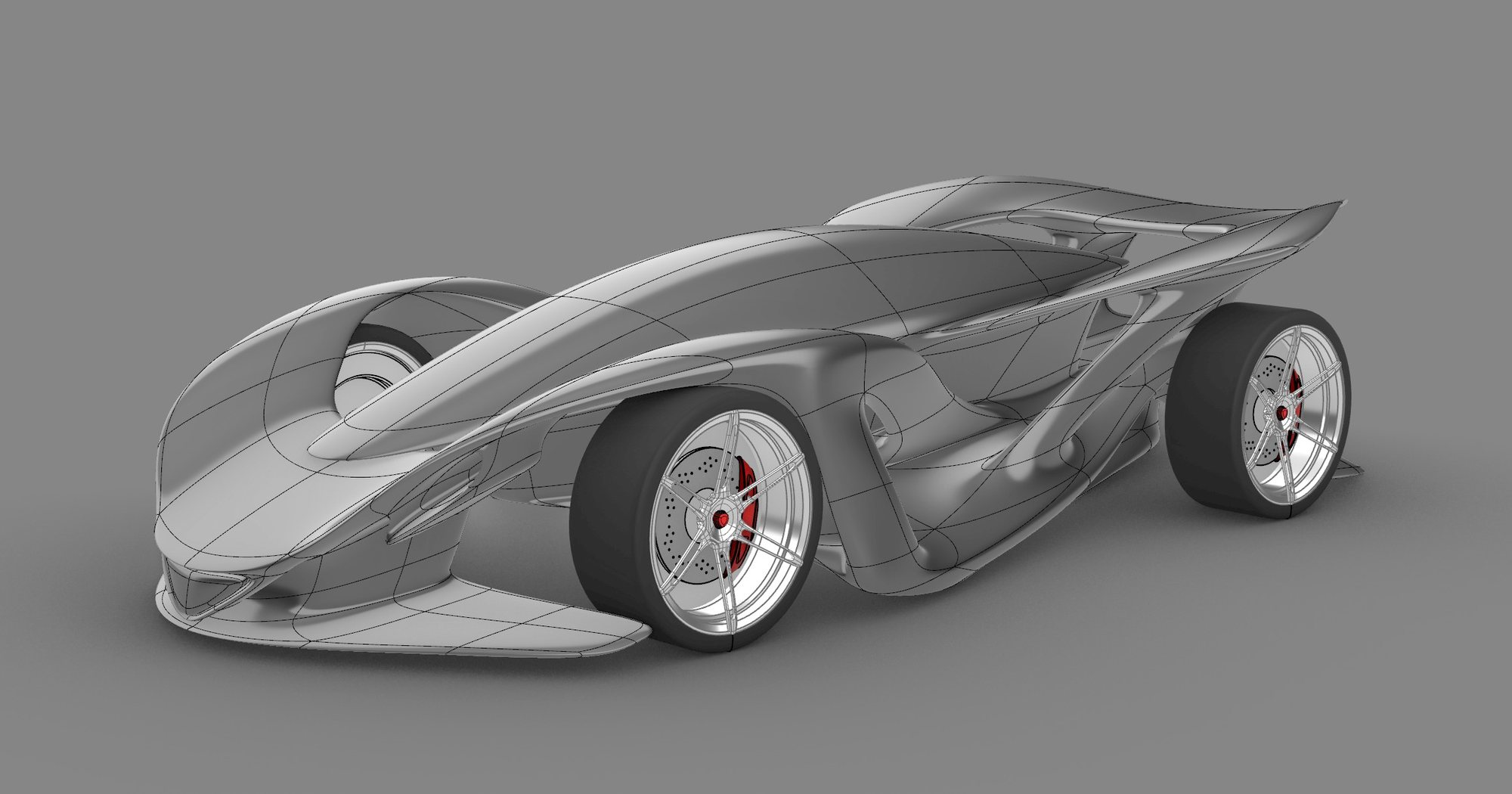
Grille, headlamp slots and a darker front mask. The surfaces are split into the parts a real car would be built from.
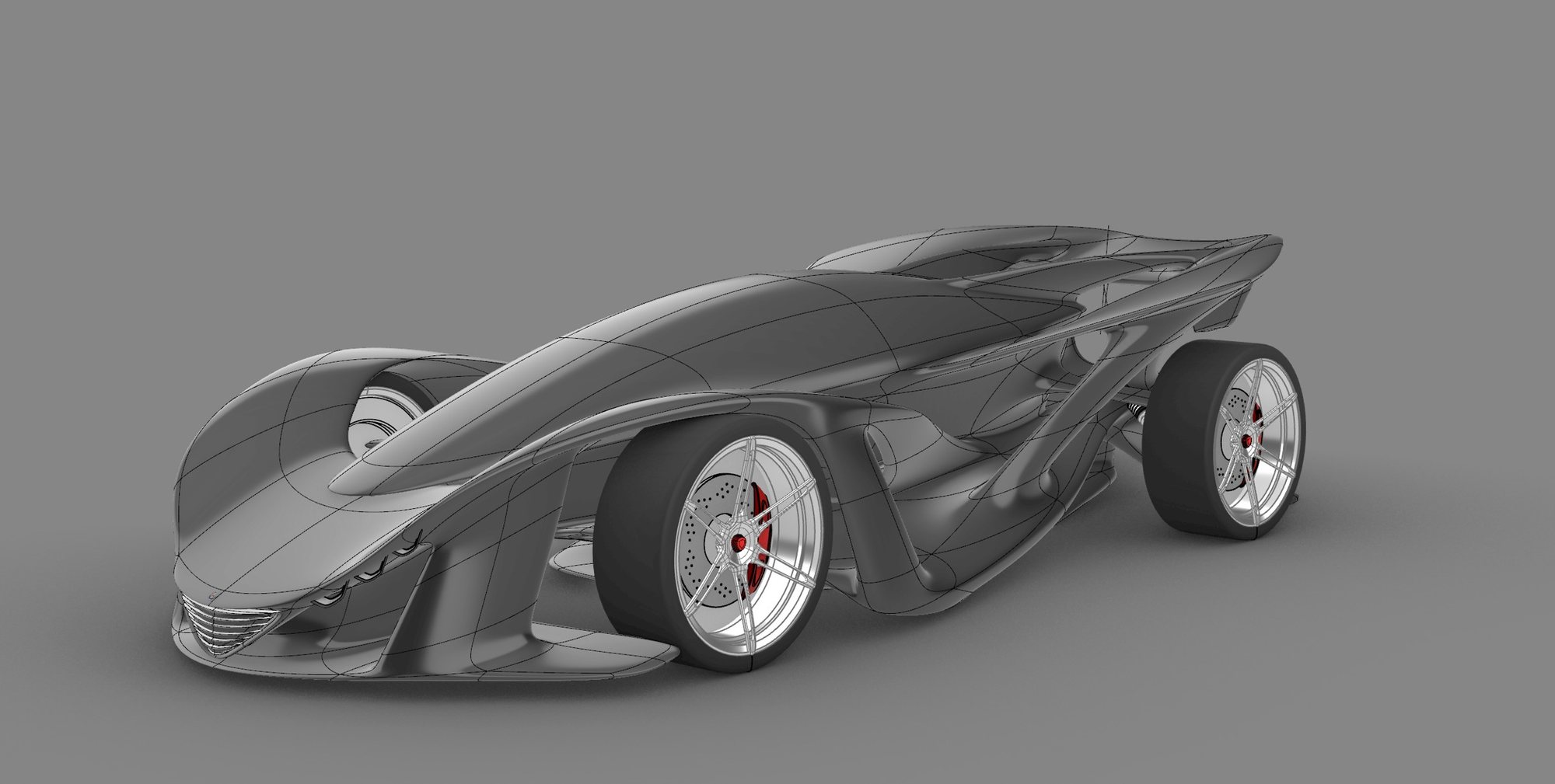
Canopy glazing, driver cell, seat and helmet for scale. The model is now clean, closed and ready to render.
Side elevation, plan and front elevation drawn from the Rhino model.
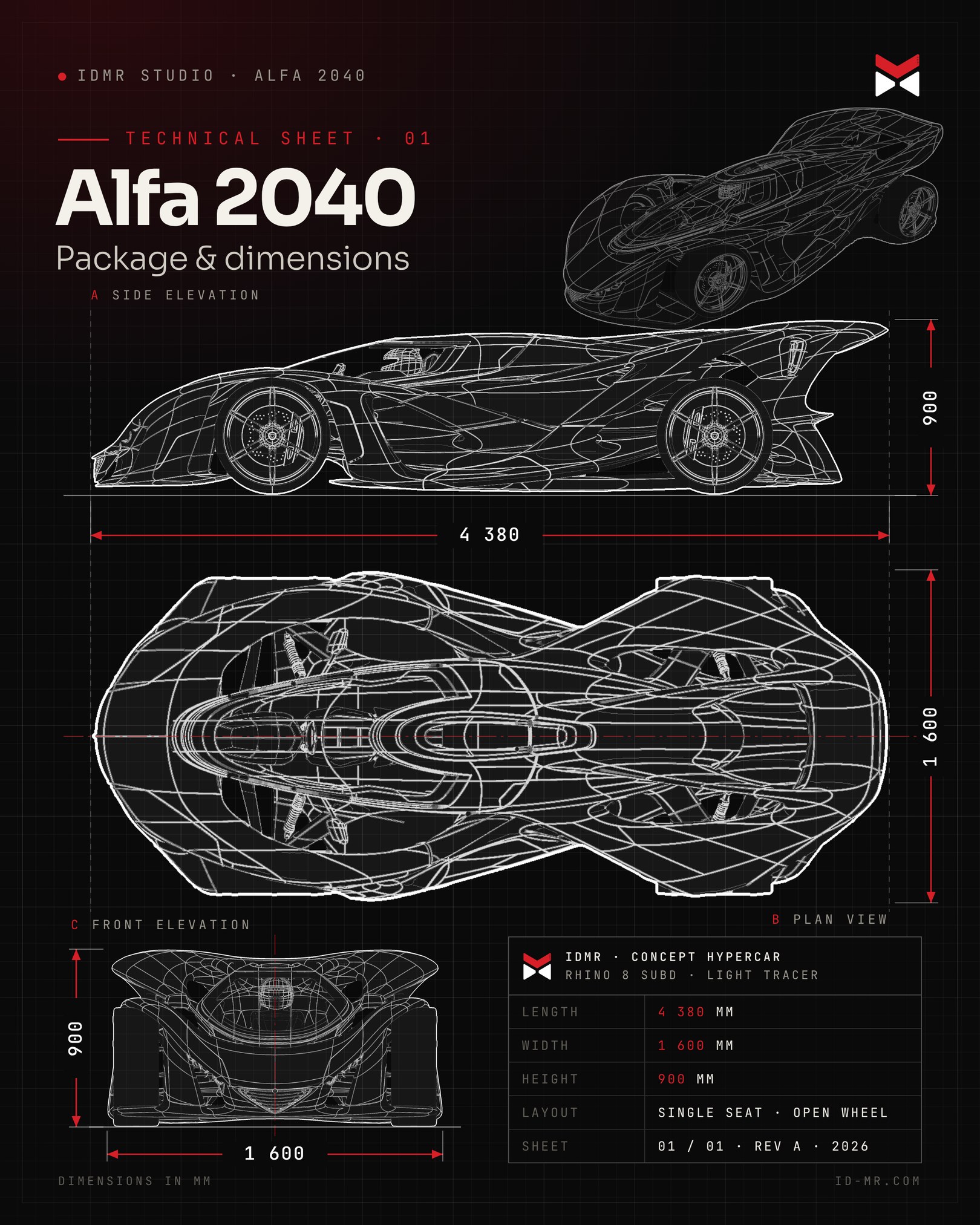
Dimensions in mm. Concept proportions — not a homologated package.
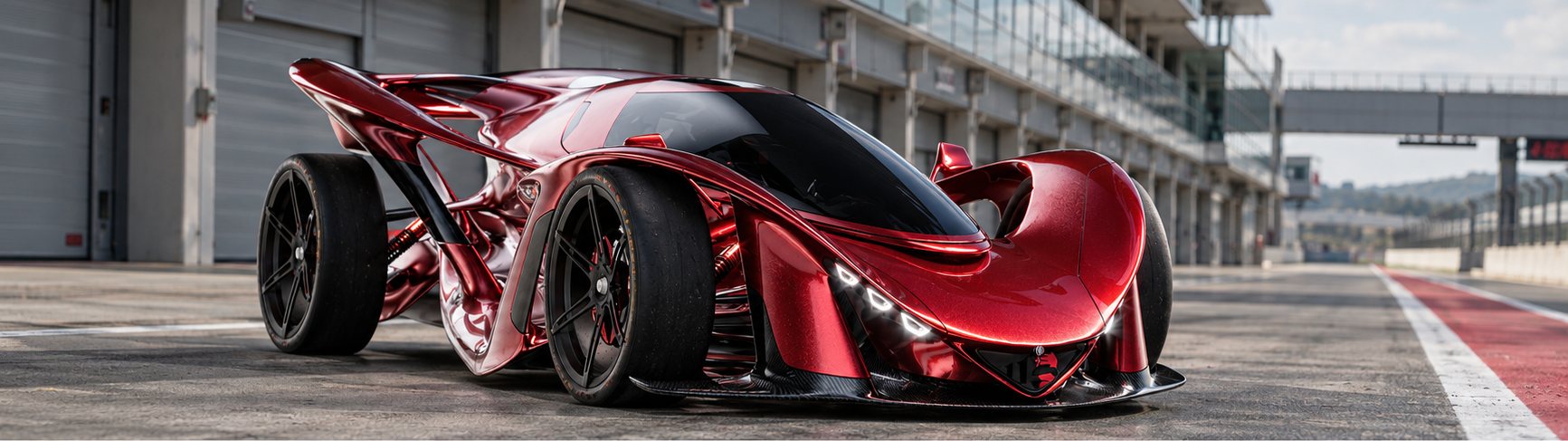
The same design carried out of the studio — pit lane, corner exit and a sunset run — then cut into a film with the wind tunnel.
Exterior design, Rhino SubD modelling, technical sheets and cinematic renders for automotive programmes. Send a brief and we’ll come back within two working days.
Request a quote Rhinoceros®
 Light Tracer Render