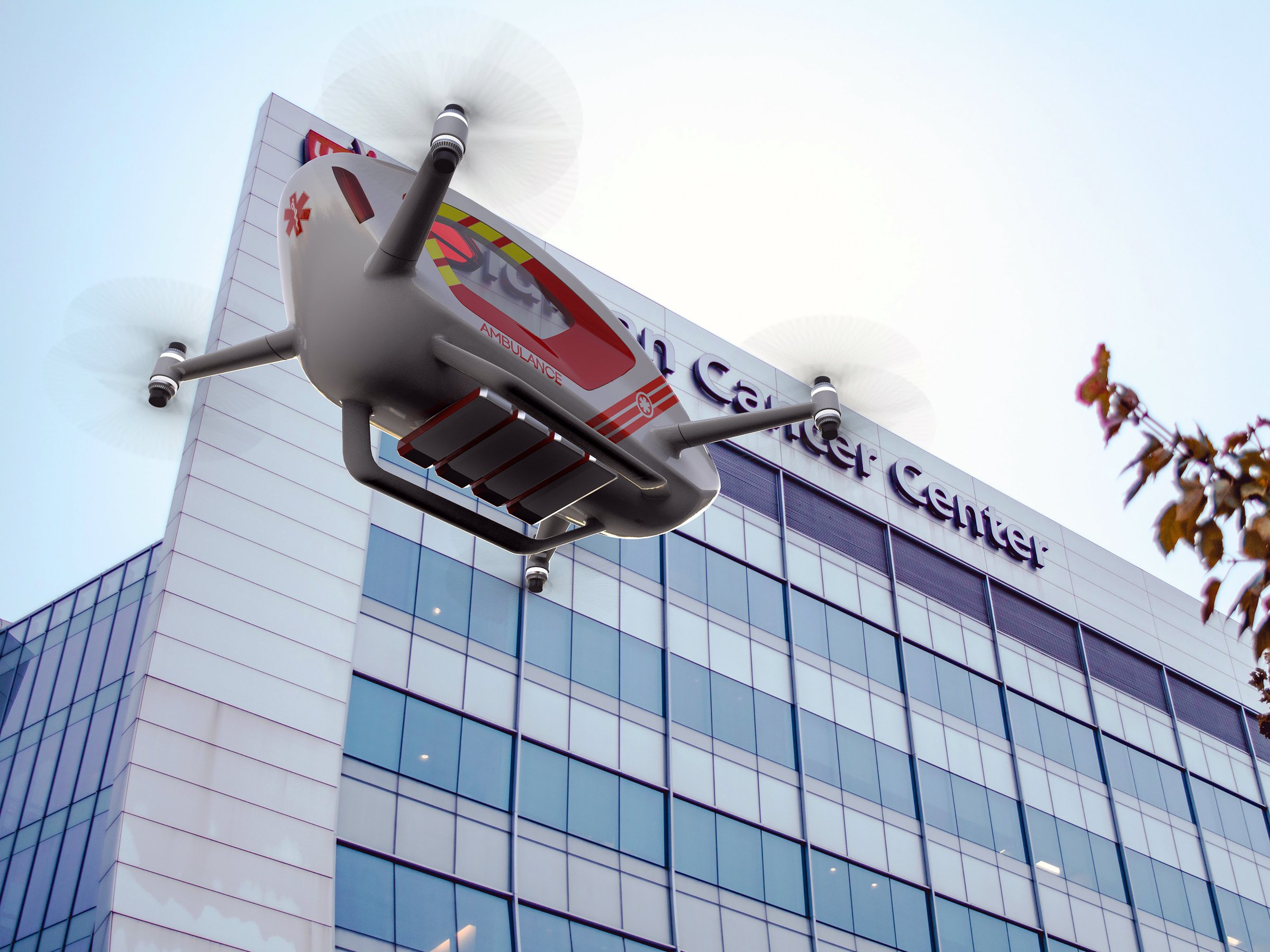
ARRIVAL · HOSPITAL
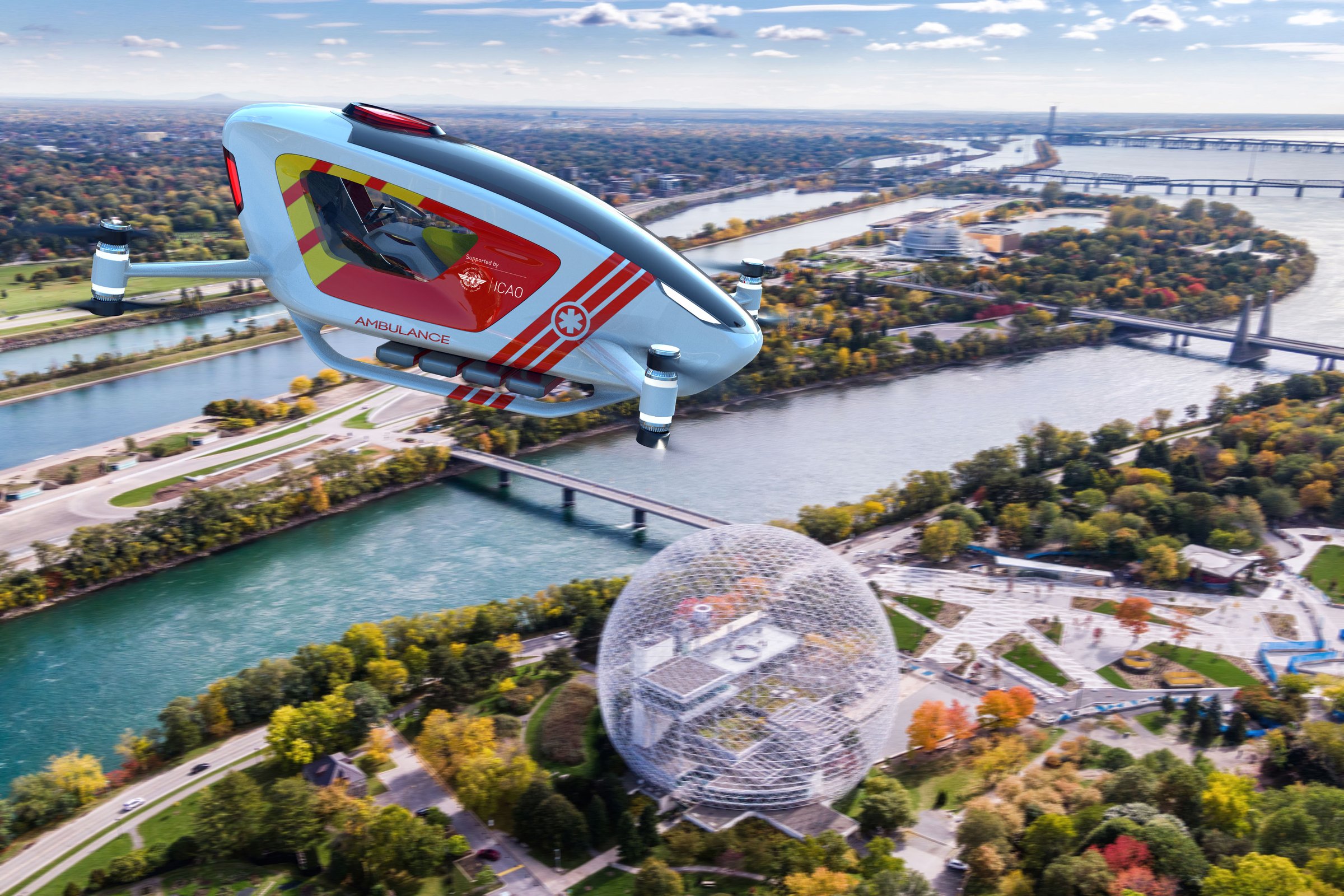
OVER MONTRÉAL
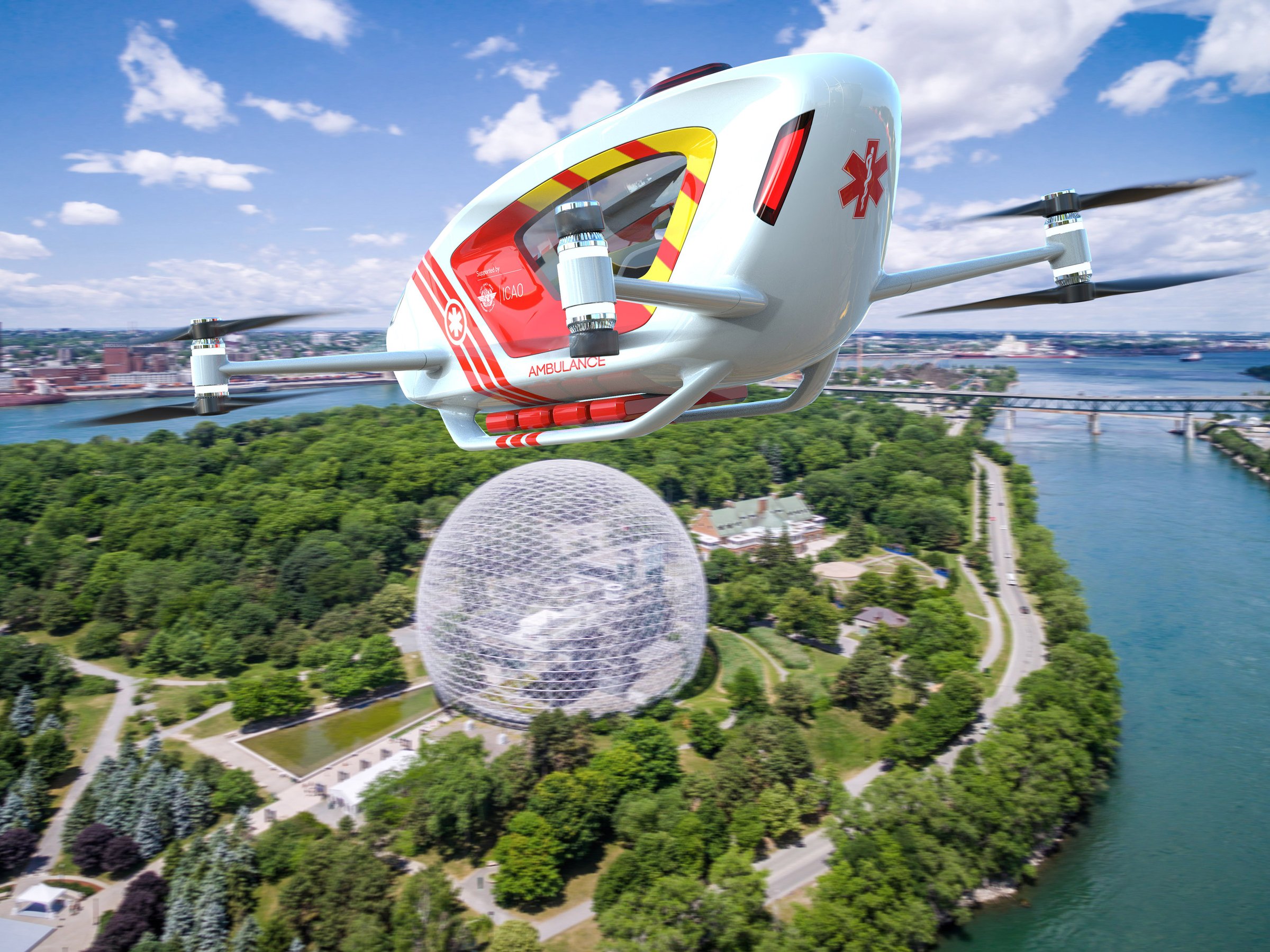
ÎLE SAINTE-HÉLÈNE
UAM · TRAFFIC

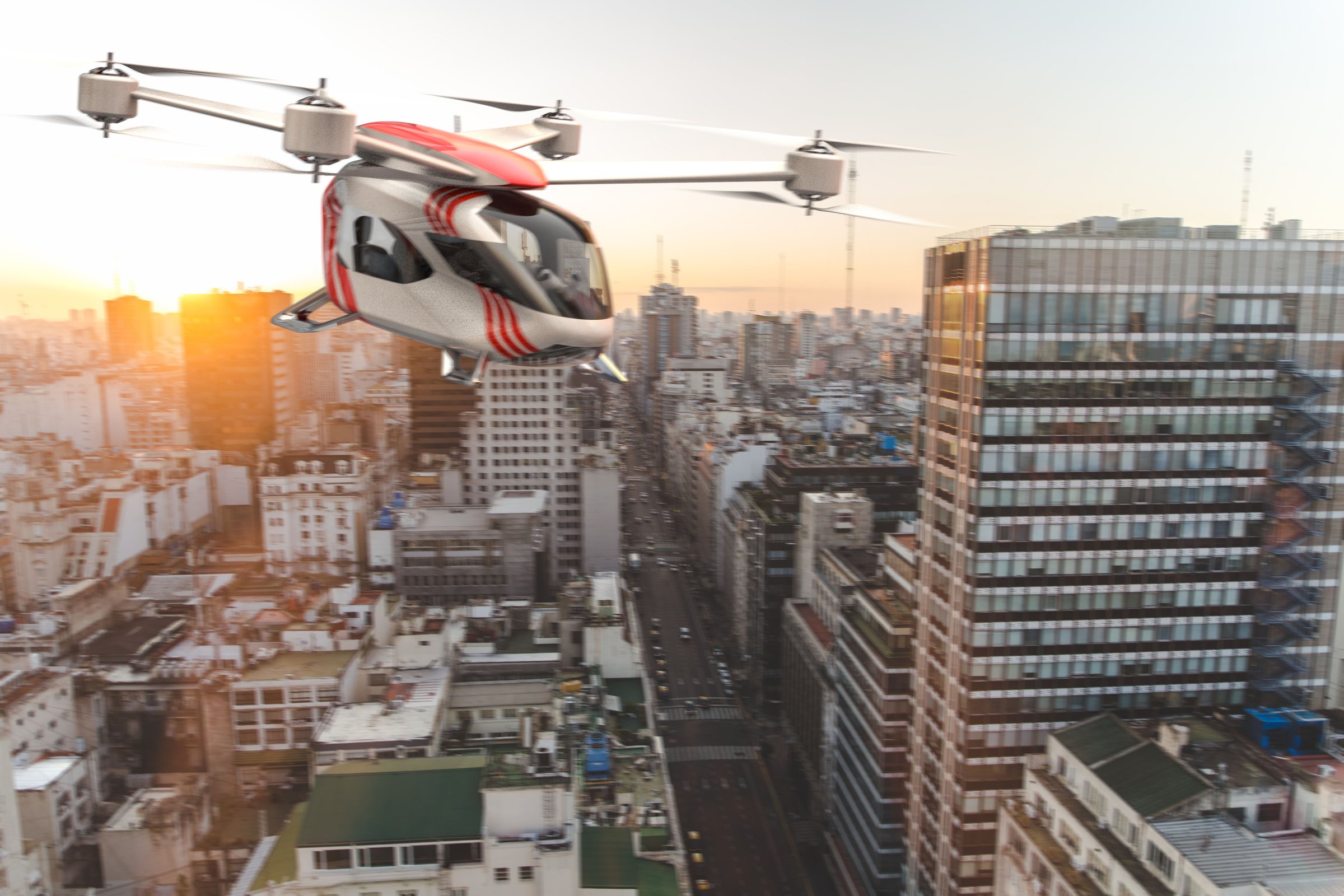
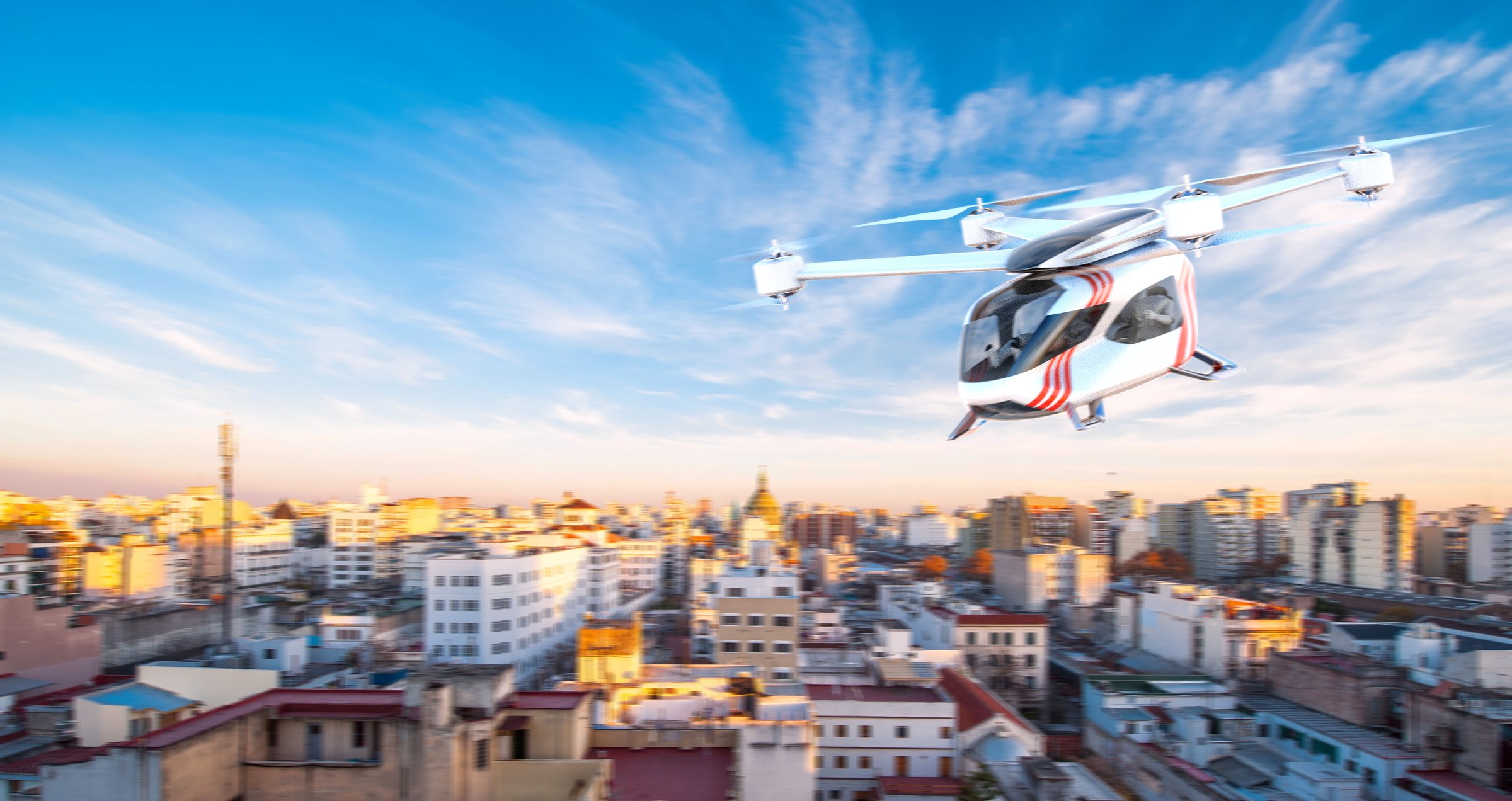
An autonomous, all-electric eVTOL flying ambulance — built to reach a patient in the minutes that decide an emergency. A volunteer project championed by ICAO, grown from an Imaginactive concept by Charles Bombardier.
Ambular is an autonomous, all-electric eVTOL conceived as a flying ambulance: a vehicle that carries a paramedic to the scene and airlifts a patient out of places a ground ambulance or a helicopter cannot easily reach — gridlocked cities, disaster zones, hard terrain.
The idea began as an Imaginactive concept by Charles Bombardier in 2018 and grew, under the International Civil Aviation Organization (ICAO), into an international volunteer effort — not a commercial product, but a shared project to learn what it actually takes to move an eVTOL from sketch to flying hardware. Martín Rico led the aircraft’s exterior and industrial design across its successive versions.
Driven by Yuri Fattah — Programme Manager of Multidisciplinary Priorities at ICAO — alongside Charles Bombardier of Imaginactive, the project relies on a global team of volunteer experts, academic institutions such as Concordia University and HKUST, and hardware partners to bring the concept to life.
Distributed electric propulsion carries the safety case: many small rotors and motors, so the failure of one still leaves a controllable, landable aircraft. The team studies four fronts in parallel — technical, medical, legal and social.
Two films: the concept in flight, and an emergency-response scenario from call to patient.
To pressure-test the ideas, the team built. First a series of quarter-scale, flyable prototypes; then a full-scale 2.0 mockup, unveiled at ICAO headquarters in Montréal. Hong Kong University of Science and Technology ran wind-tunnel and CFD work on the airframe; Concordia’s Gina Cody School, China’s CASRI and EHang contributed engineering and hardware.
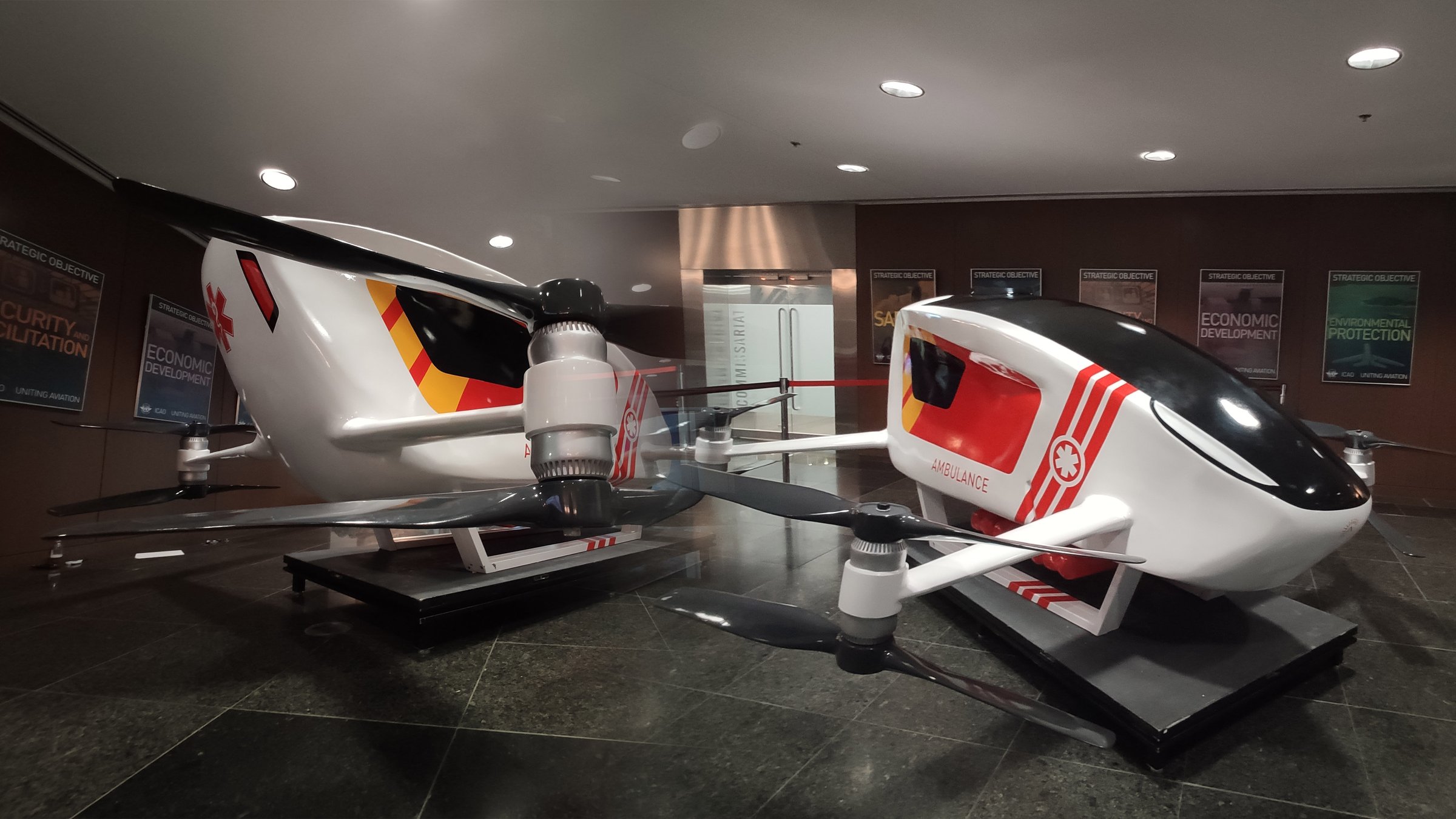
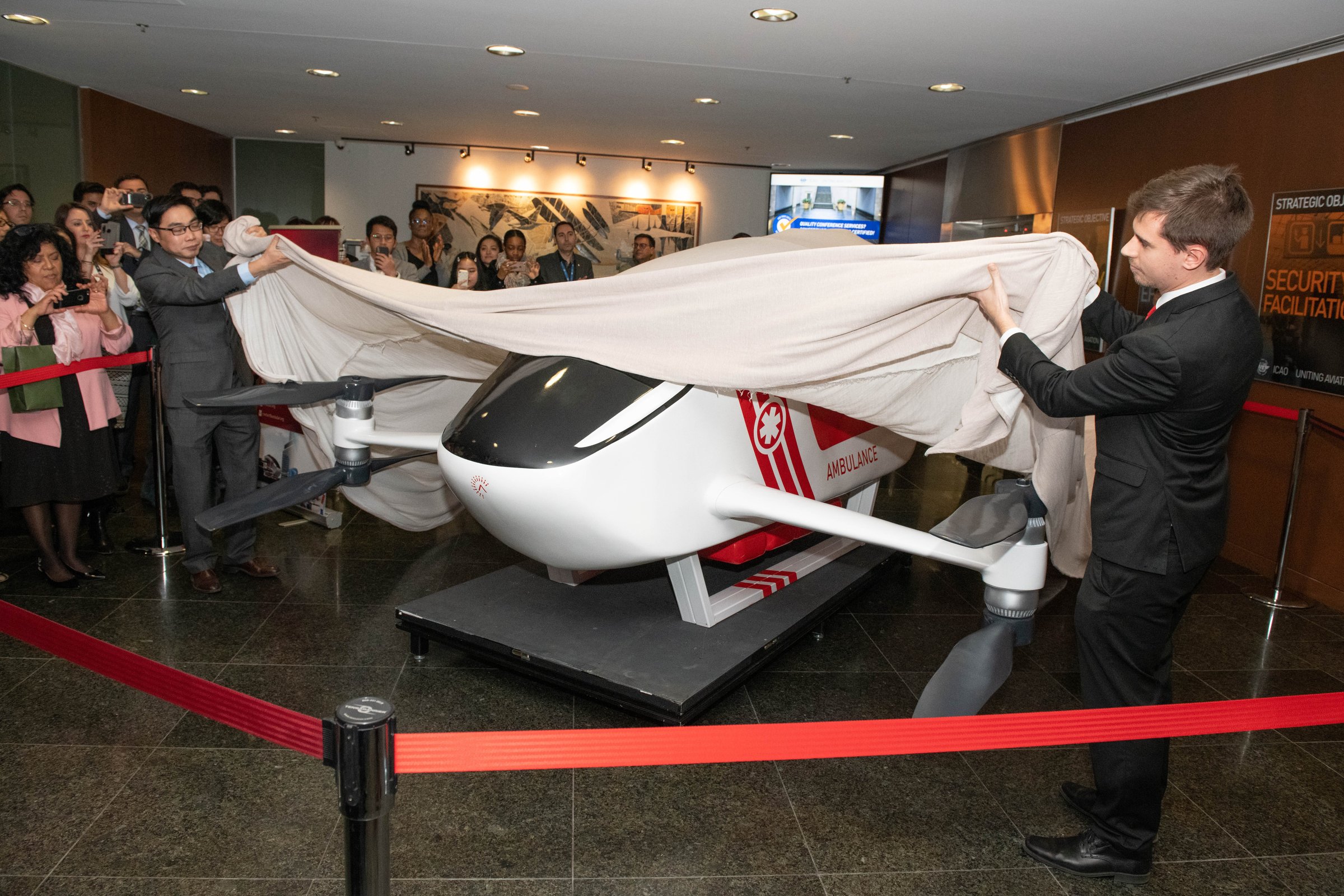
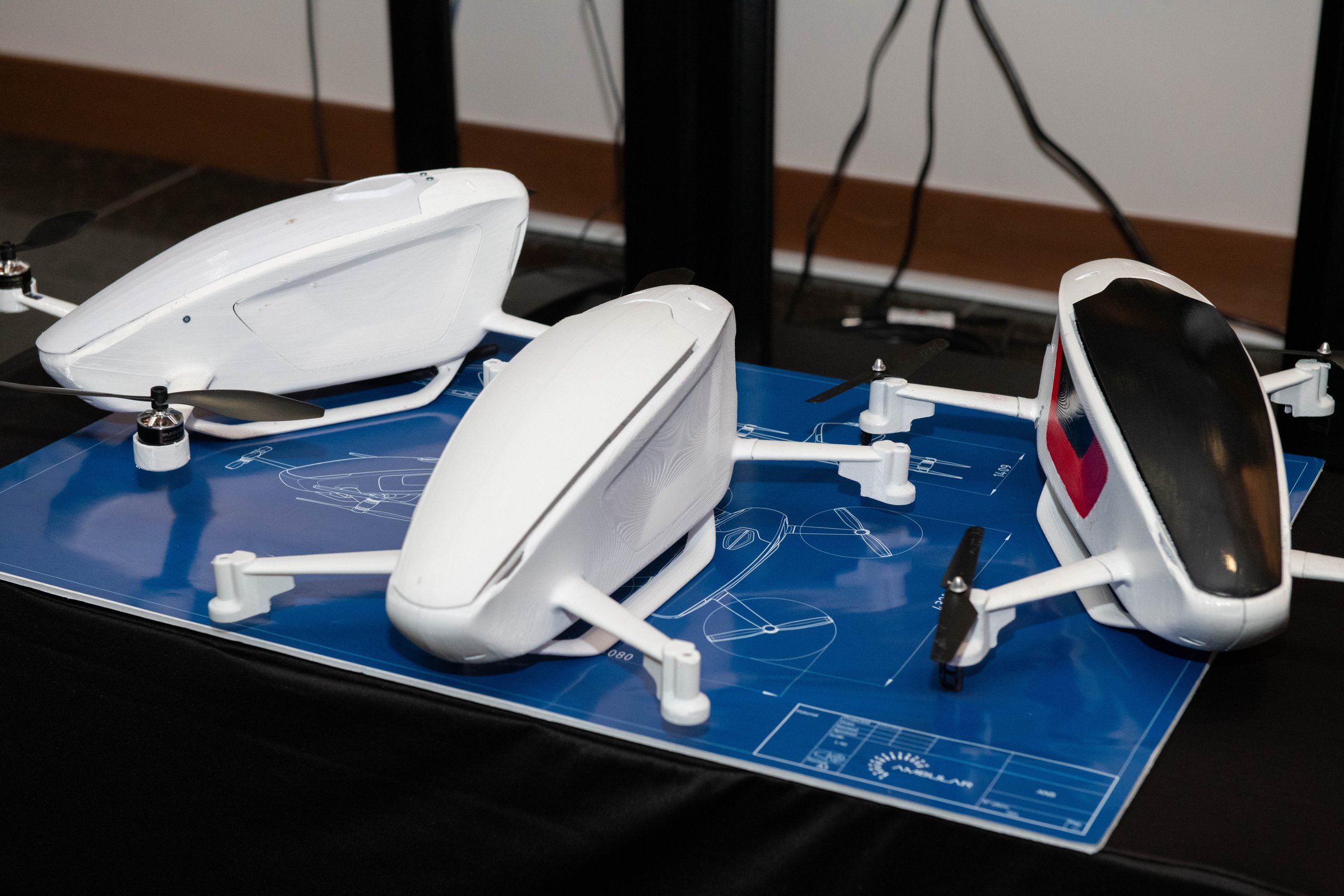
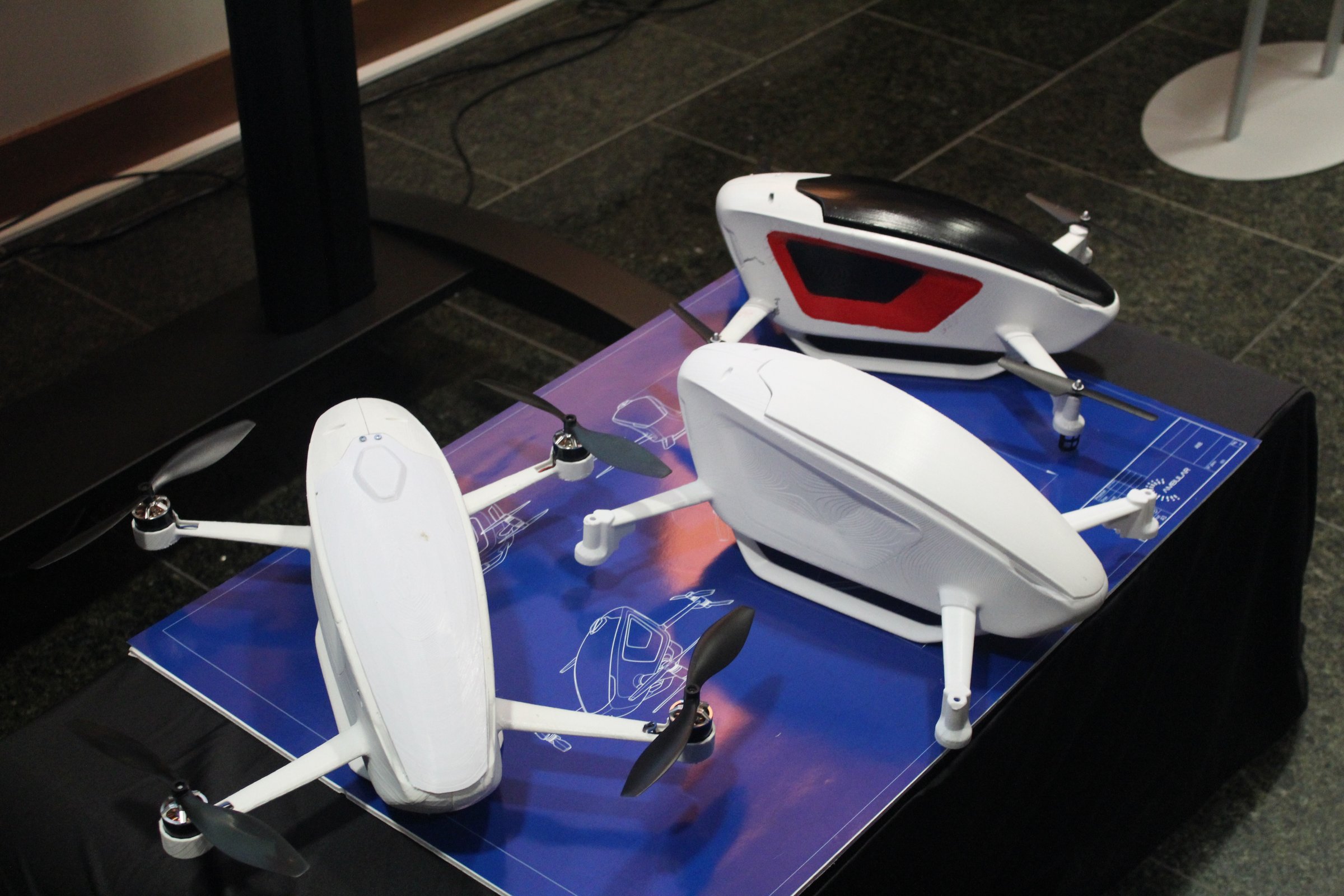
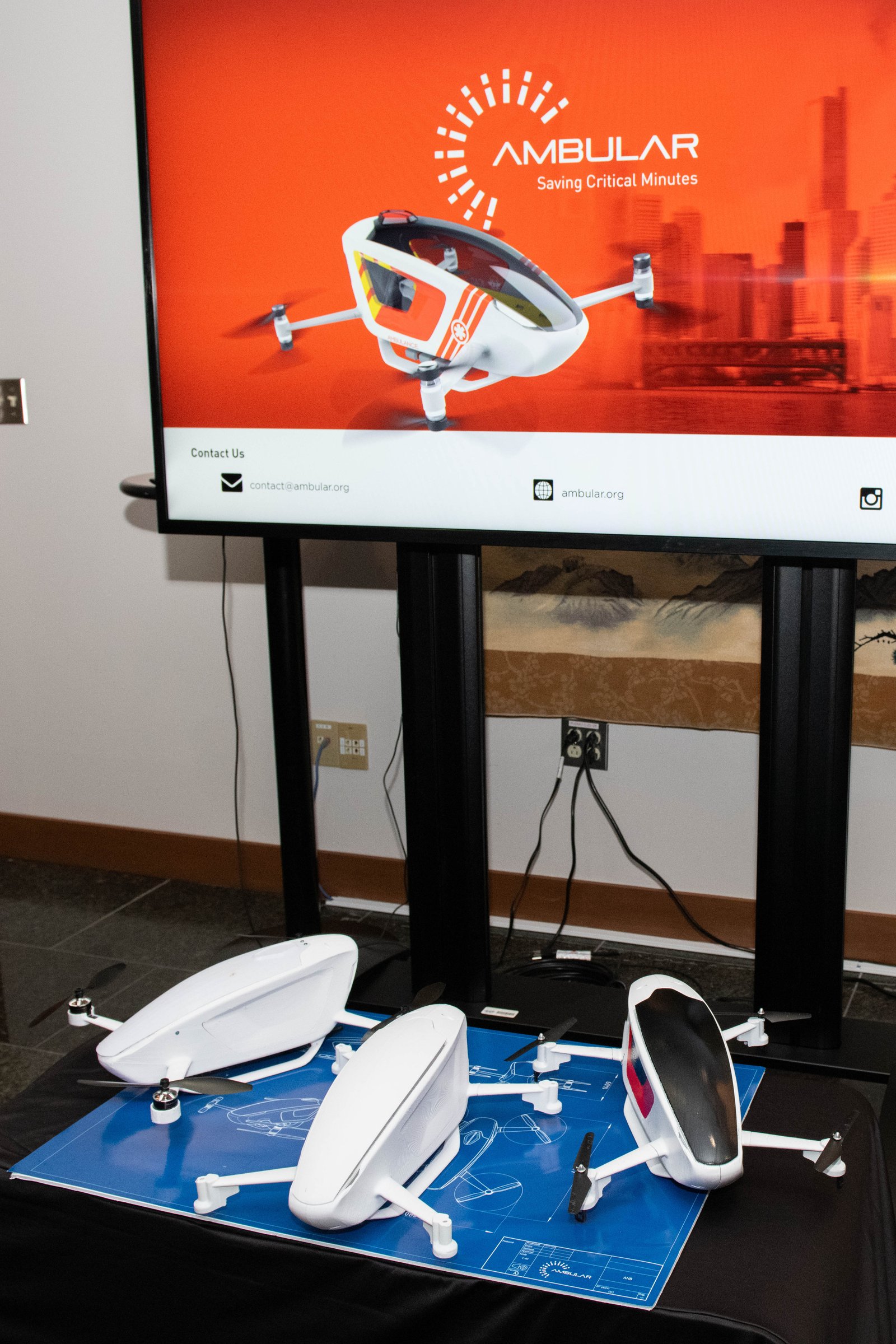
Each version folds back what the prototypes taught. The 3.0 study tightens the body and the rotor booms around what the testing revealed.
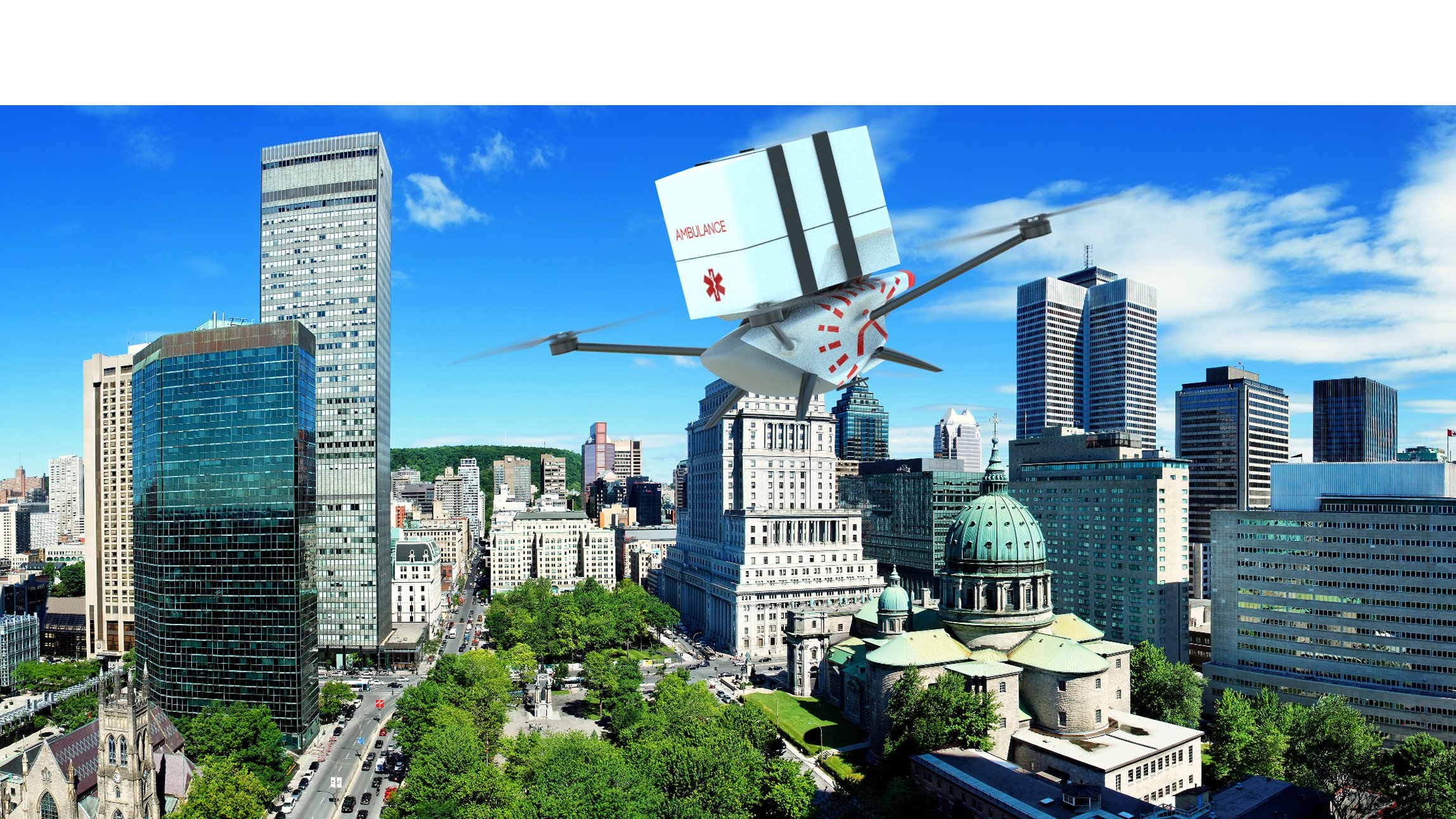
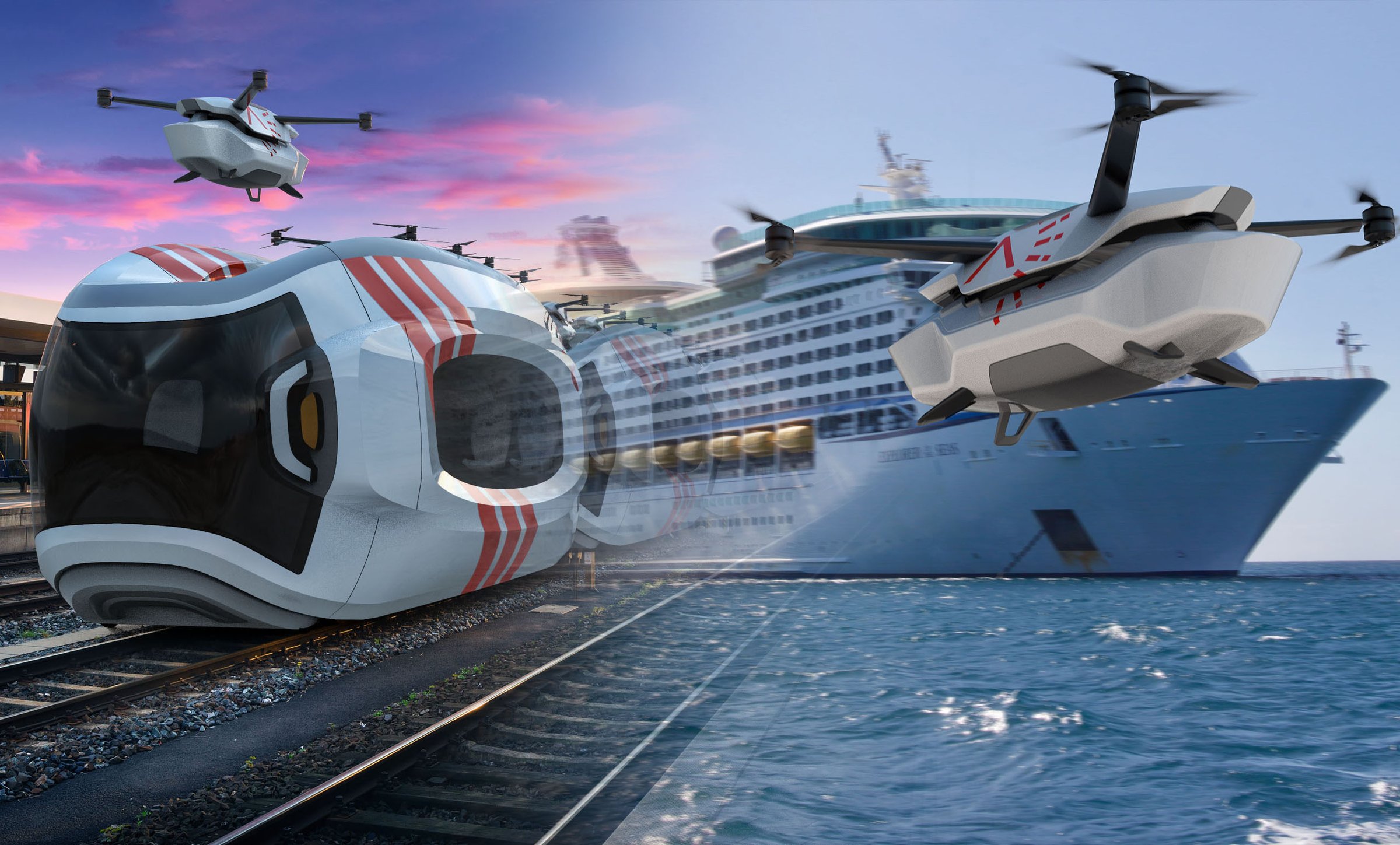
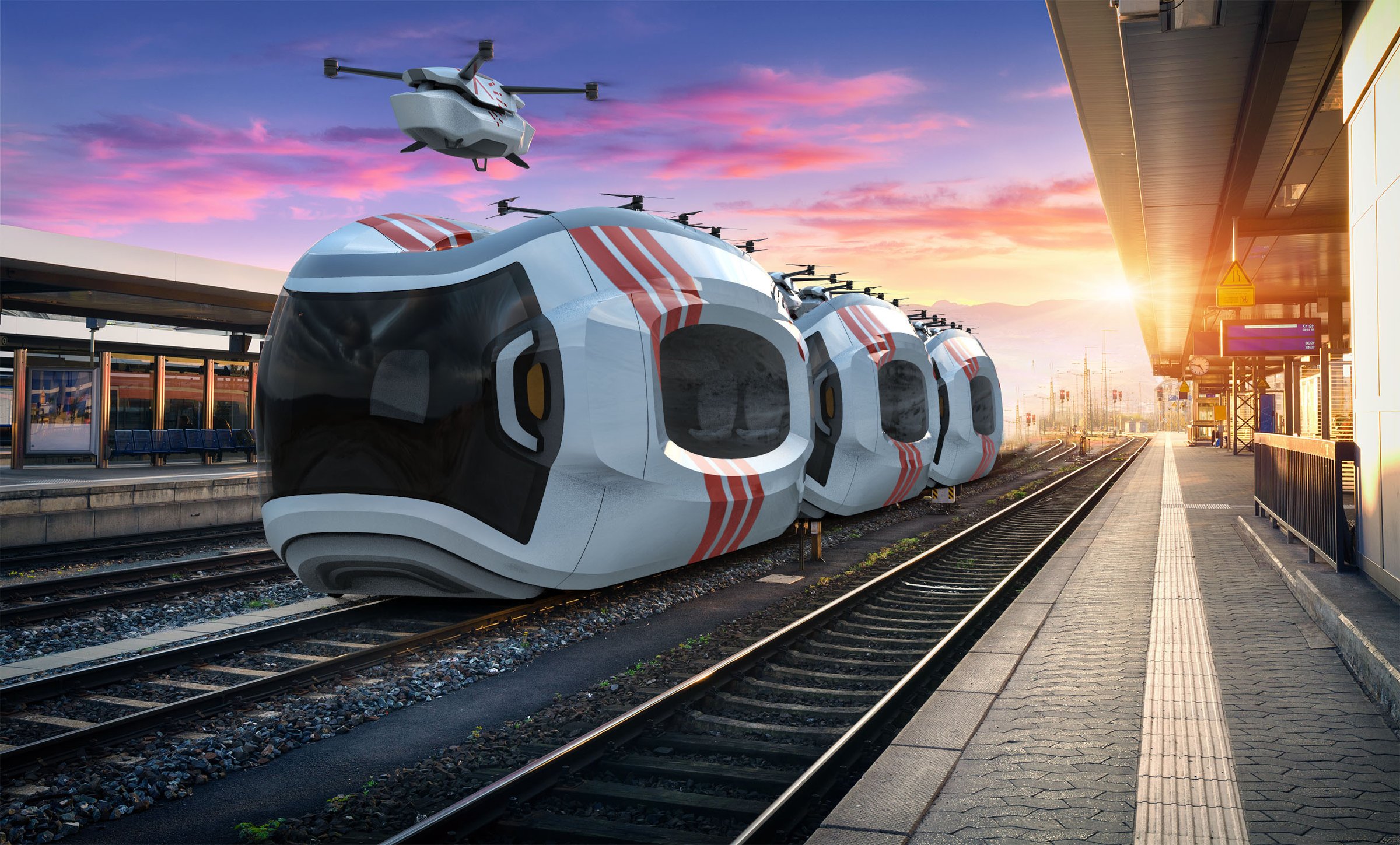
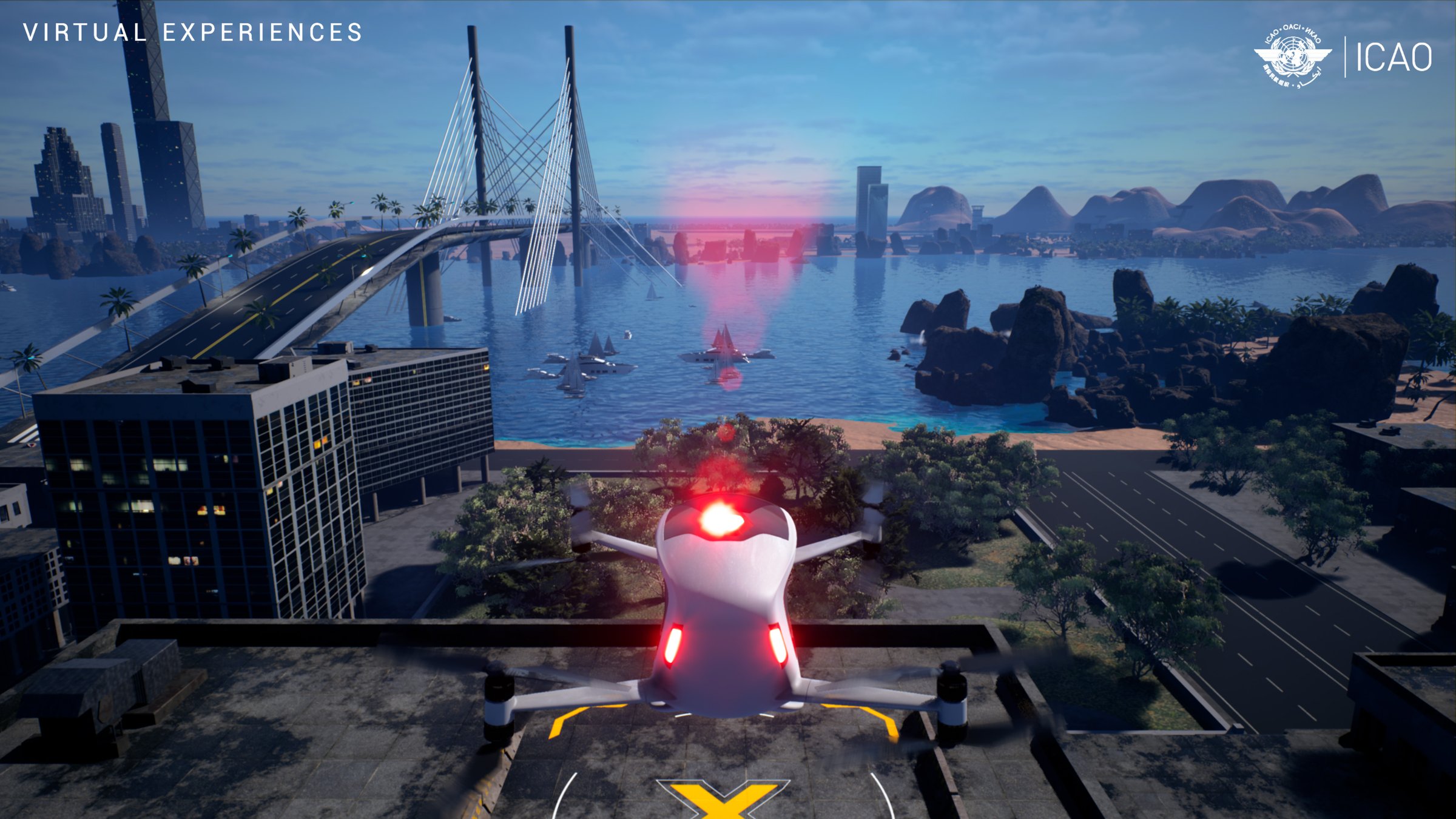
The same airframe logic reaches past patient transport — autonomous medical-cargo delivery, a multimodal vision that hands patients between rail, sea and air, and immersive ICAO virtual experiences that let people walk the concept before it flies.


Aerospace, eVTOL or transport concept work — from first sketch to flying hardware. Send a brief and we’ll come back within two working days.
Request a quote