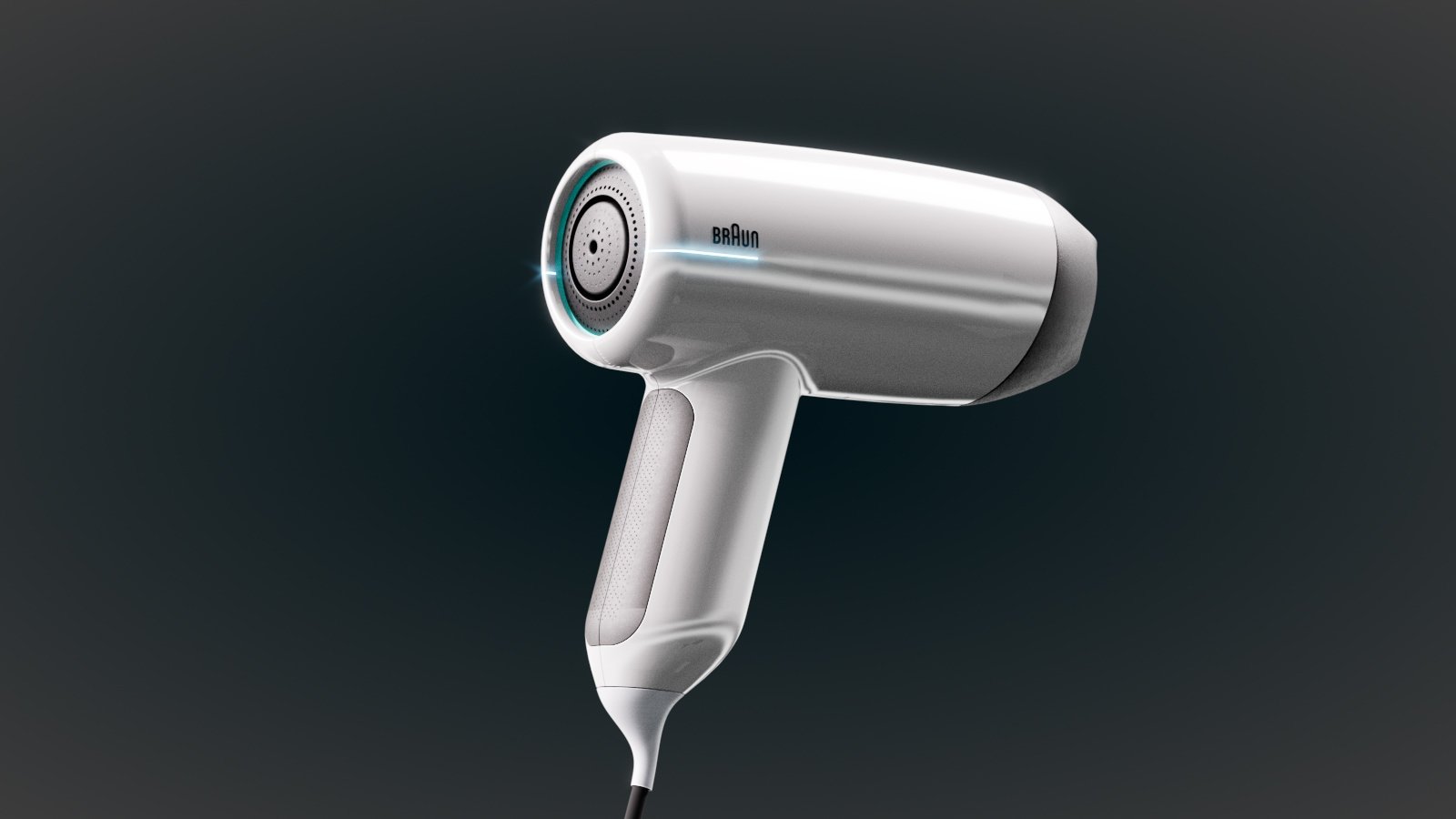
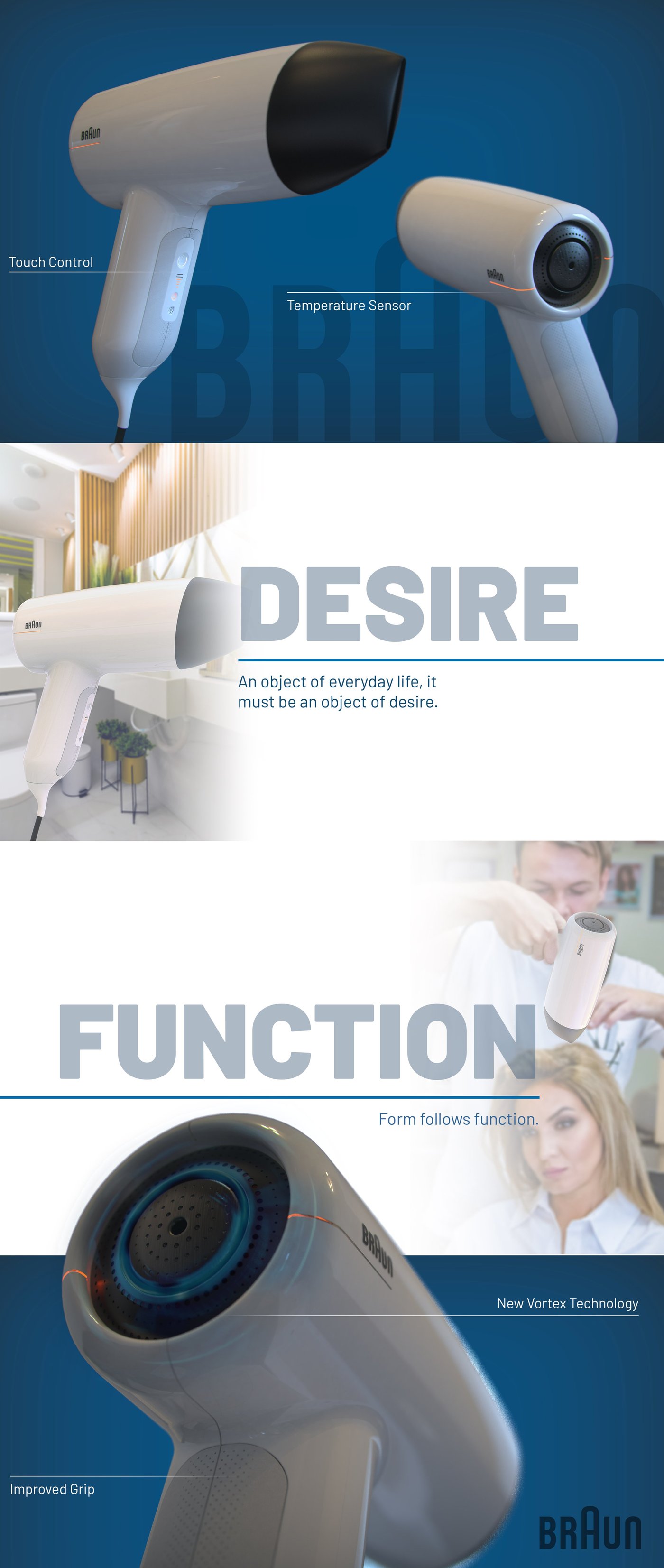
A hair-dryer concept in the Braun tradition — a calm, soft-pebble volume with nothing on it that doesn't need to be there. Capacitive touch control, an integrated temperature sensor and a new vortex air path, wrapped in a single gloss-white shell. Surfaced in Rhinoceros and lit in KeyShot.
Vortex is a personal study of what a Braun hair dryer could be if it were designed today against the principles the brand is known for. The brief I set myself was simple: an everyday object that earns its place on the shelf — quiet, honest, and reduced to the essential — and that still feels like an object of desire.
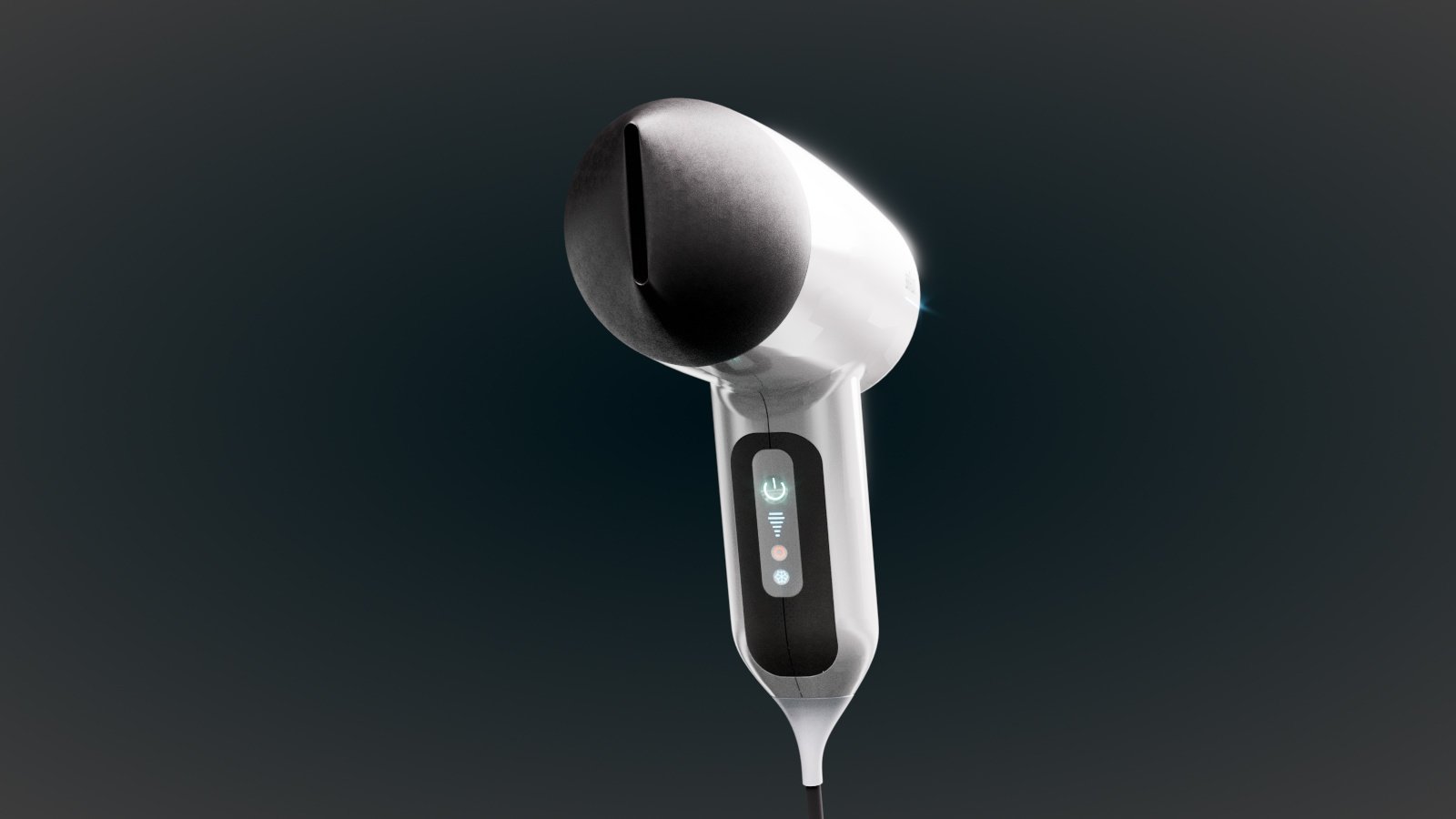
The body is a single soft-pebble volume. There are no fan-grille flourishes and no decorative seams; the only graphics are the wordmark and a thin warm accent line that lights up in use. A recessed touch panel on the handle replaces the usual cluster of mechanical sliders, and a small temperature sensor sits at the air intake to hold the heat steady rather than just dumping it.
Surfaced in Rhinoceros — NURBS for the primary shell and split-lines, a touch of SubD for the soft nose and handle transitions — with the hero stills lit and rendered in KeyShot. The bathroom scene was composited from the same model into a real interior to test how the object reads in everyday life.
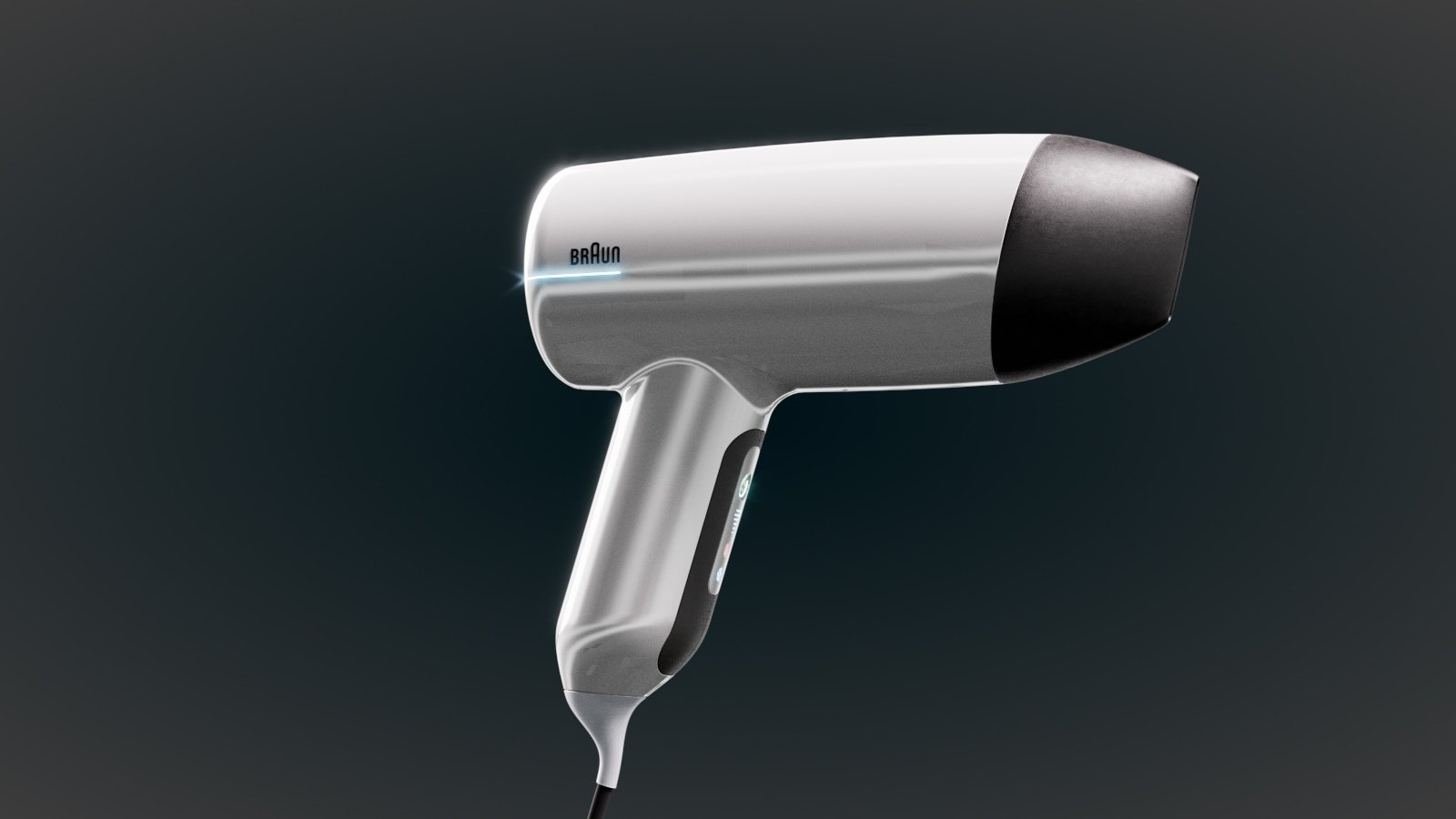
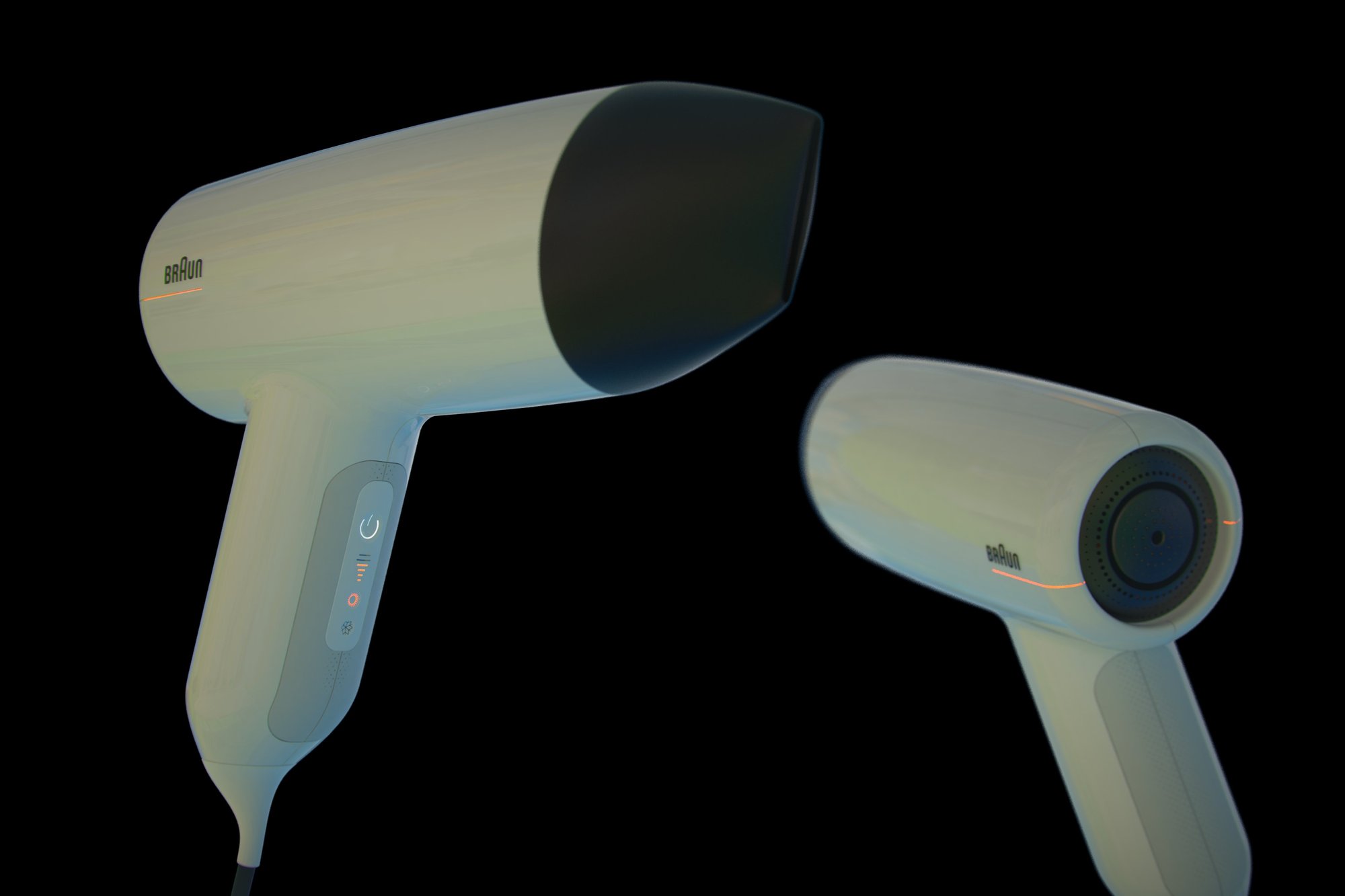
Every line on the body answers to how the dryer is held and used. The handle tucks a soft-touch grip pad where the fingers fall; the controls live in one calm window; and the nozzle was studied in two configurations — a directional concentrator and an open vortex outlet — to compare airflow character without changing the silhouette.
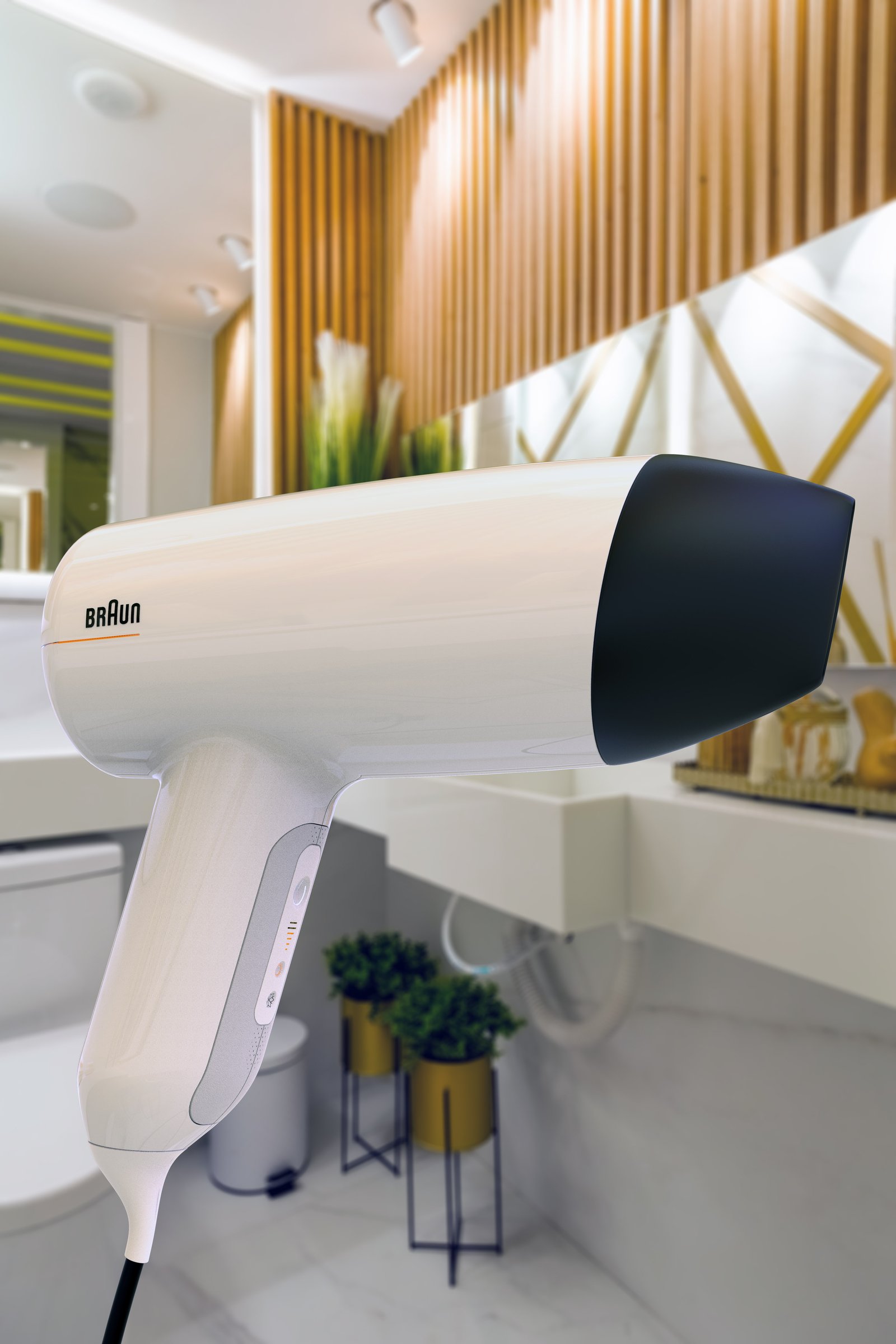
An object of everyday life should also be an object of desire. Dropping the same model into a real bathroom backplate was the honest test — does it still look considered when it sits next to the taps, the plants and the morning light, rather than floating on a studio sweep?
The gloss-white finish, the single warm line and the quiet front mask were tuned to read as calm and premium in that setting — at home on the counter, not shouting from it.
A single presentation board pulls the story together — touch control, temperature sensor and the new vortex technology, framed by the two ideas the whole concept hangs on.
Rhinoceros — the shell was built as a clean surface package: NURBS for the primary body and split-lines, SubD for the soft nose and the handle-to-body transition, so the single-volume read stays intact from every angle.
KeyShot — used for the studio hero stills and the turntable. The gloss-white plastic, the soft-touch grip and the illuminated accent line were all set up as physical materials and emissive details rather than post effects.
Compositing — the bathroom scene places the same geometry into a real interior backplate, matched for camera, lighting and grade, so the concept can be judged the way it would actually be encountered.
If you're developing a consumer appliance or personal-care product — from first concept to production-ready CAD — let's talk. Send a brief and we'll come back within two working days.
Request a quote