IDMR / Work / Eagle
Aerospace · EVTOL · ICAO Concept

Eagle.

Distributed electric ducted-fan VTOL — a clean-sheet airframe study for ICAO exploring the next generation of short-haul electric flight. Thirty-four ducted electric motors with vectored thrust, 300 km range, 8-passenger cabin, full lithium-polymer powertrain.

Sector
AerospaceEVTOL · ICAO
Propulsion
34 × electric ducted fansVectored thrust
Range / Speed
300 km / 300 km/hCruise envelope
Payload
3 500 kg8 passengers
About the project

A distributed-thrust airframe.

Eagle is a clean-sheet EVTOL concept developed as part of the studio's ongoing work for ICAO — exploring what a credible next-generation short-haul electric aircraft could look like once the regulatory and battery-density barriers come down. The brief was open: propose a vertical-takeoff aircraft that re-thinks propulsion architecture rather than just electrifying a helicopter.

The answer is a wing-mounted array of 34 small ducted electric fans distributed along the leading edge, with full thrust vectoring for vertical take-off, transition, and cruise. The high-count, low-thrust-each approach trades a single point-of-failure rotor for graceful degradation — losing several motors still leaves enough thrust to complete a controlled landing. It's also dramatically quieter at hover than a conventional rotor configuration.

The mission profile targets the 300 km regional segment — coastal commuter routes, inter-city hops between metropolitan areas, and short island links. With 8 seats and a 3 500 kg payload it sits between a luxury EVTOL air-taxi (4-6 pax) and a regional commuter aircraft (19-50 pax), opening up a category that today doesn't really exist.

Powertrain: lithium-polymer battery banks distributed along the wing root for both inertial benefit and thermal isolation, feeding the duct array via solid-state inverters. Configuration: twin-boom, V-tail, single tractor cockpit. Pipeline: Rhino → KeyShot for materials, environmental composite render passes for the location work.
Form · Configuration studies

Two ducted arrays. Twin-boom.

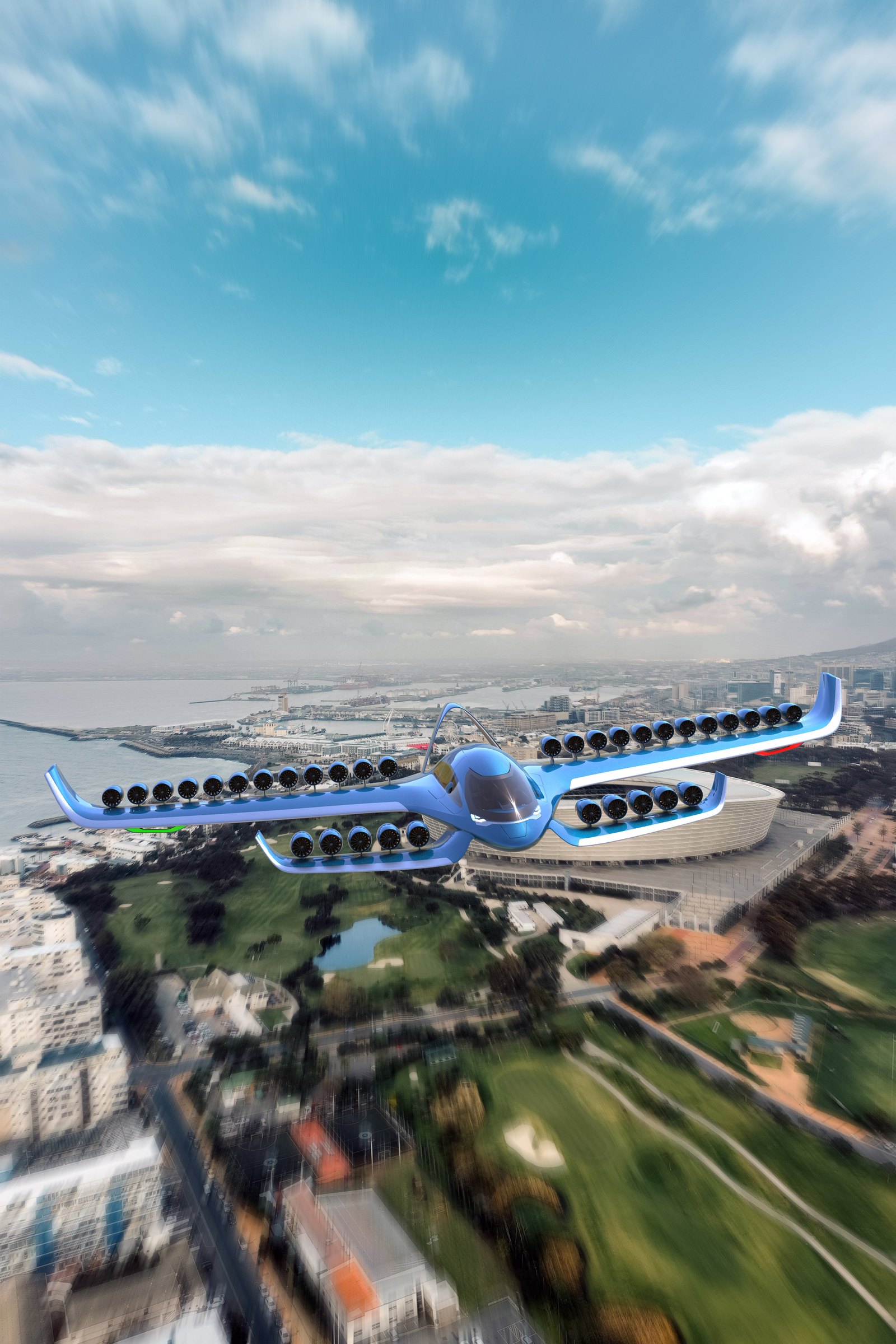
Eagle is built around two long wing-root spars, each carrying 17 ducted fans arranged in two rows of ducts that tilt together for vertical, transition, and cruise flight. The cockpit pod sits forward of the leading edge between the booms.

FORM · FRONT 3/4
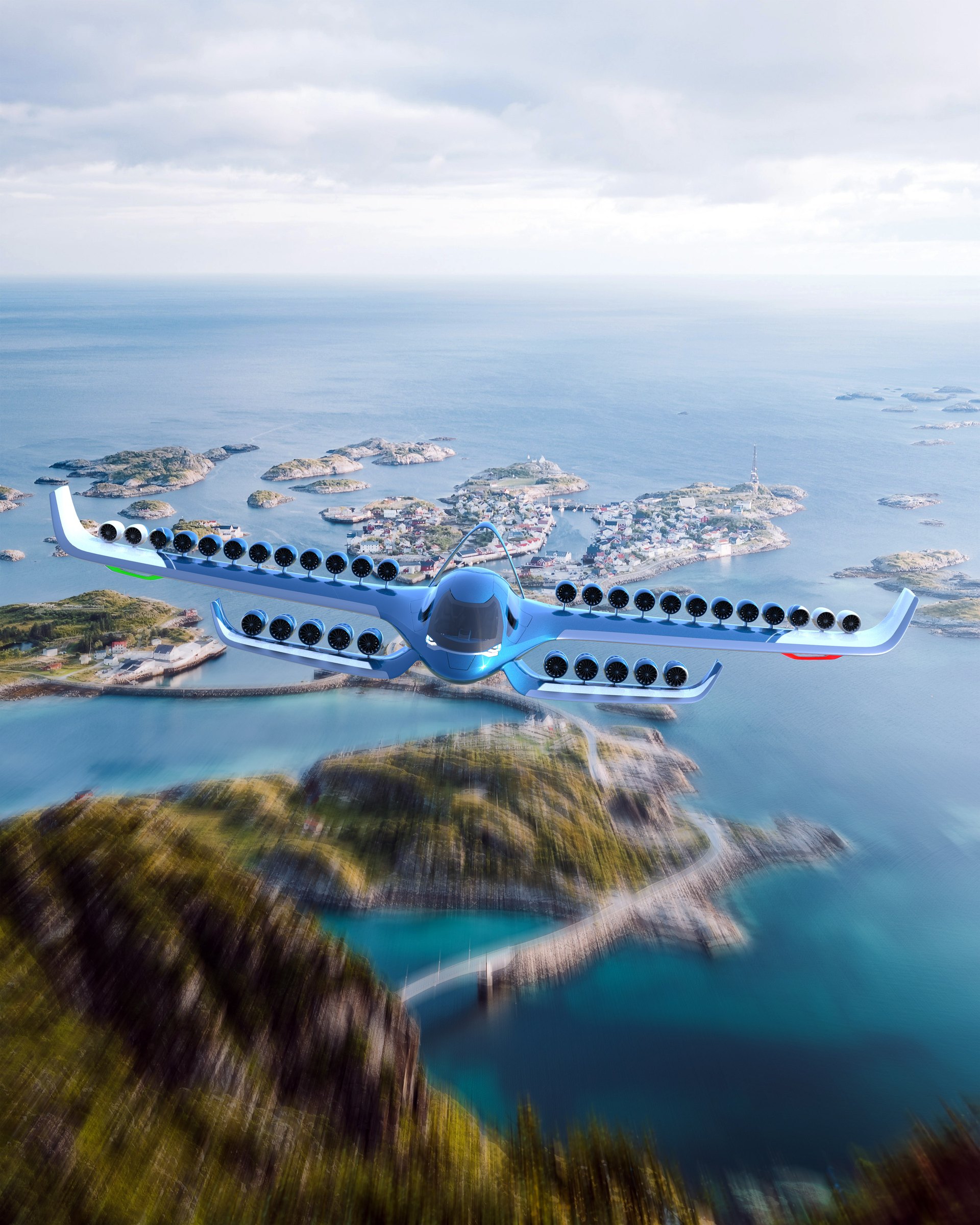
Eagle EVTOL aircraft seen from front 3/4 in flight above coastal islands
Front three-quarter Full view of the ducted-fan array — 34 motors in two stacked rows along each wing. Position-light convention preserved (red right wing tip / green left).
FORM · BANKED PASS
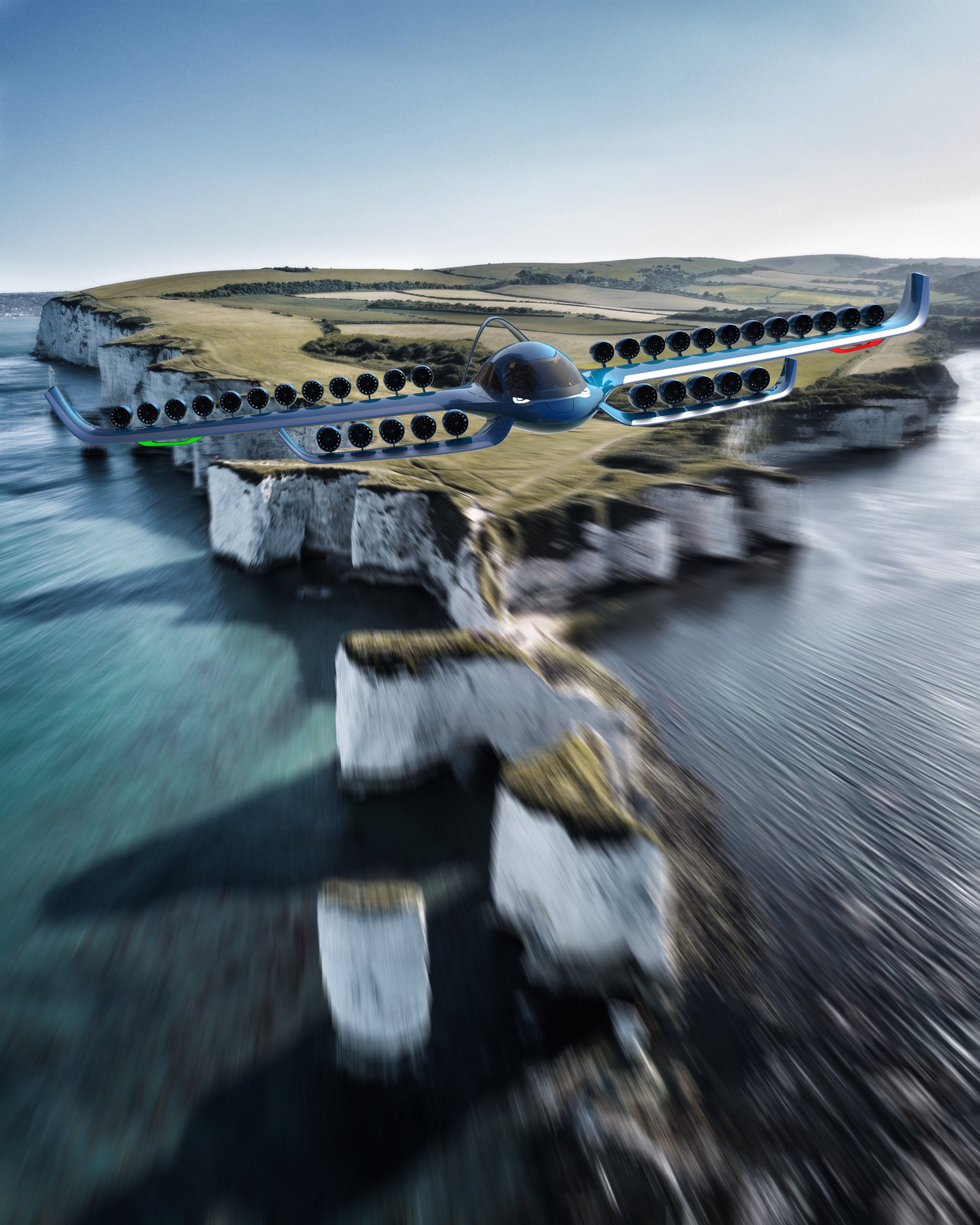
Eagle EVTOL banking above coastal cliffs
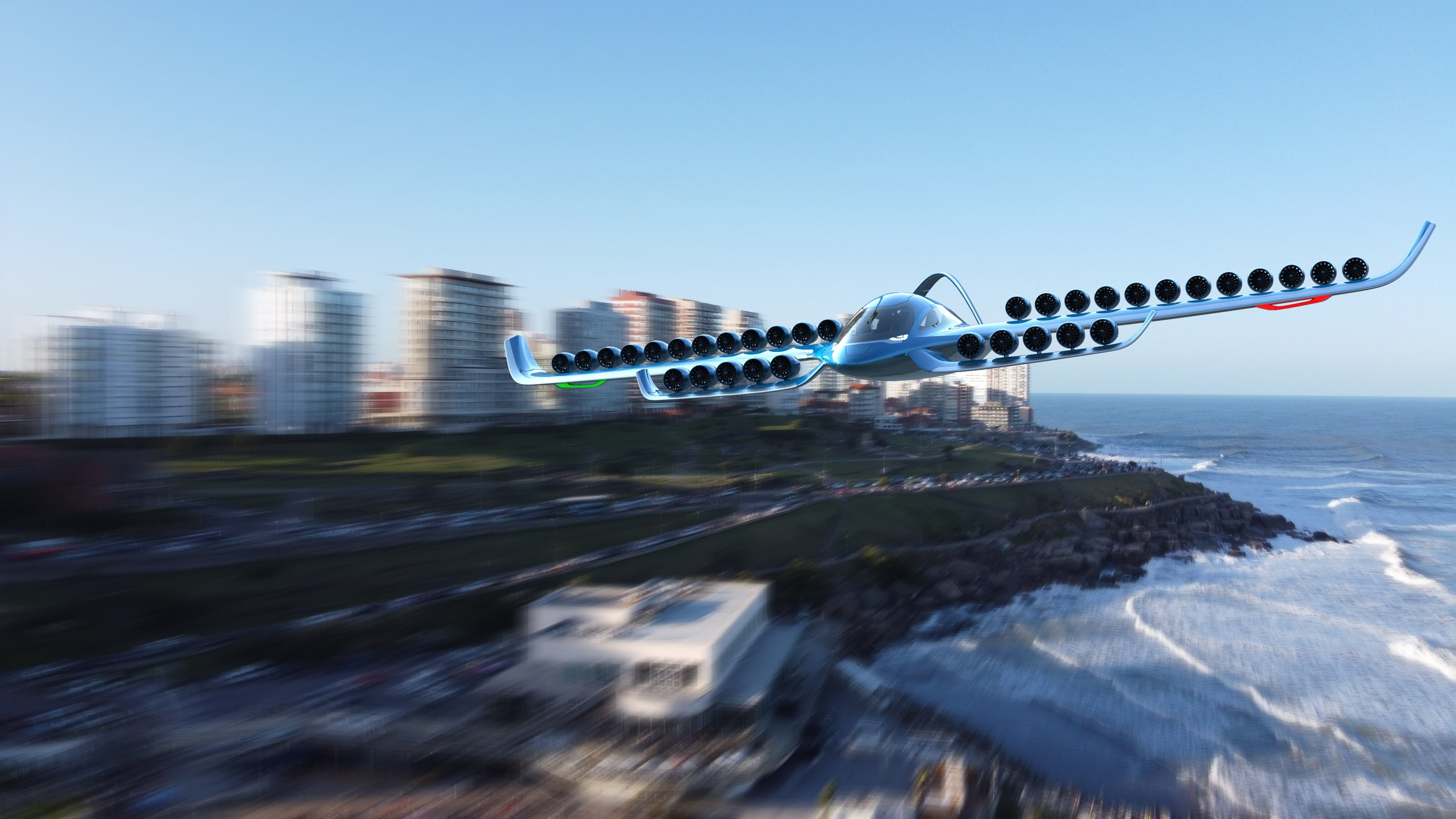
Coastal pass Banking shot over the cliffs — designed for the 300 km coastal-commuter mission profile. Wing winglets fold upward into vertical end-plates.
FORM · WIDE CRUISE
Eagle EVTOL in horizontal cruise mode over urban coastline
Horizontal cruise Side view showing the duct array at zero-tilt cruise position. The fuselage is short and stubby — the wing carries the volume.
FORM · OVERHEAD
Eagle EVTOL seen from above in cruise position
Overhead Top-down view of the duct distribution and the cockpit pod between the booms. The two arrays mirror each other around the centre line.
Specification · Concept

The numbers.

Spec sheet for the concept as currently configured. These are target figures — the airframe is a study, not a flight vehicle, and final values would depend on the certified motor and battery hardware chosen for any actual programme.

Propulsion
34 ×Electric ducted fans · vectored thrust
Range
300 kmCruise envelope
Cruise speed
300 km/hTarget maximum
Payload
3 500 kgMaximum take-off weight
Capacity
8 pax+ pilot · regional commuter segment
Power source
Li-PoLithium-polymer battery banks
Context · Mission profile

Coastal. Urban. Remote.

The 300 km range targets three distinct operating contexts: dense coastal commuter routes, inter-metropolitan hops over green-belt corridors, and remote regional connections where surface infrastructure is the limiting factor. Renders below were composited into real coastal, urban, and mountain environments to test scale and presence.

CONTEXT · URBAN APPROACH
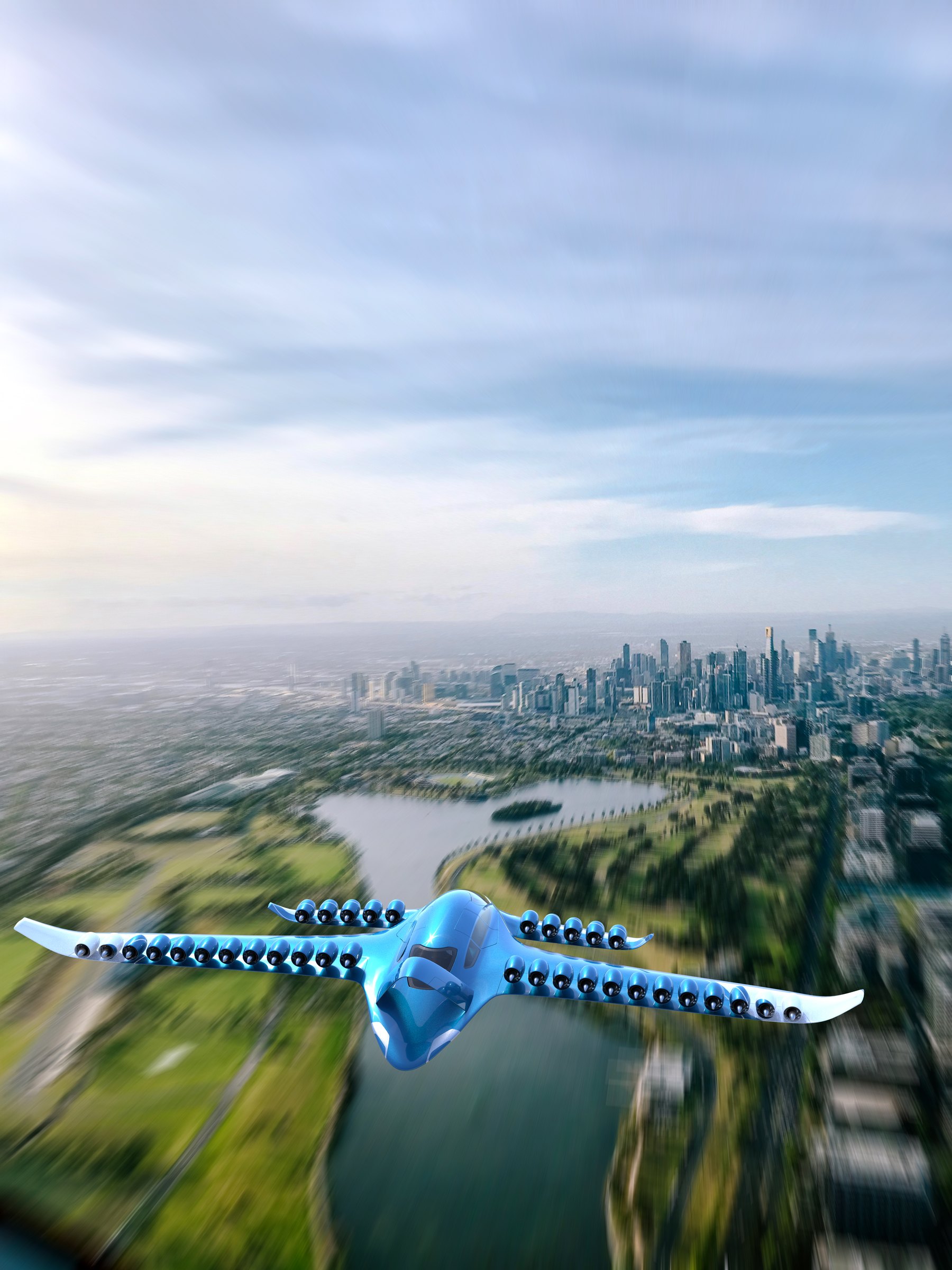
Eagle EVTOL on approach over a major city skyline
Metropolitan approach Inbound to a downtown vertiport with the central business district behind. Distributed-fan acoustics matter here — neighbourhood noise envelopes are usually the binding constraint for urban EVTOL.
CONTEXT · COASTAL CRUISE
Eagle EVTOL cruising along a coastal urban edge
Coastal corridor Inter-city coastal route — the 300 km range covers most major metropolitan-to-metropolitan hops along developed coastlines.
CONTEXT · REMOTE TERRAIN
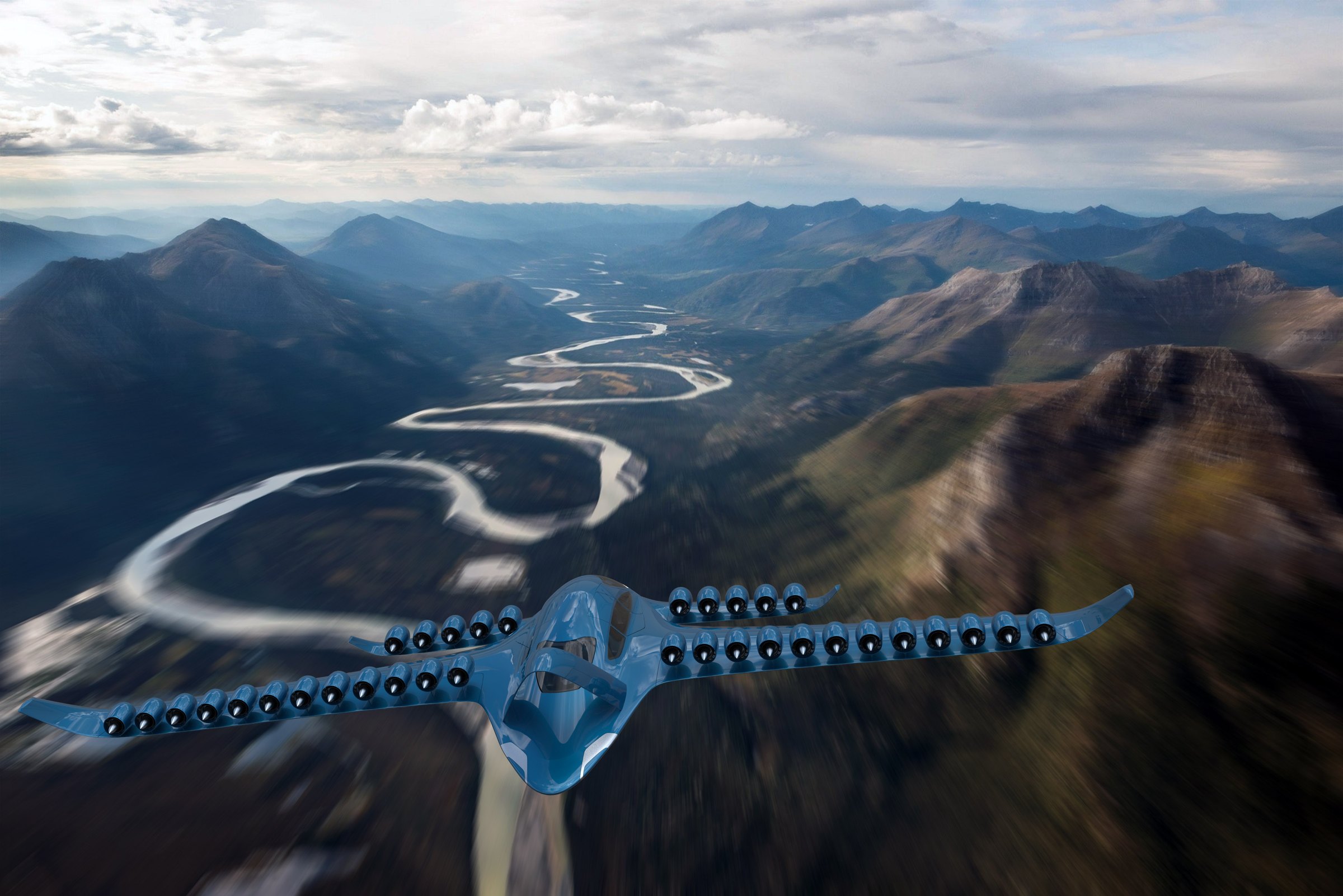
Eagle EVTOL over remote mountain valley with meandering river
Remote regional Mountain valley pass — where surface transport is either slow, dangerous, or non-existent. The 8-seat capacity addresses commuter, medical, and supply use cases simultaneously.
External · Client

About ICAO.

The International Civil Aviation Organization is the UN specialised agency that develops global standards for civil aviation — covering everything from air-traffic management and aircraft certification to environmental regulation. Eagle was developed under IDMR's ongoing concept-design work for ICAO exploring the next generation of commercial flight.

ICAO.INT ↗

Working on something similar?

If you're working on an aircraft, EVTOL, or any next-generation mobility concept — concept design through engineering-grade visualisation — let's talk. Send a brief and we'll come back within two working days.

Request a quote