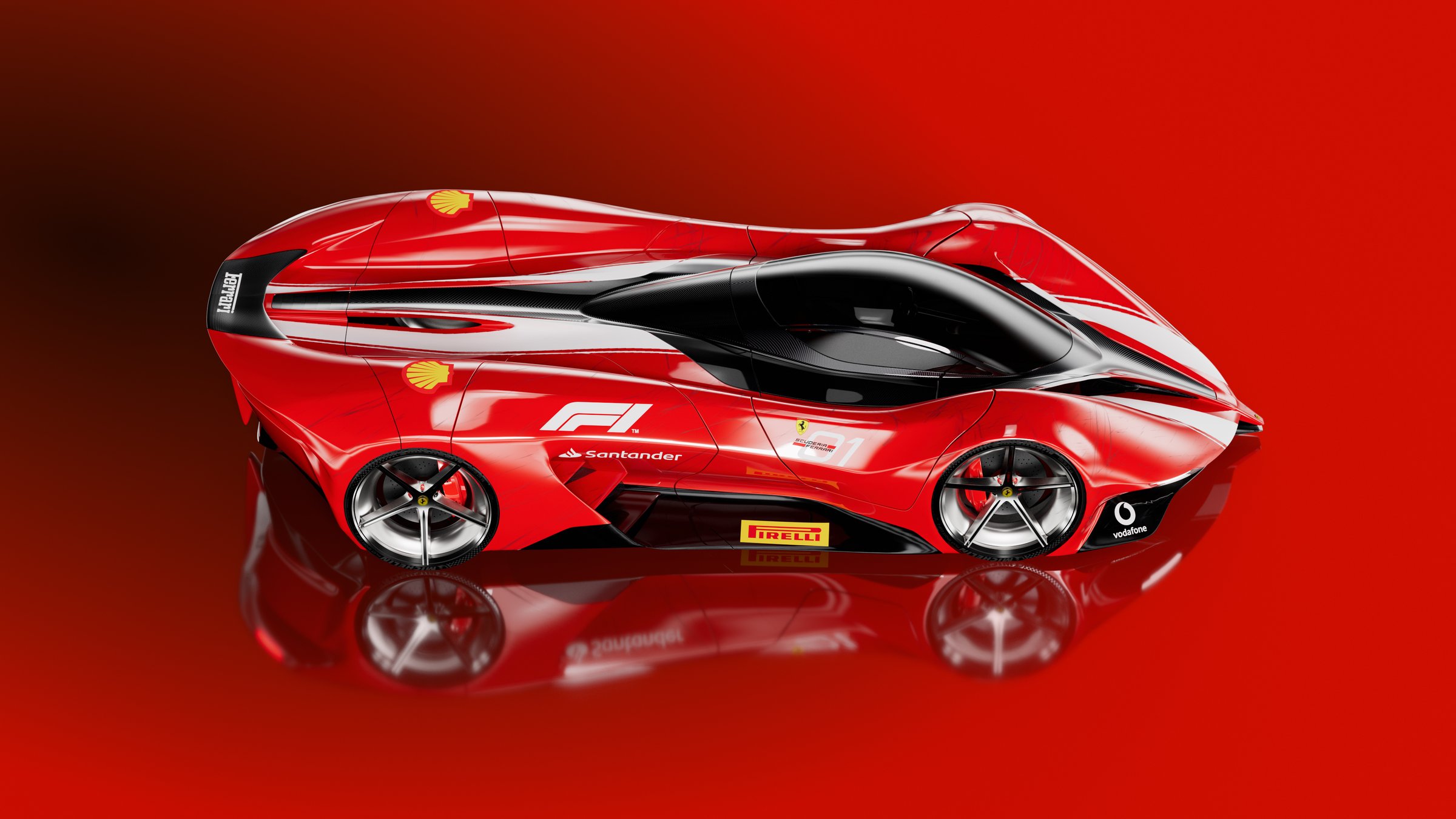
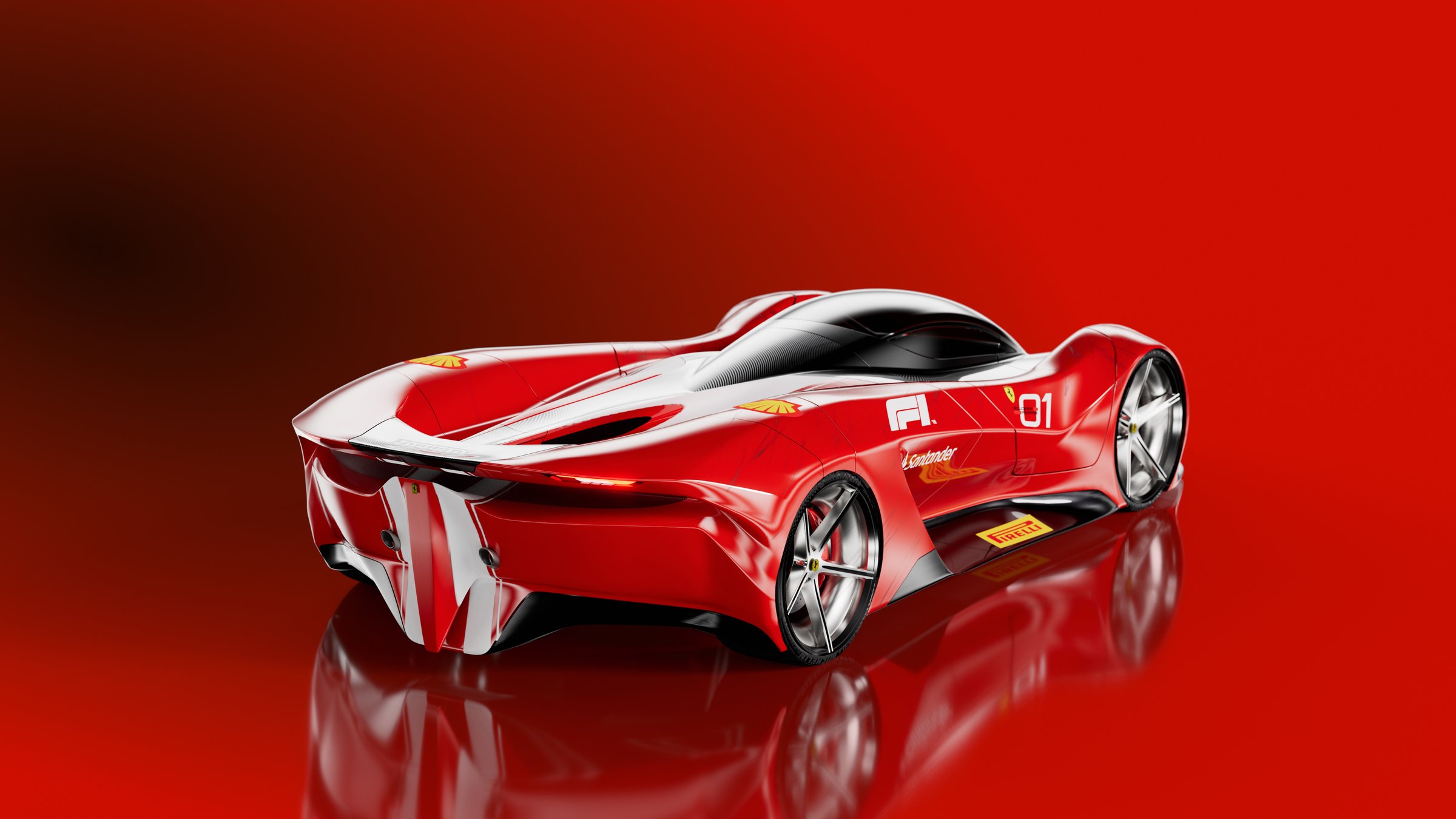
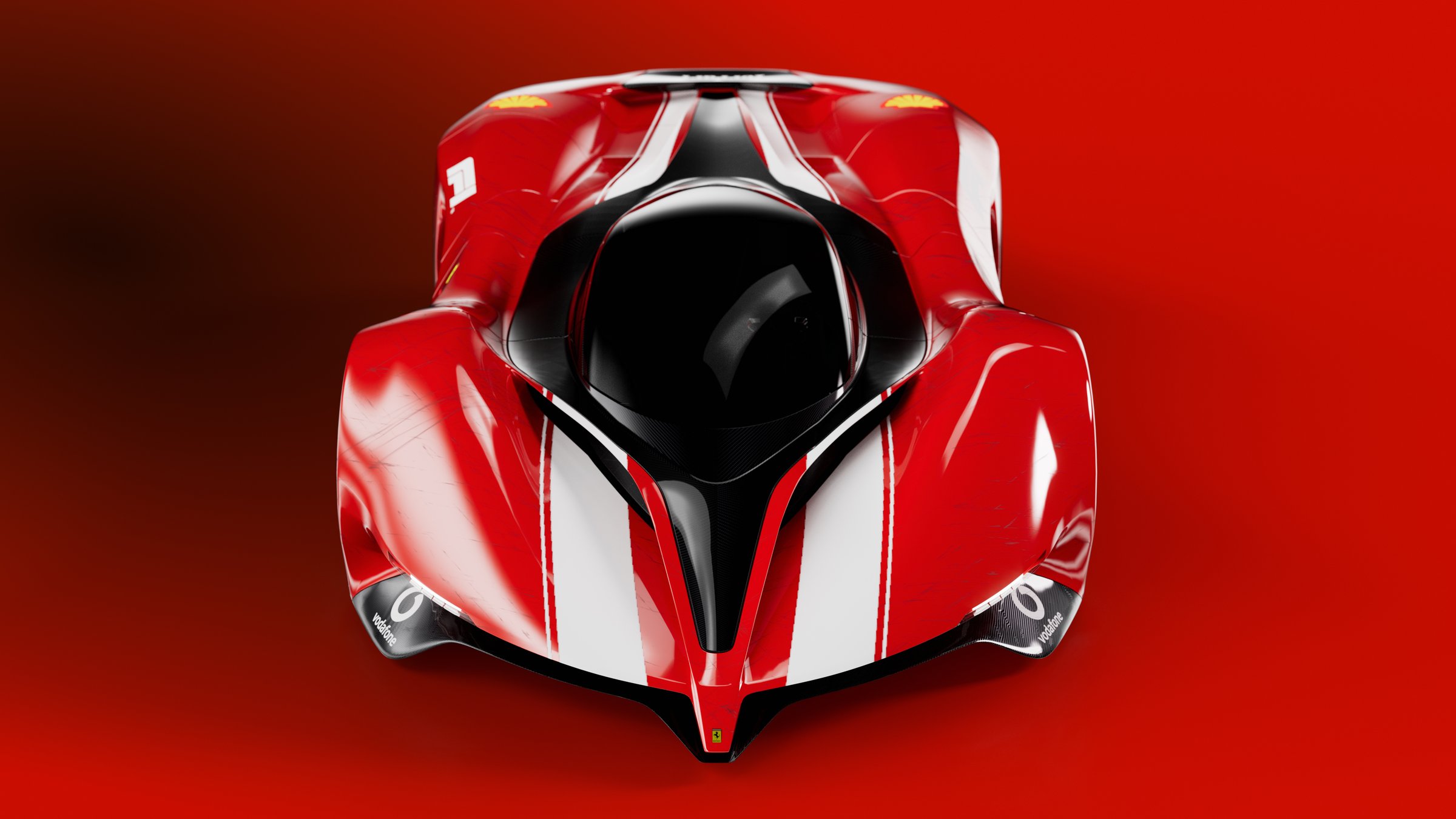
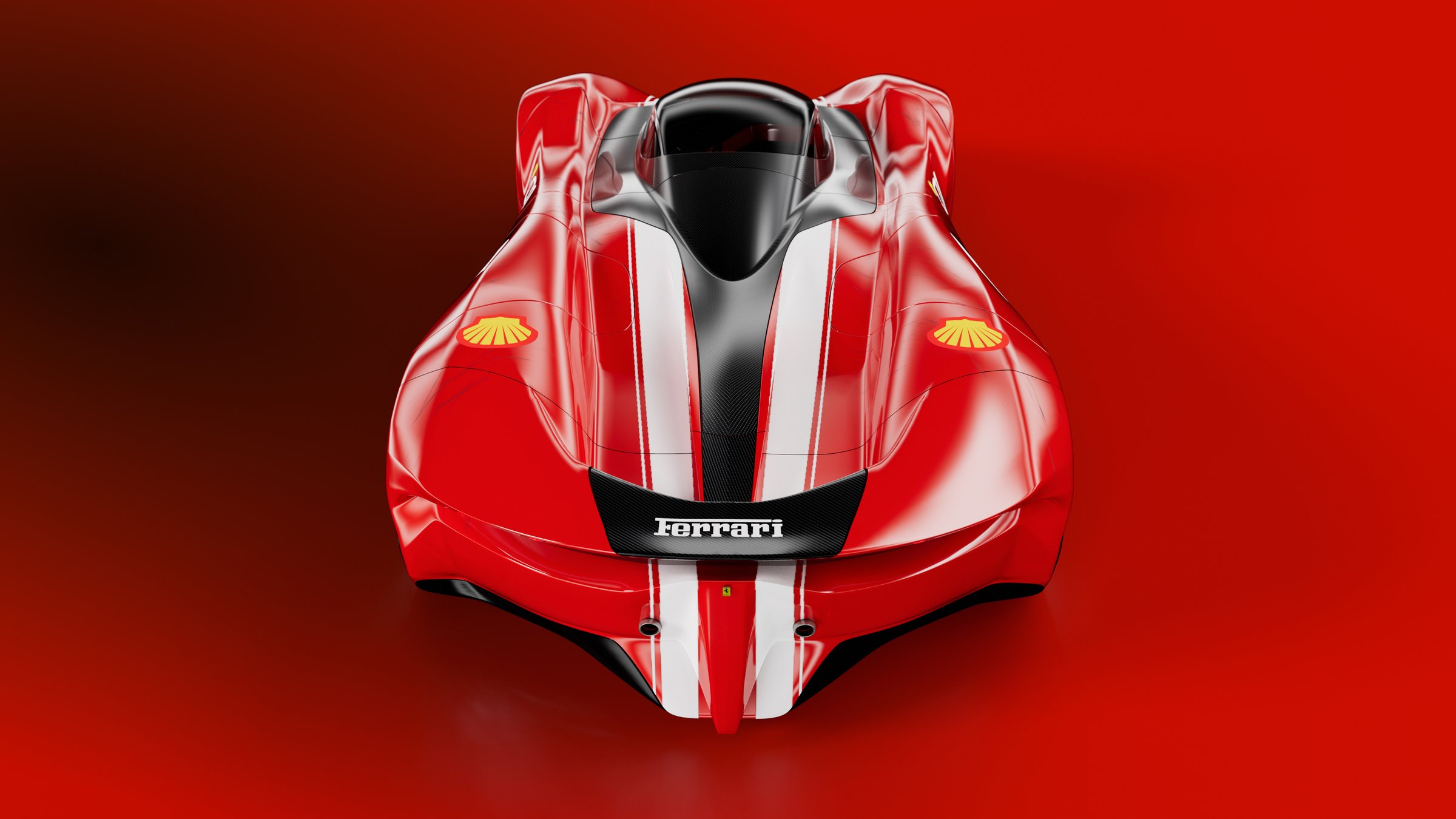
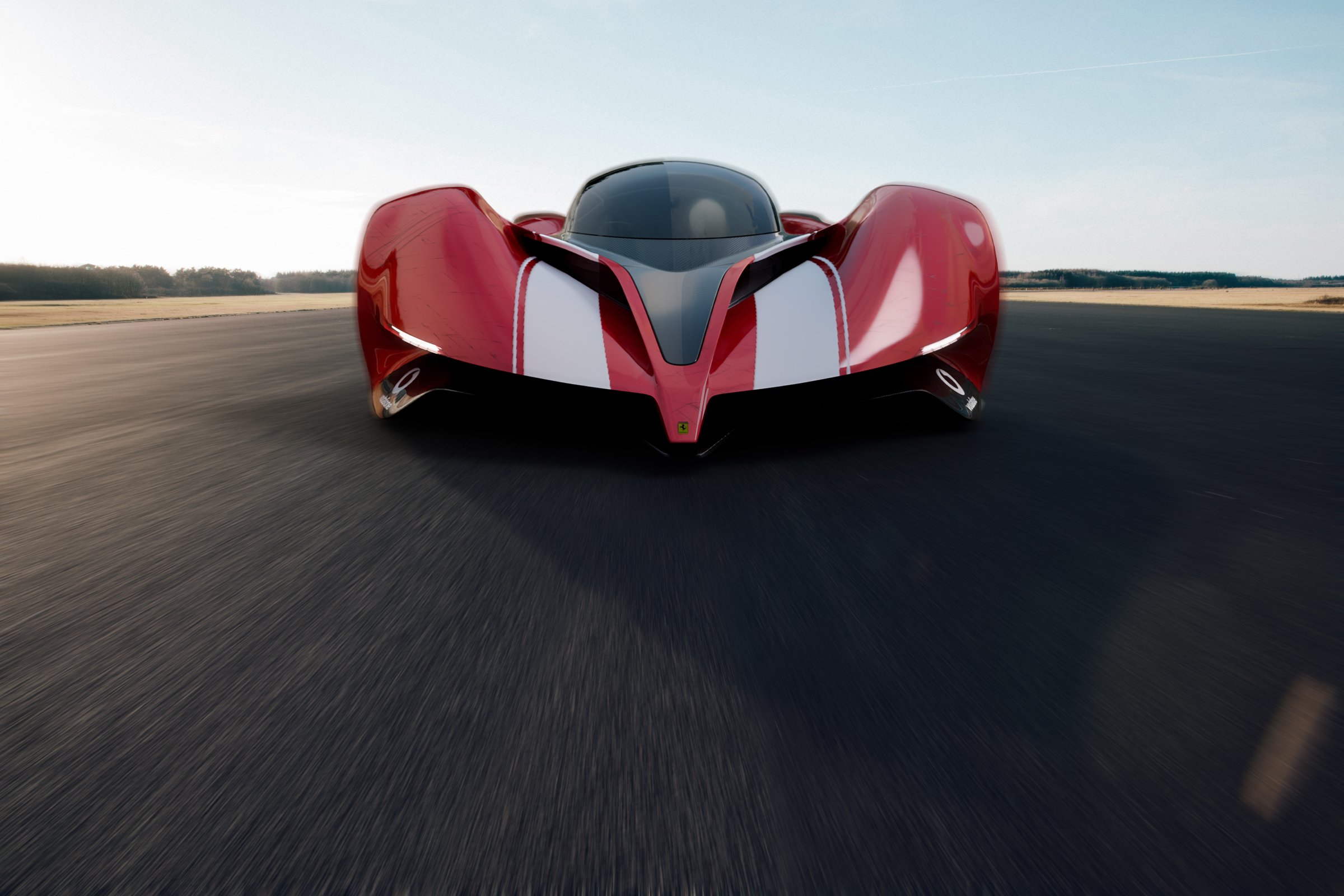
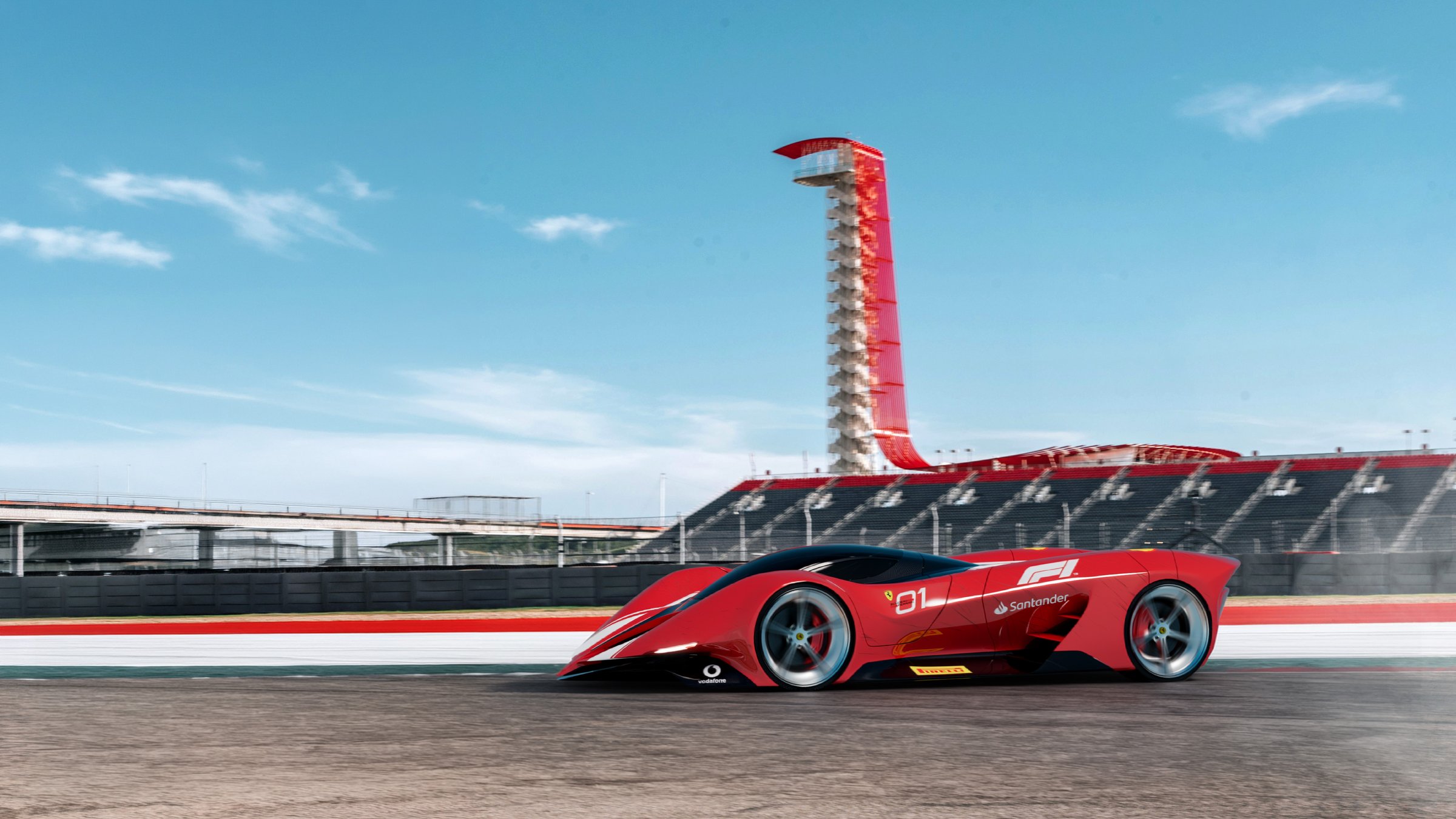
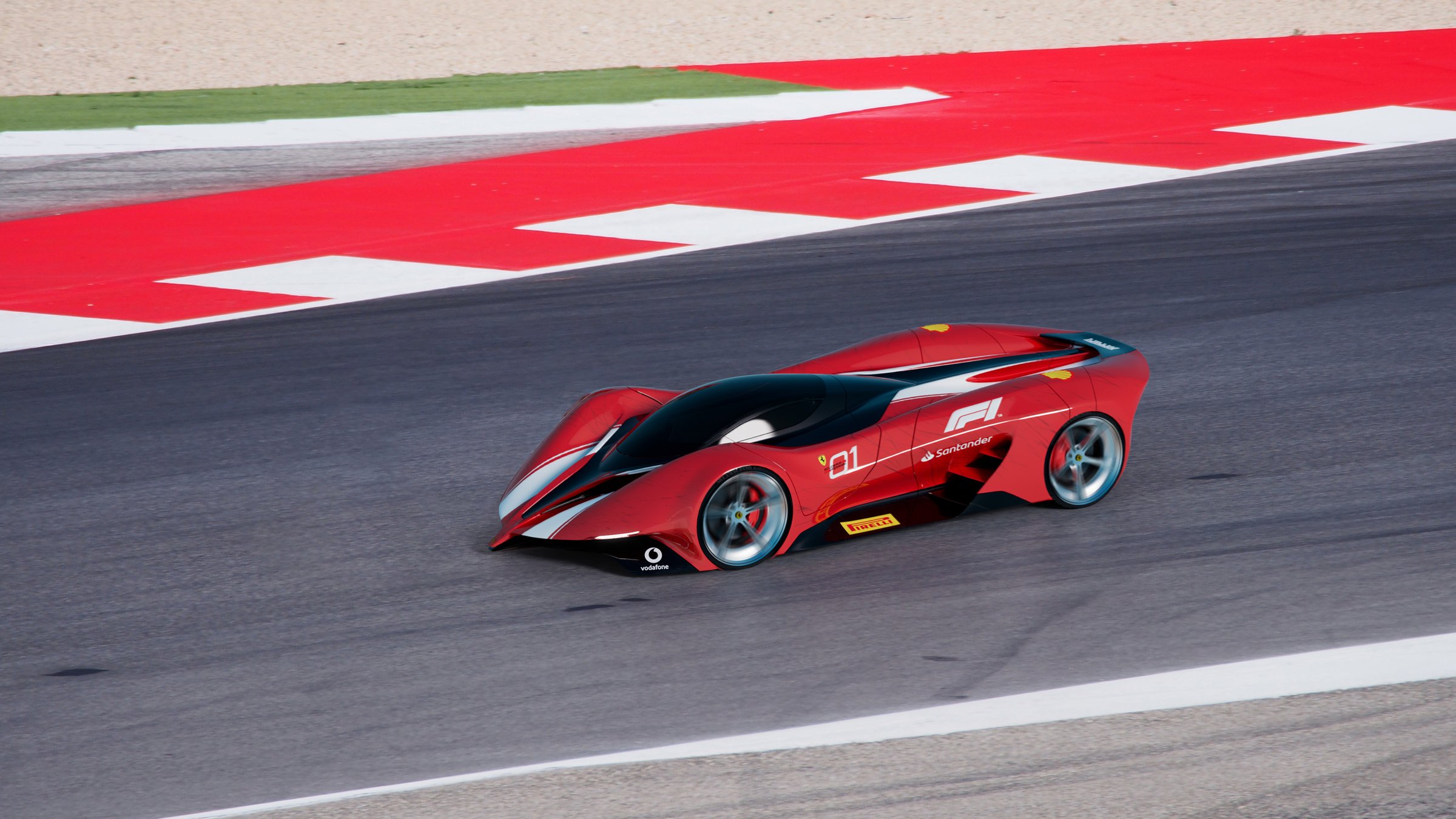
A single-seat endurance hypercar concept wearing full Scuderia colours — a central driving position under a teardrop canopy, a classic twin racing stripe, and proportions tuned for the straights. Sculpted in Rhinoceros and lit in Light Tracer Render.
Fzanzara — from the Italian zanzara, mosquito — is a personal study of a single-seat Ferrari endurance racer: small, fast, and built around one occupant sitting dead-centre. Rather than the usual side-by-side cabin, the driver sits on the centreline under a teardrop carbon canopy, with the bodywork swelling symmetrically away to either flank.
The proportions borrow from the long-tail Le Mans school — a low, pointed nose, a deep central spine running front to back, and pronounced front and rear fender peaks that frame the cockpit bubble. It reads equally as a closed prototype and as a road-going hypercar in full team livery.
Modelled in Rhinoceros — NURBS for the body panels and shutlines, SubD for the sculptural canopy-to-fender transitions — with the hero stills lit and path-traced in Light Tracer Render. Track and runway scenes were composited from the same model into real-world backplates.
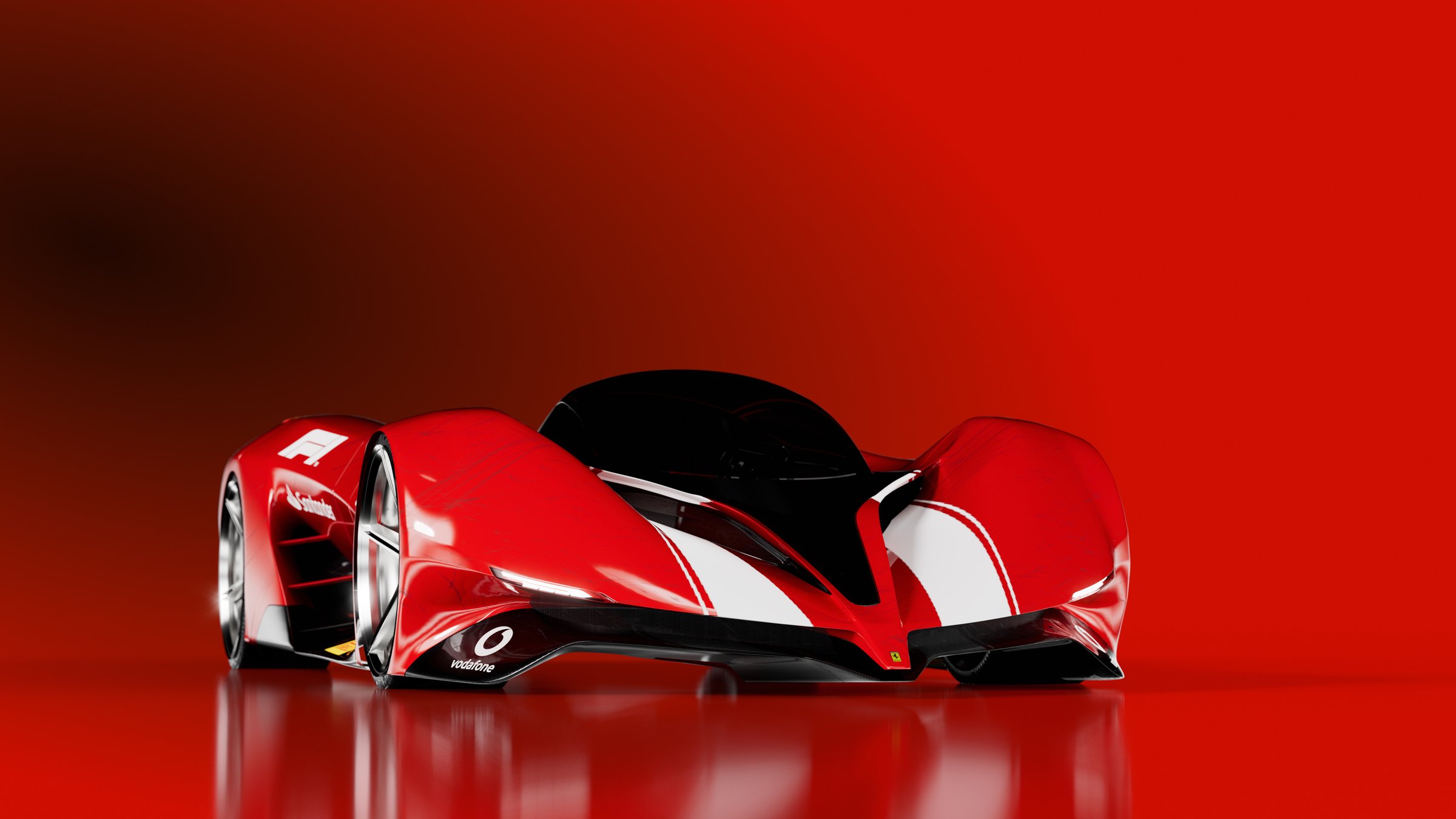
The car wears classic Ferrari red broken by a twin white stripe that runs the full length of the centreline — over the nose, around the canopy, and down the tail. A full sponsor wrap and the gloss-black carbon canopy complete the team-car language. The studio set below isolates the surfaces against pure red, the way a clay would be reviewed before it ever sees daylight.
The same model was dropped into real backplates to pressure-test the surfaces under natural light and motion. A low runway pass for the head-on drama, then two passes at a Grand Prix circuit — the kind of reflective, high-contrast environment that exposes any flaw in a body section.
Rhinoceros — the whole car was built here, from proportion blocking to a closed surface package. NURBS handled the panels that needed clean curvature for splits and shutlines; SubD handled the sculptural canopy and fender transitions.
Light Tracer Render — used for the studio hero stills. It reads the Rhino model directly, so there is no export or re-prep step between modelling and a physically accurate, path-traced image.
Compositing — the runway and circuit scenes place the same geometry into real backplates, matched for camera, lighting and grade so the concept can be read in a believable, in-the-world context.
If you're developing a sports car, hypercar or motorsport programme — let's talk. Send a brief and we'll come back within two working days.
Request a quote