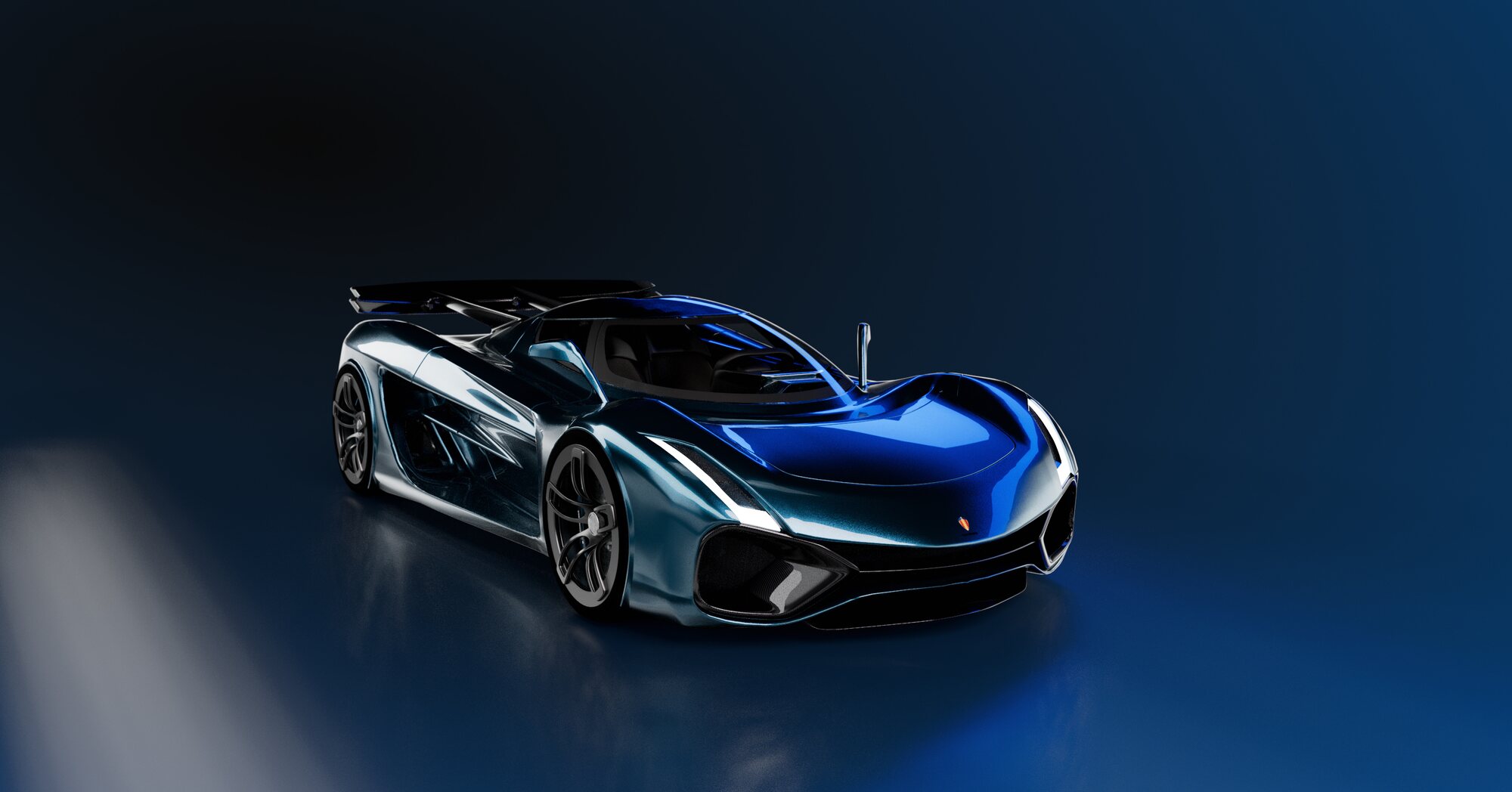
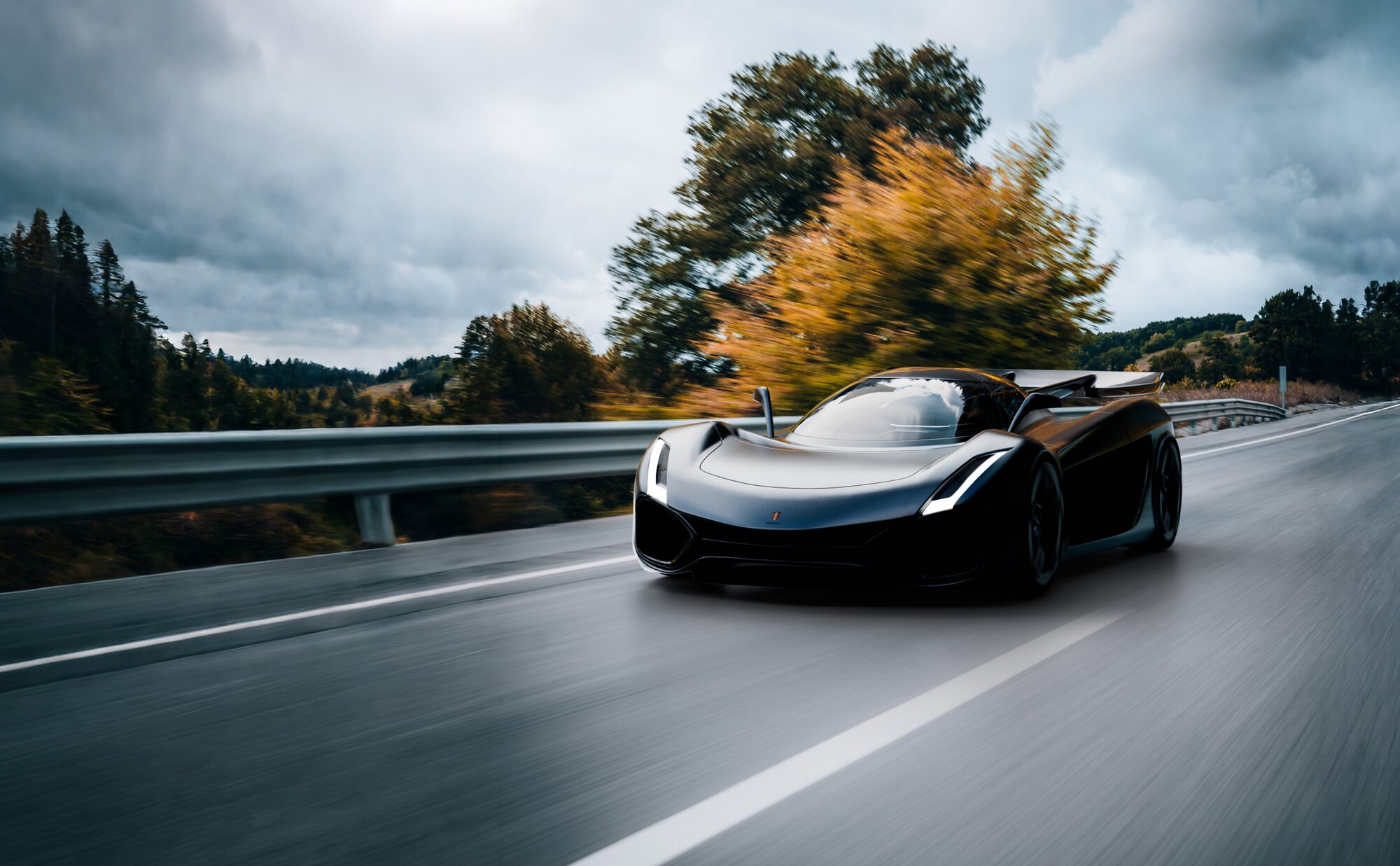
THREE-QUARTER · FRONT
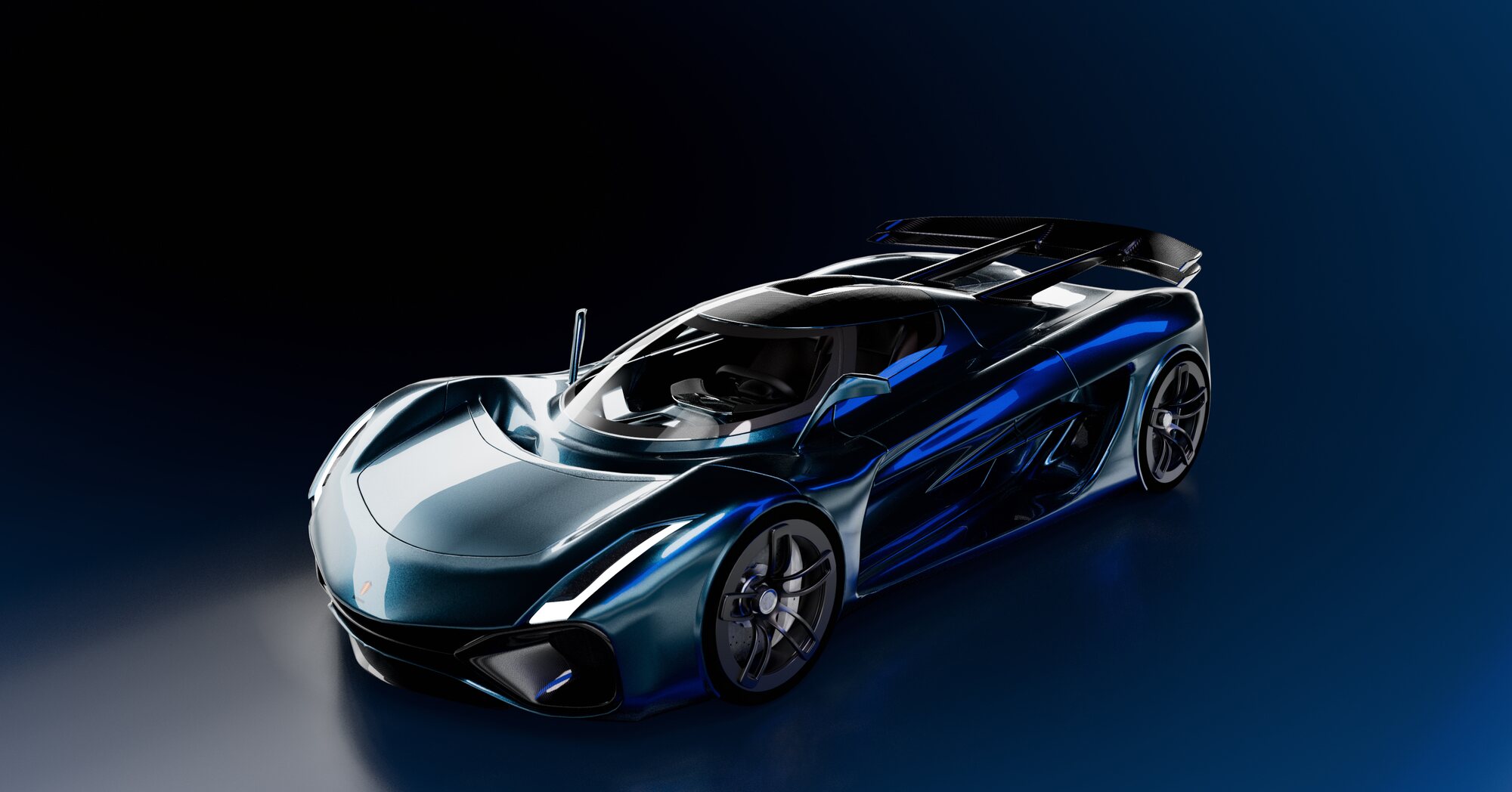
THREE-QUARTER · FRONT · ELEVATED
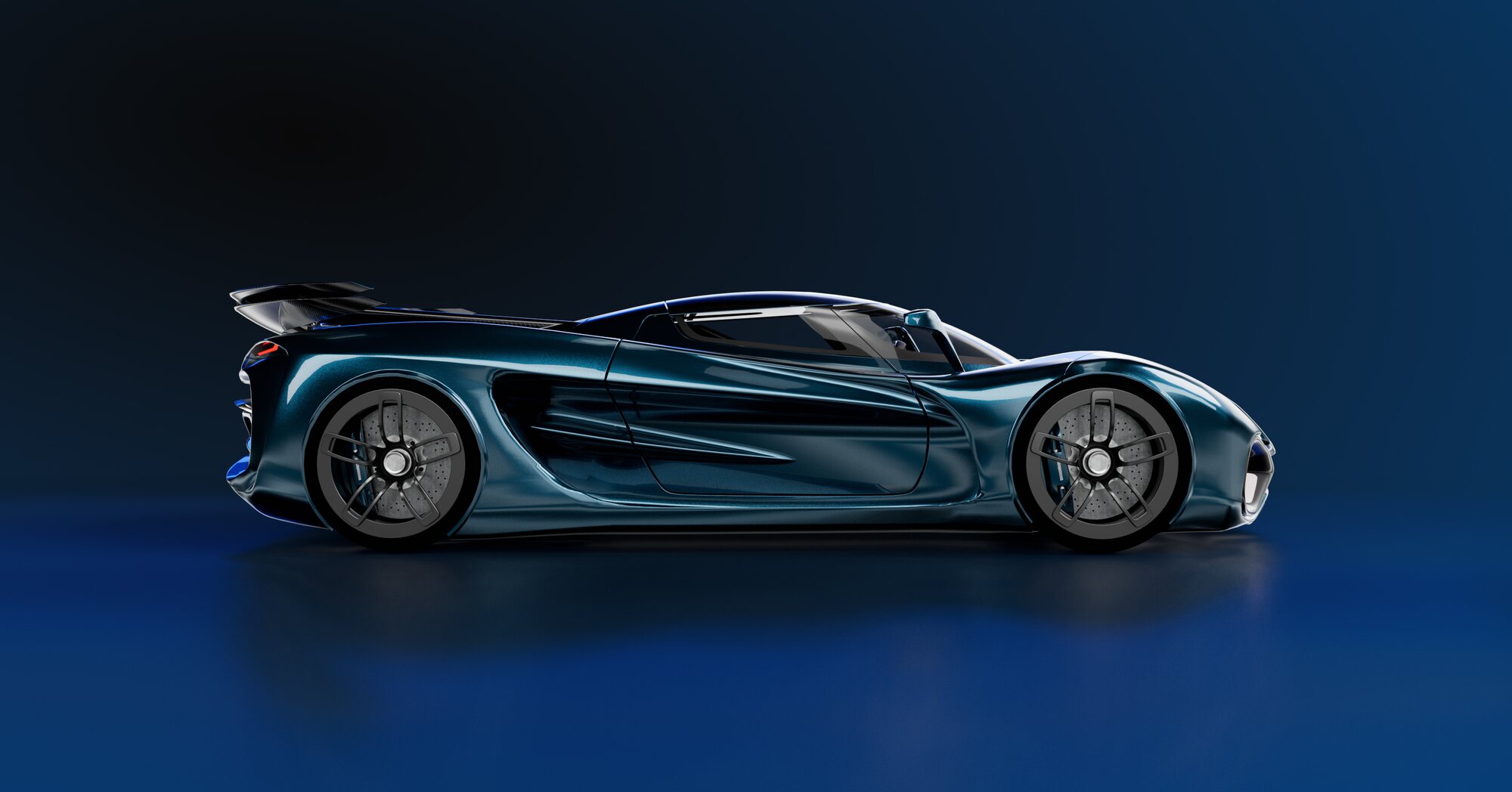
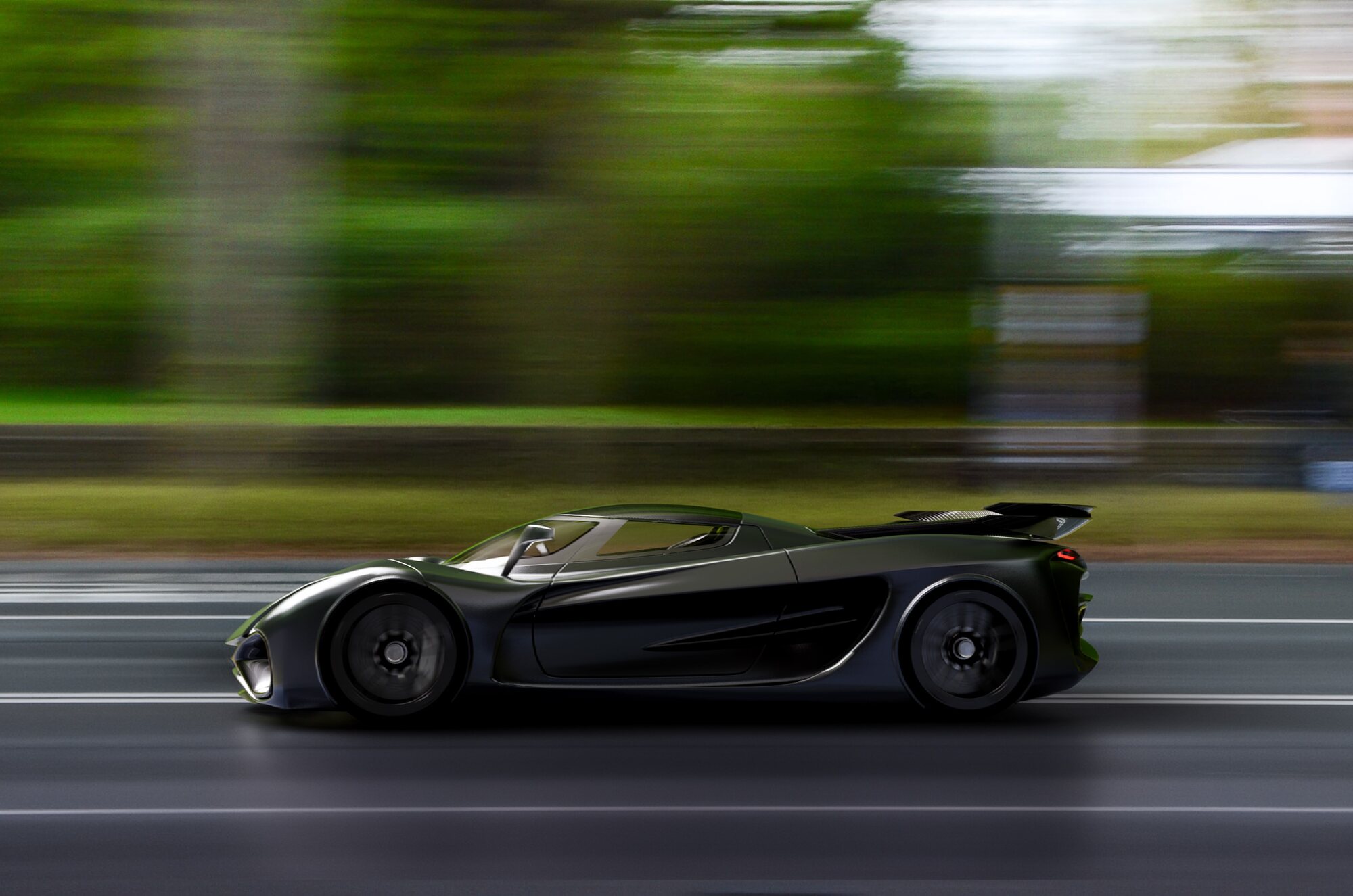
SIDE
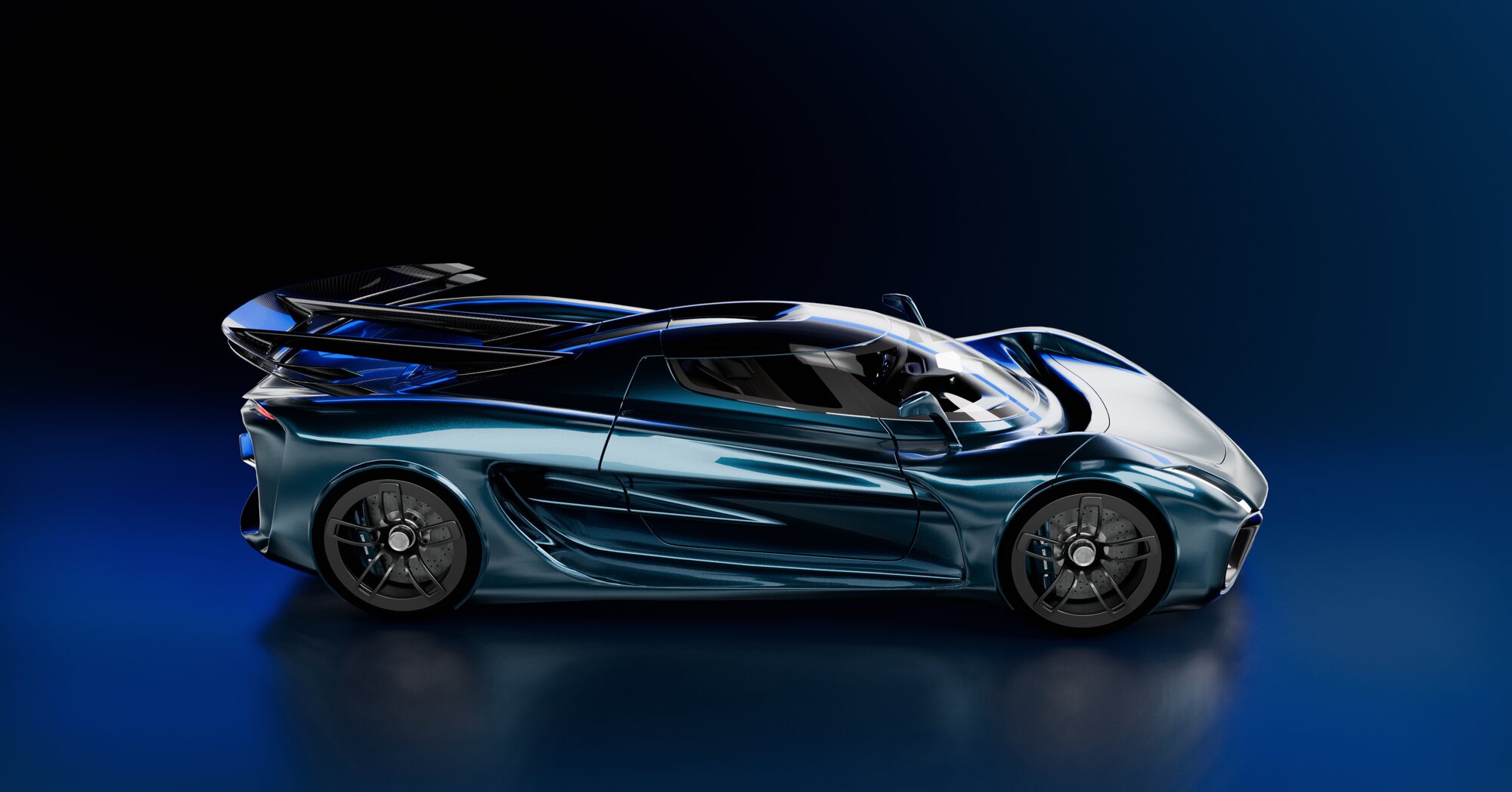
SIDE · ELEVATED
FRONT
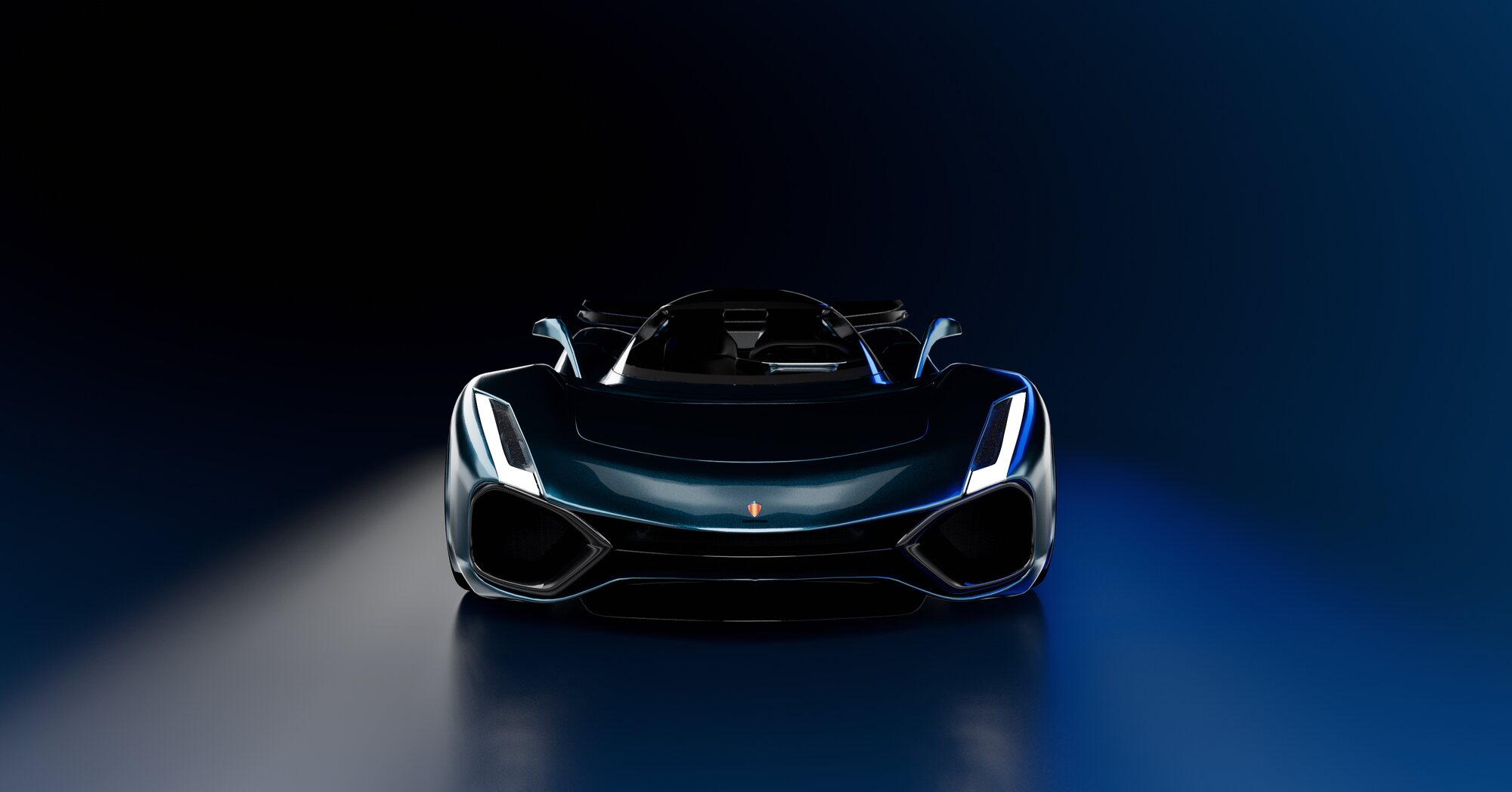
THREE-QUARTER · REAR
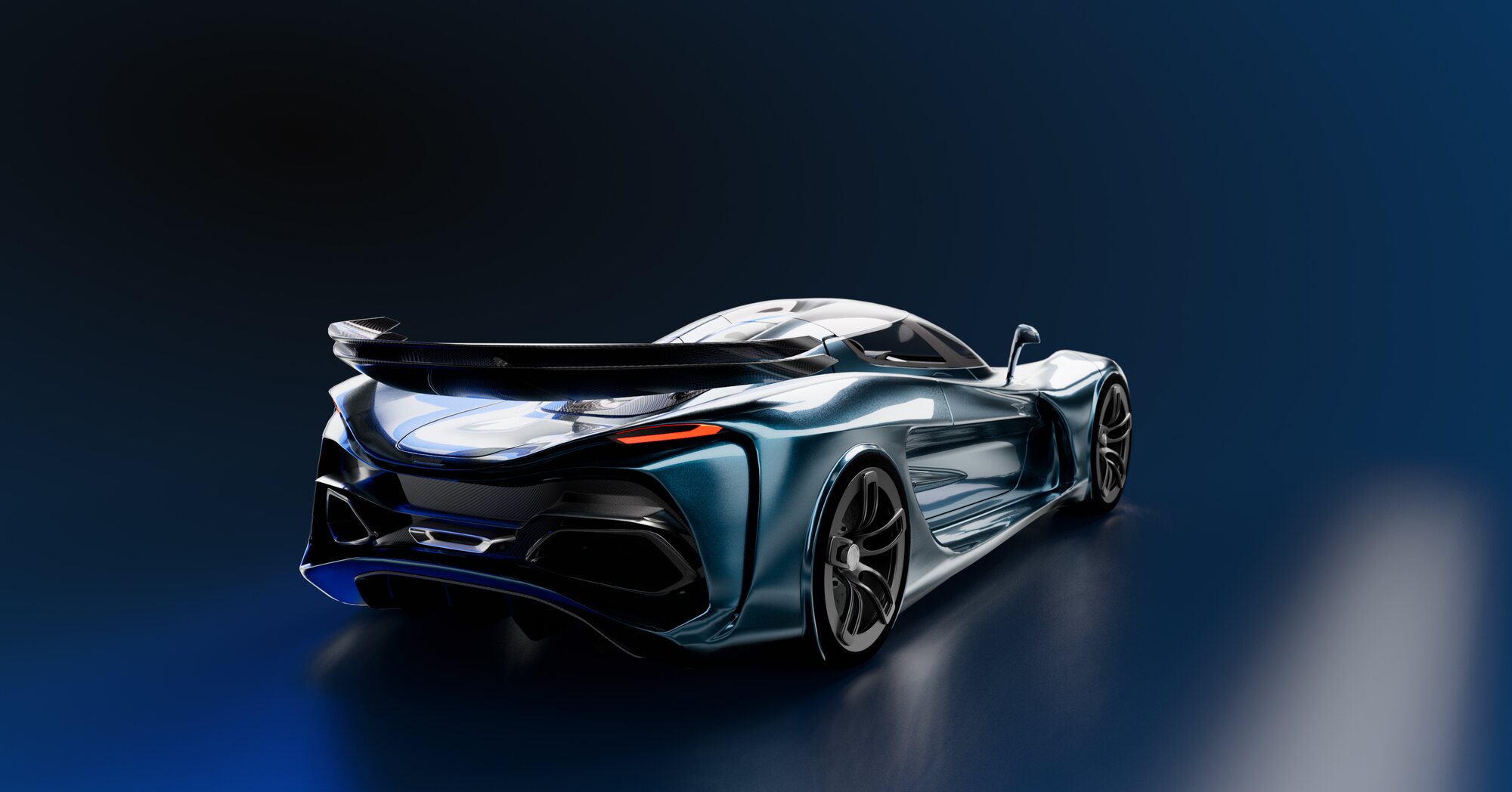
REAR
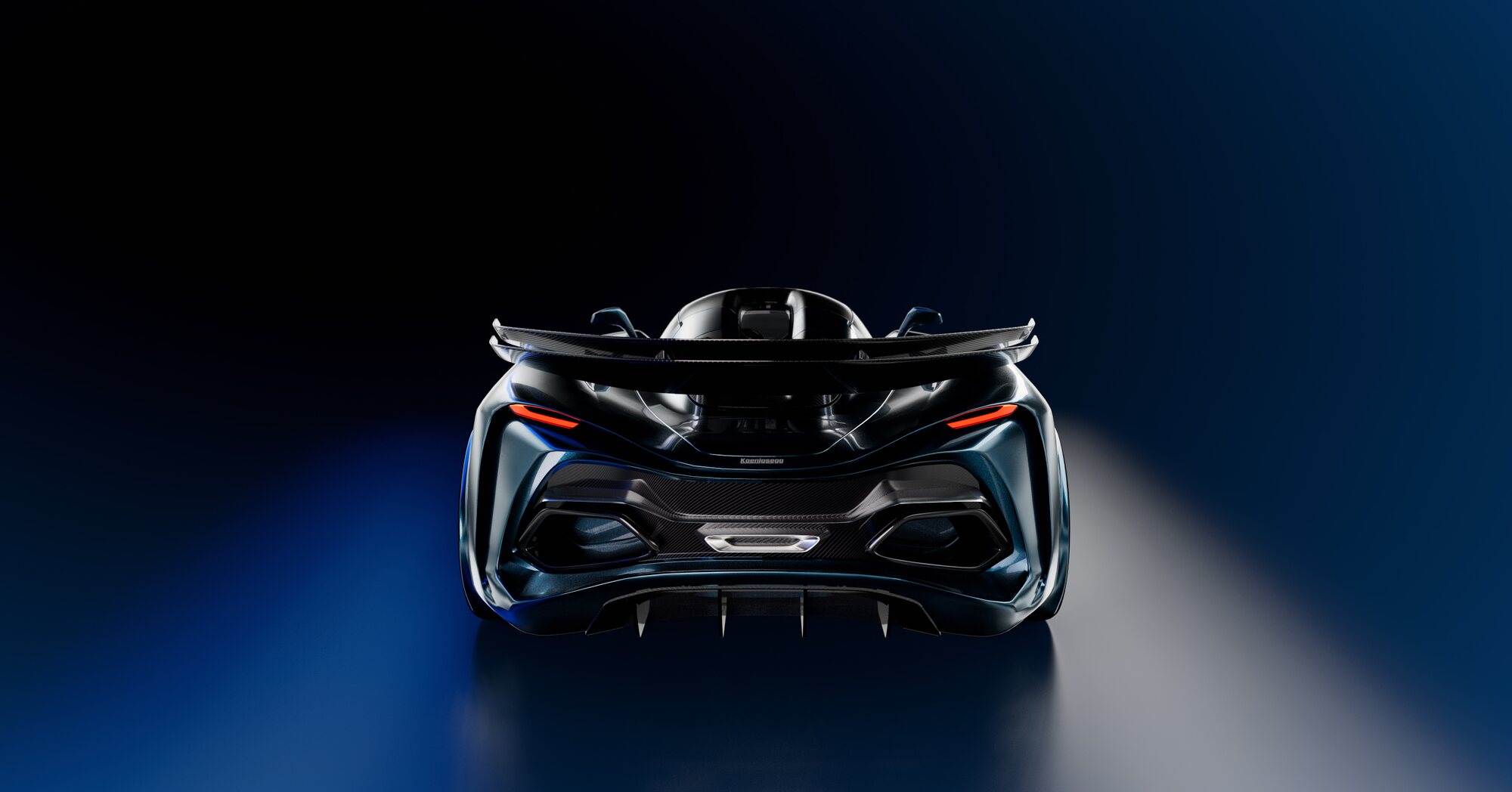
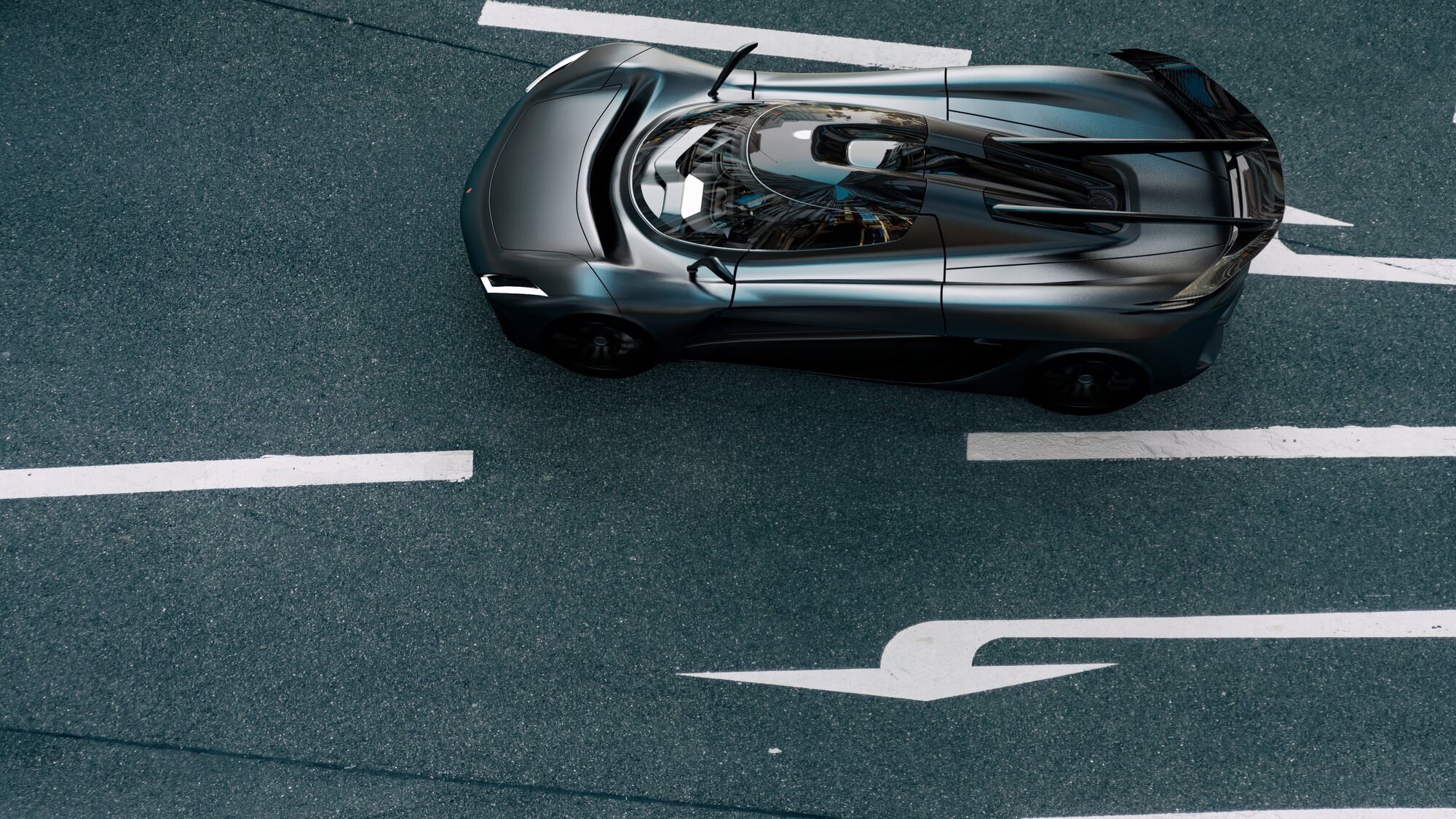
PLAN
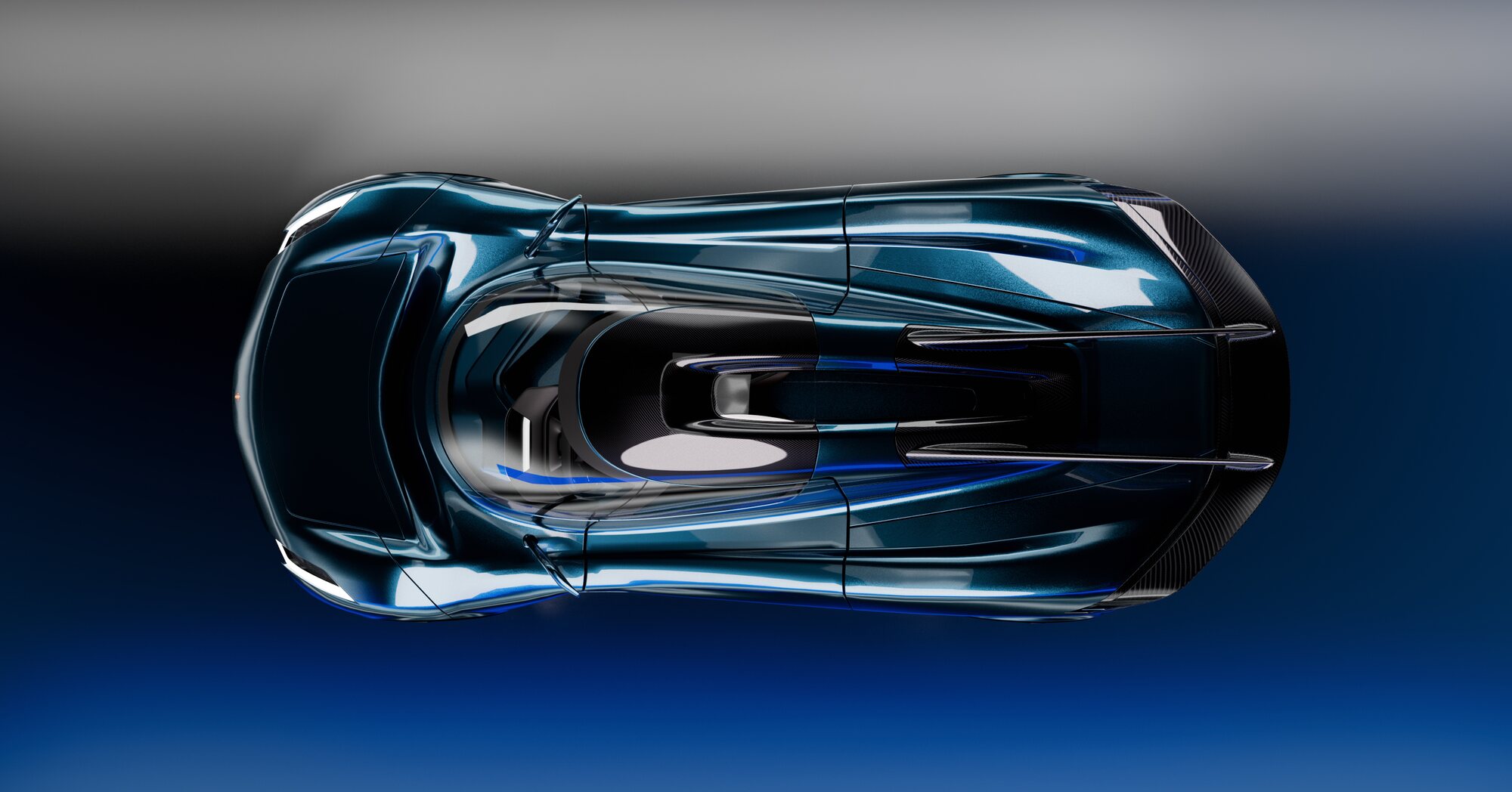
A self-directed hypercar study from 2019 — an open-cabin, single-volume body built around Koenigsegg's own vocabulary: the needle nose, the full-width rear wing on stalks, panel surfaces that read as one continuous reflection.
This one had no brief and no deadline — a personal exercise in 2019 to see how far Koenigsegg's design language could be pushed by hand. No roof, no windscreen frame, a cockpit reduced to two shaped seats behind a low, wraparound screen. The doors open on a dihedral hinge, folding the glasshouse up and out of the way rather than hiding it. Behind the seats the body ends and the structure takes over: a fixed wing carried clear of the deck on twin stalks, exhaust and diffuser left exposed the way Koenigsegg leaves its own mechanicals on show.
The badge on the nose keeps the shield-and-chevron cue without copying it outright, and the surfacing stays close to what the brand actually builds — a single reflective volume with almost no interruption between the front fascia and the rear haunch, so the car reads as one gesture rather than a collection of panels.
Three settings tested the shape under different conditions: a moody studio pass for pure surface and colour, a mountain road for the matte finishes, and a fast circuit corner for what the body does at speed and under camera pan-blur.
Full orthographic coverage plus the elevated three-quarters that sell the proportion: a long, low nose, cabin pushed back over the rear axle, and a tail that stops short to leave the wing and diffuser in the open.
A short cinematic pass — the surfacing is easier to trust once light is moving across it.
Matte black on a wet mountain descent, matte olive on the same kind of road in better light, and gunmetal silver taken hard through a fast, camber-marked circuit corner — three checks on how the shape reads once it stops standing still.
Exterior design and cinematic CGI for automotive and hypercar programmes. Send a brief and we’ll come back within two working days.
Request a quote