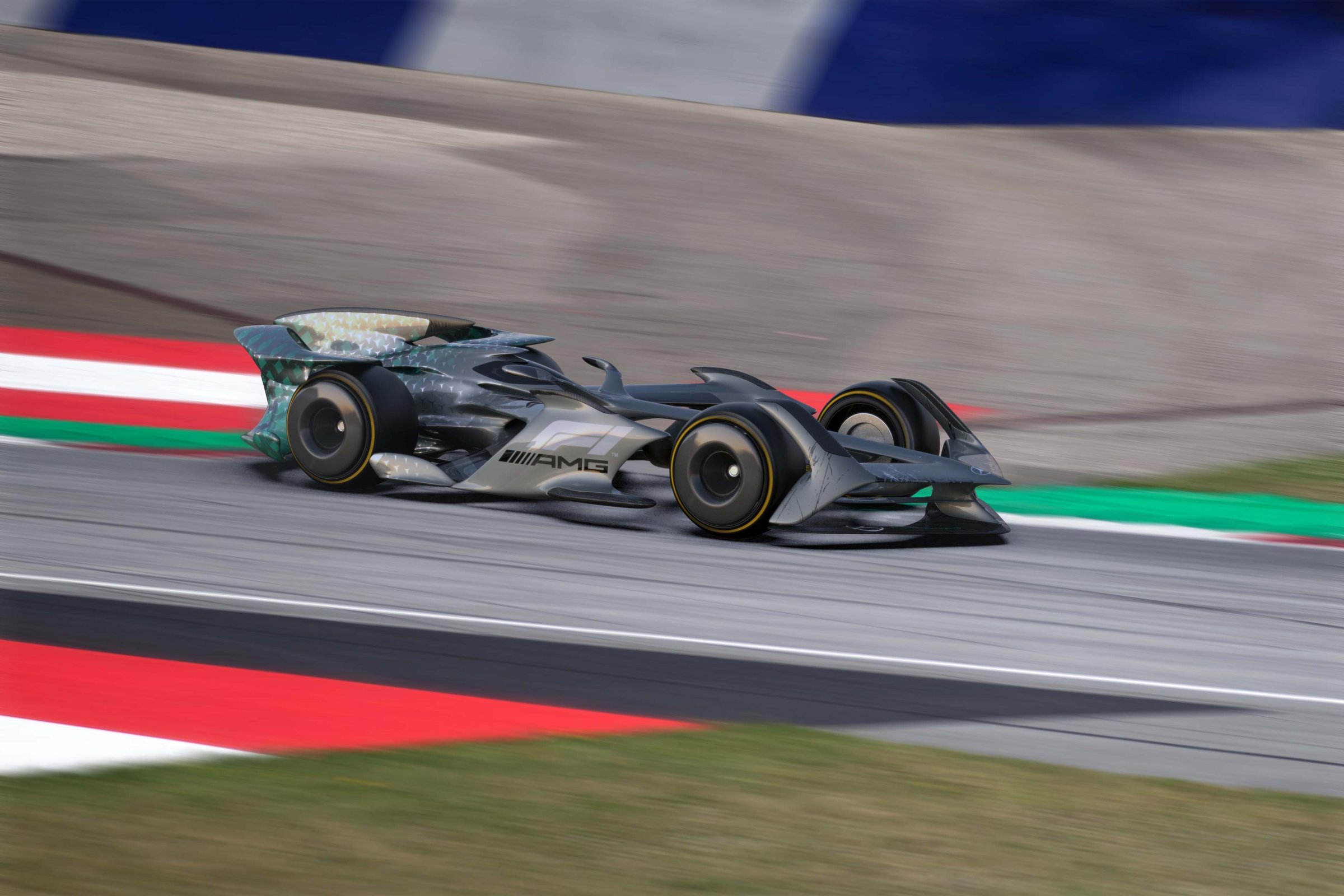
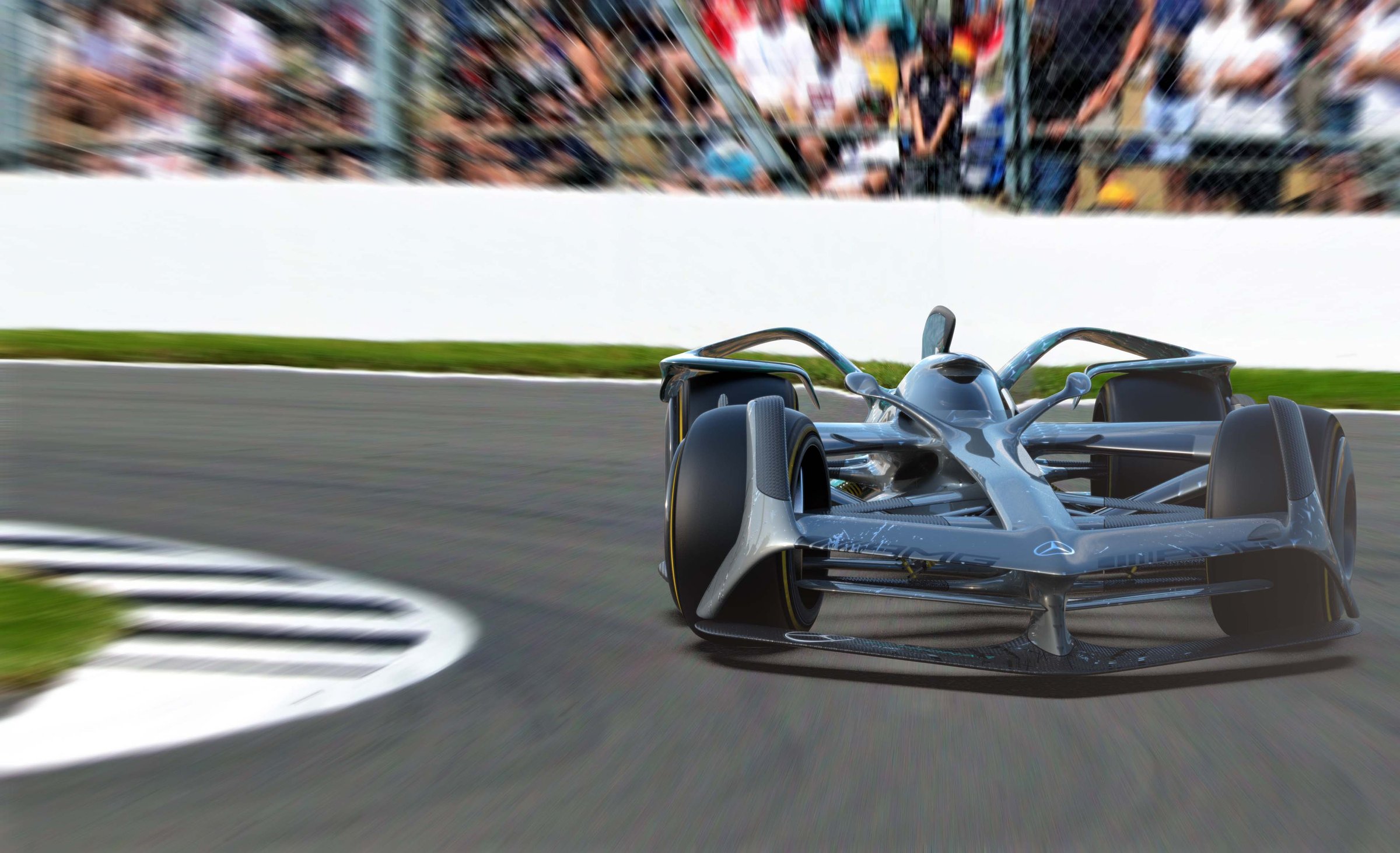
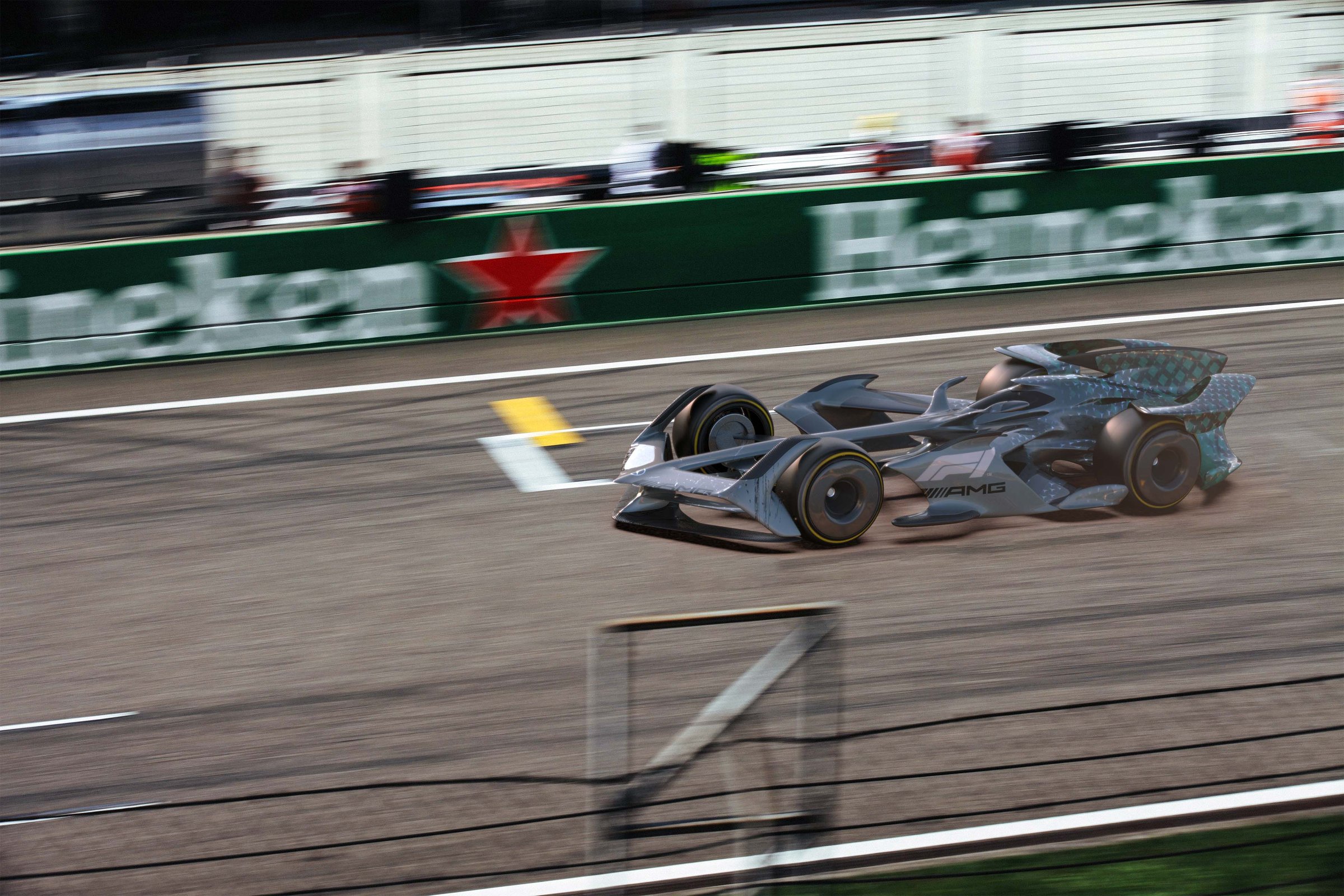
A future Formula 1 single-seater for Mercedes-AMG Petronas — a sculptural exoskeleton of aero arms bridging the wheels, a part-enclosed cockpit, and the Silver Arrow in full team livery. Modelled in Rhinoceros, rendered in Light Tracer and brought to motion in Unreal Engine.
This is a personal vision of where a Formula 1 car could go — the open-wheel single-seater rethought as a sculptural exoskeleton. Instead of slab wings, slender carbon arms arch over and between the wheels, tying the front and rear axles together into one continuous aero structure and leaving the suspension and floor dramatically exposed.
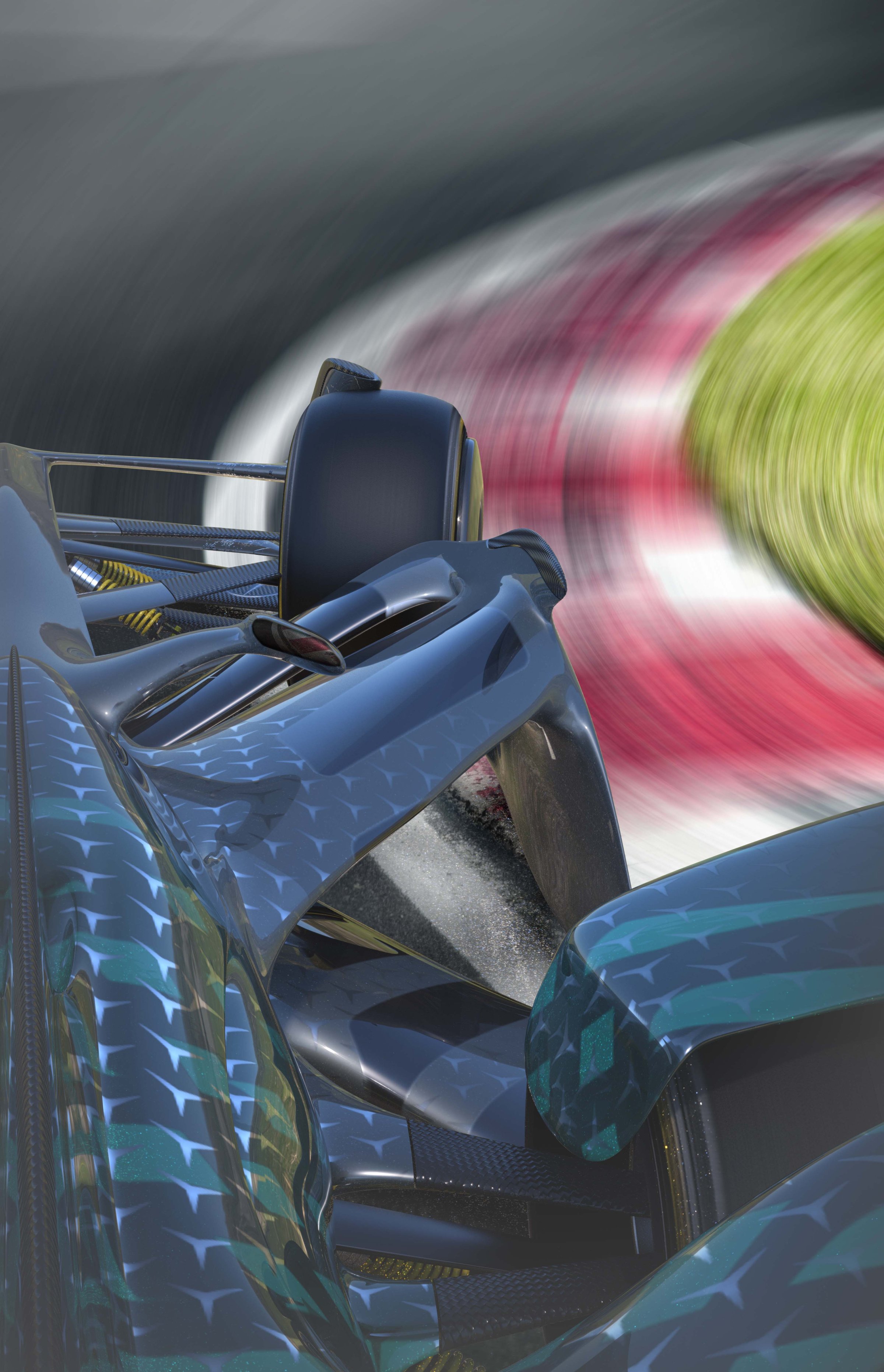
The cockpit is pulled into a part-enclosed teardrop that flows back into a spined engine cover, while an iridescent dragon-scale graphic runs across the upper surfaces. It wears the Silver Arrow with confidence: brushed Petronas silver, green and yellow accents, the three-pointed star on the nose, and AMG · F1 · Pirelli marks across the body.
Modelled in Rhinoceros — NURBS for the hard aero blades and shutlines, SubD for the organic cockpit-to-spine transitions — with hero stills path-traced in Light Tracer Render and composited into real circuit backplates. The motion piece was built as a cinematic in Unreal Engine.
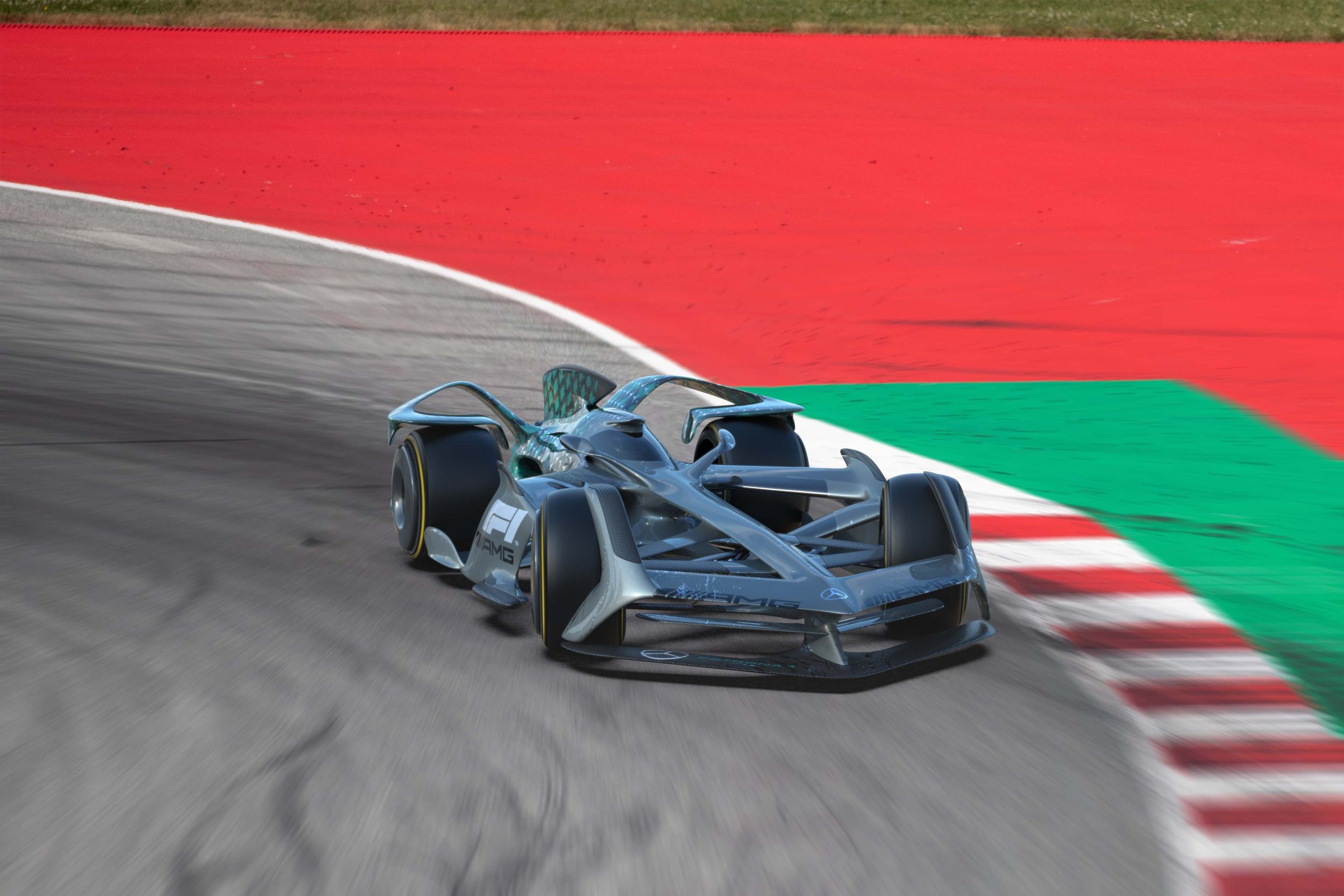
The car was dropped into real circuit backplates — kerbs, grandstands and grass — and shot with long, panned exposures to test how the exoskeleton reads in motion. Light catches the arched aero arms differently at every angle, which is exactly where a structure this exposed has to earn its keep.
Motion lives in Unreal. The same Rhino geometry and materials behind the stills were pushed into a real-time scene, where camera moves, lighting and atmospherics could be iterated in seconds — the concept lapping a circuit rather than sitting on a page.
Rhinoceros — the entire car was built here, from proportion blocking through to a resolved surface package. NURBS handled the hard aero blades and shutlines; SubD handled the sculptural cockpit and engine-cover spine.
Light Tracer Render — the hero stills were path-traced straight from the Rhino model, then composited into real circuit backplates and panned to sit convincingly in motion.
Unreal Engine — the same geometry and materials drove a real-time cinematic, so the concept could be seen lapping and lit in a believable, in-the-world setting.
If you're developing a racing programme, motorsport livery or a future-vehicle concept — let's talk. Send a brief and we'll come back within two working days.
Request a quote