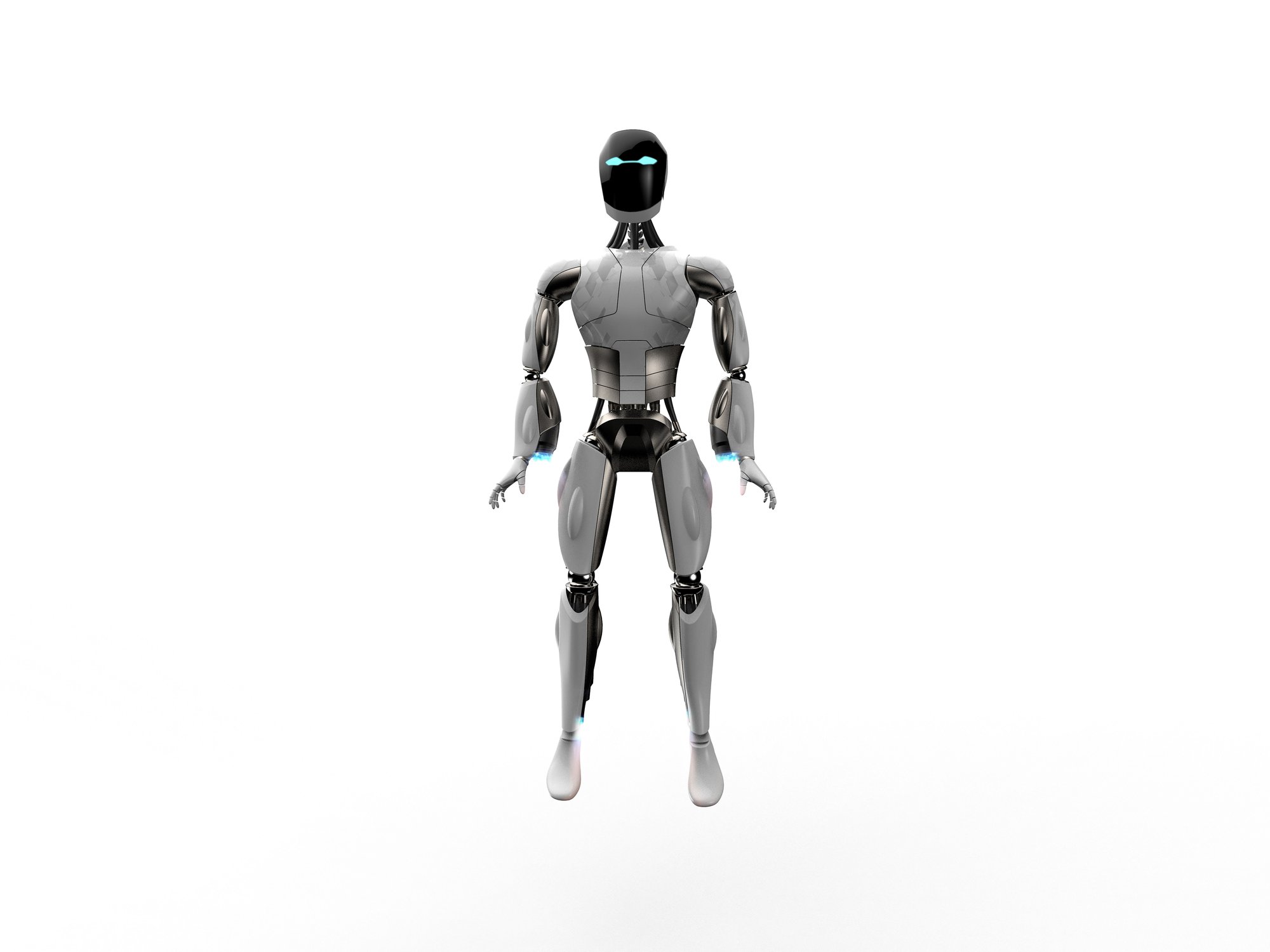
FIGURE · FRONT
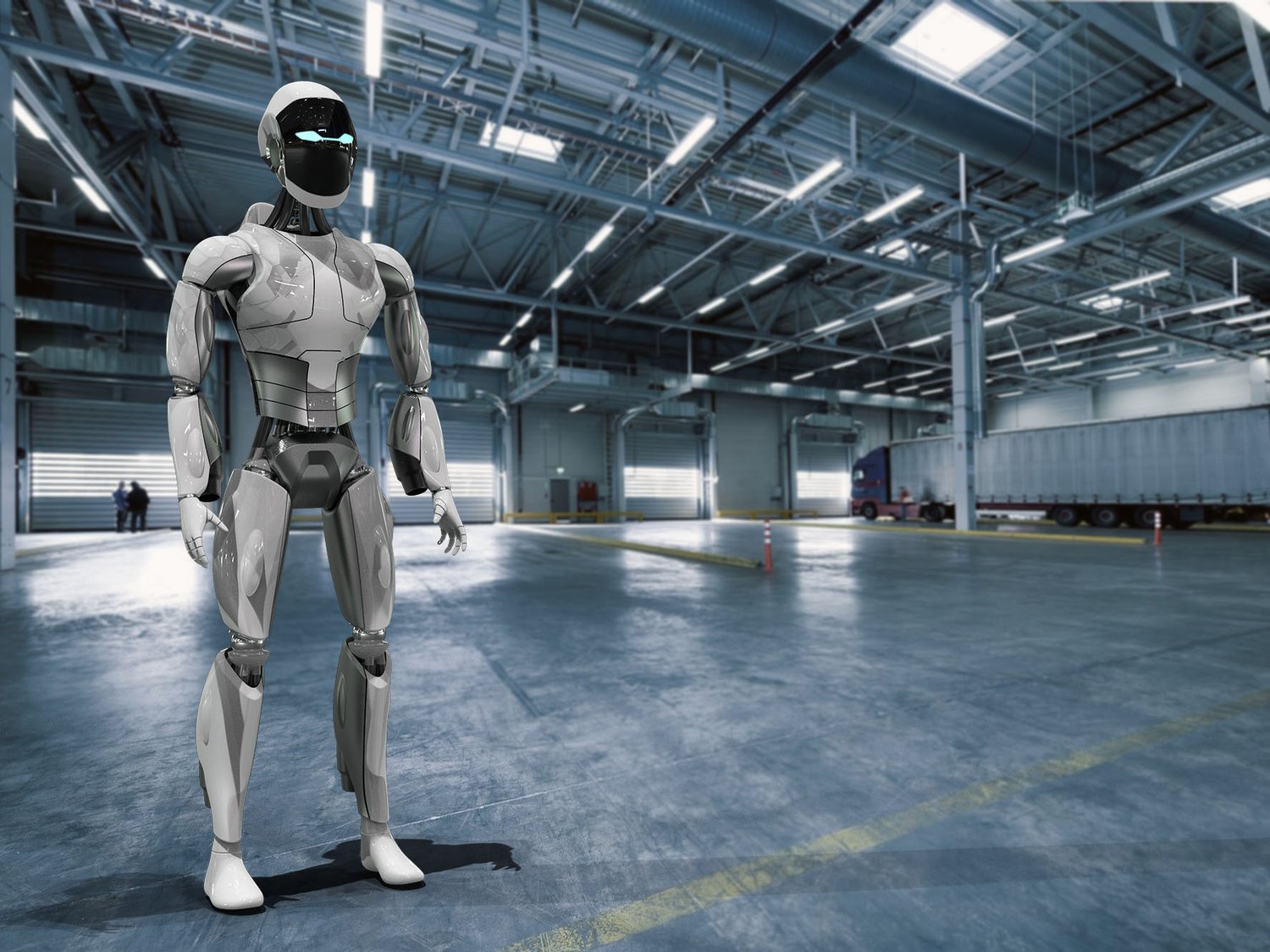
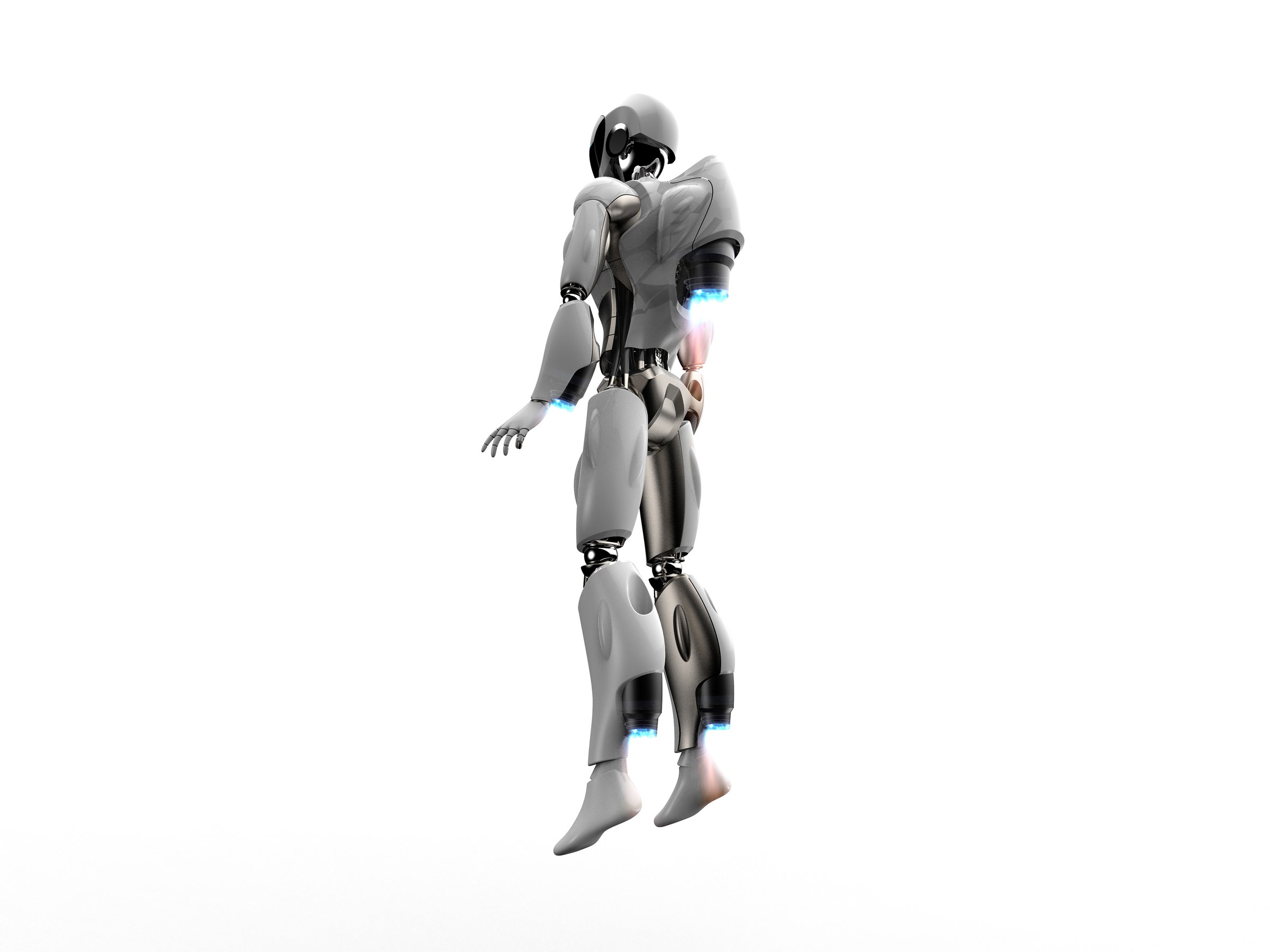
FIGURE · THREE-QUARTER
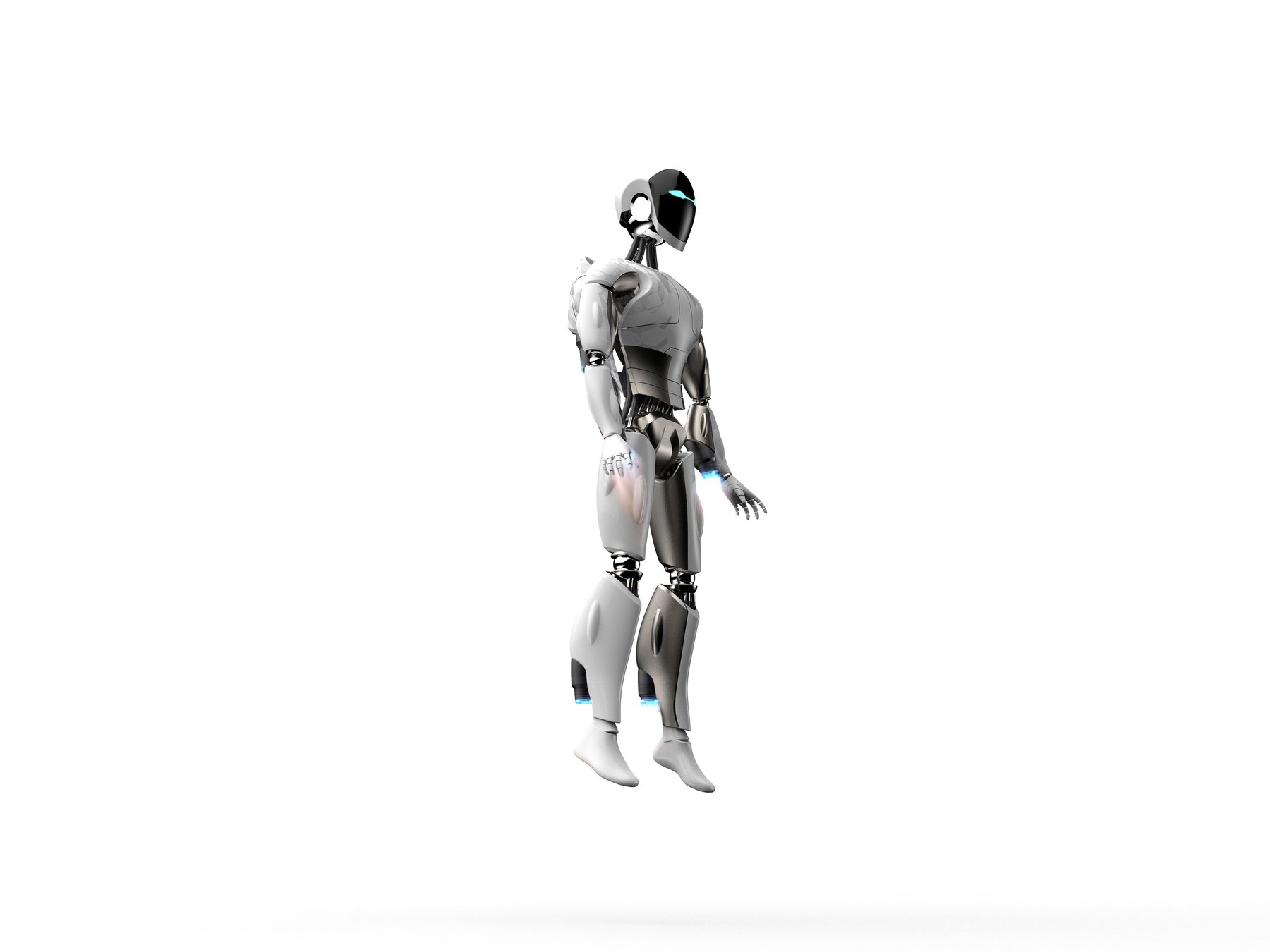
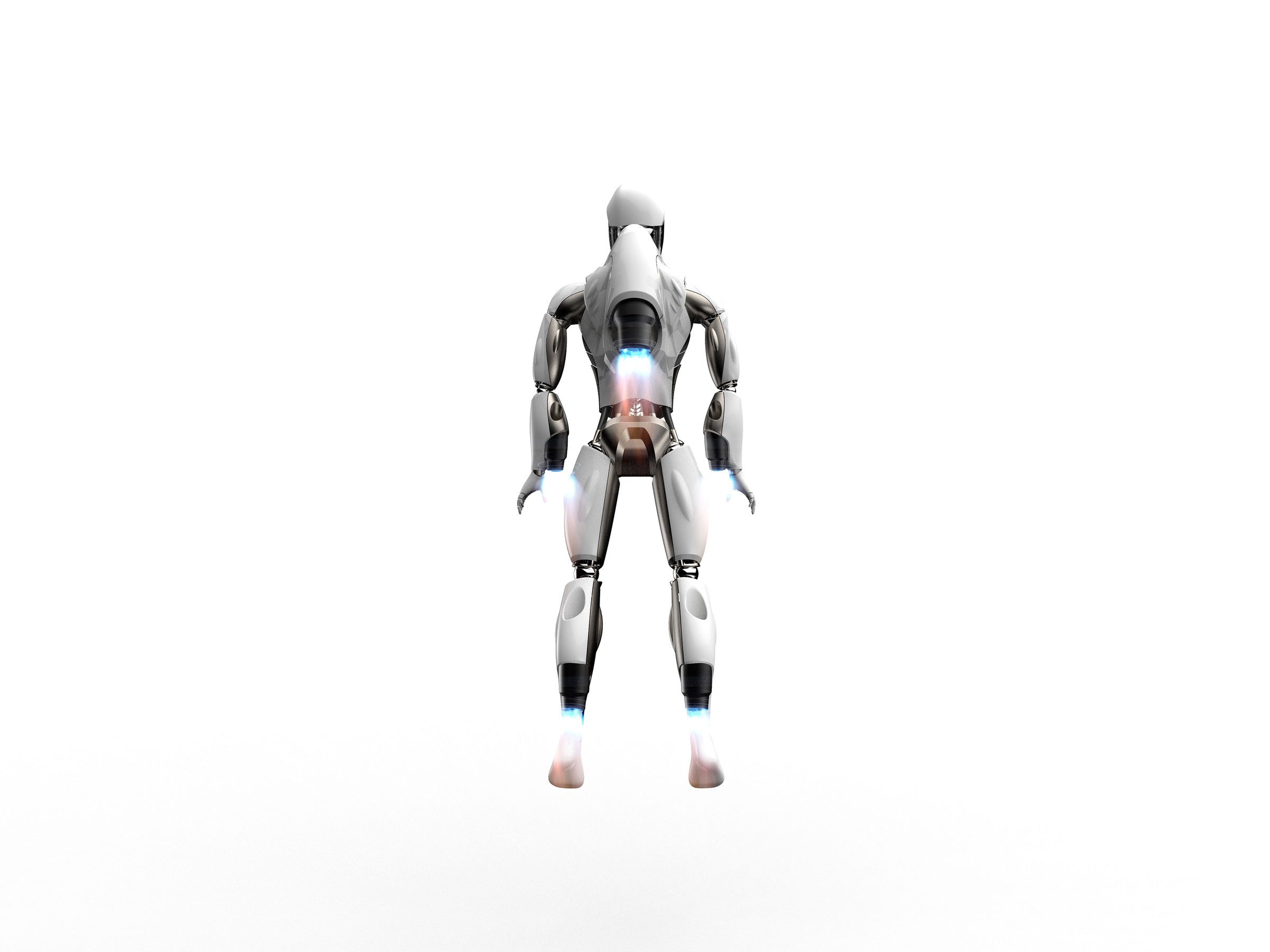
FIGURE · REAR QUARTER
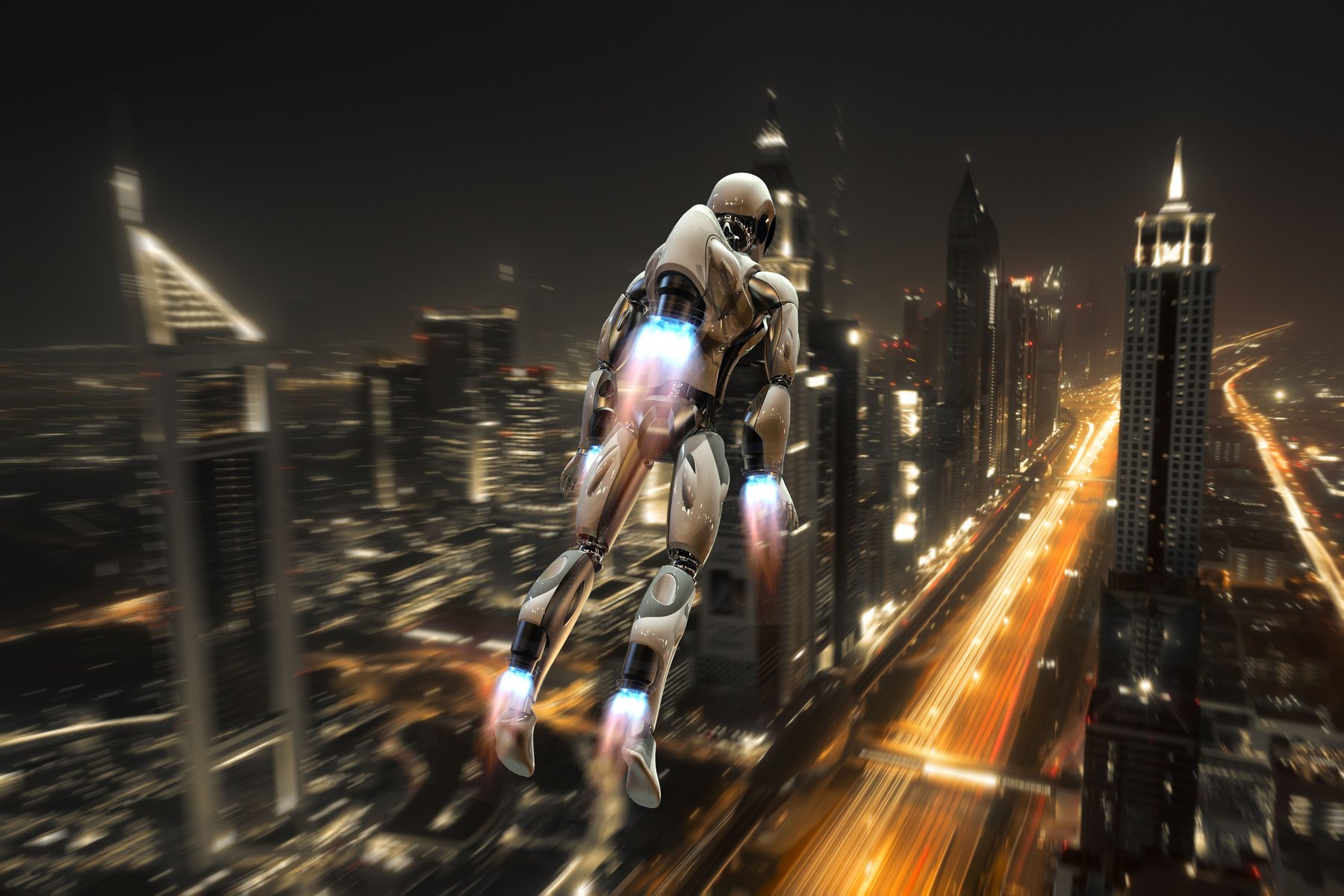
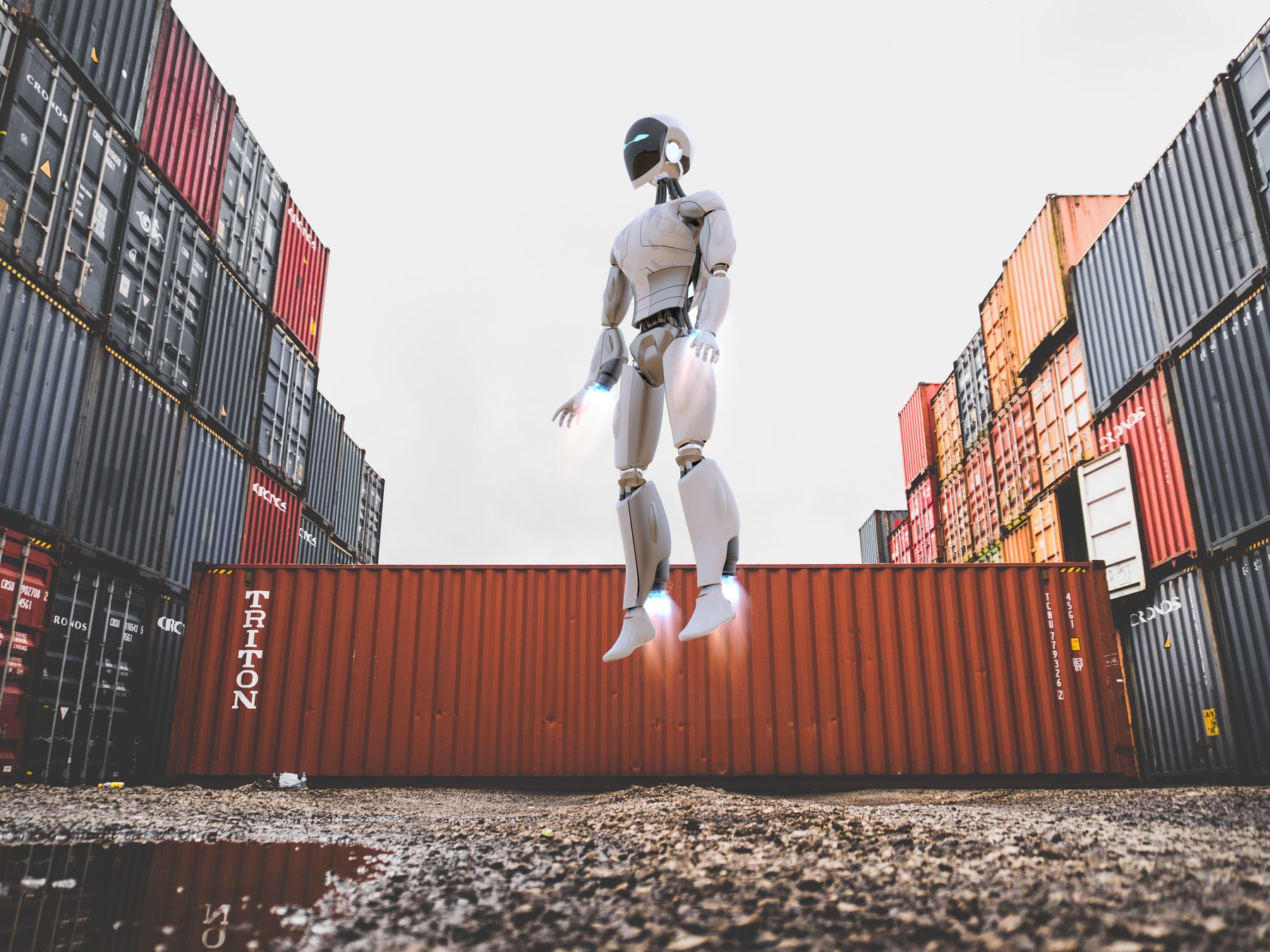
FIGURE · THRUST
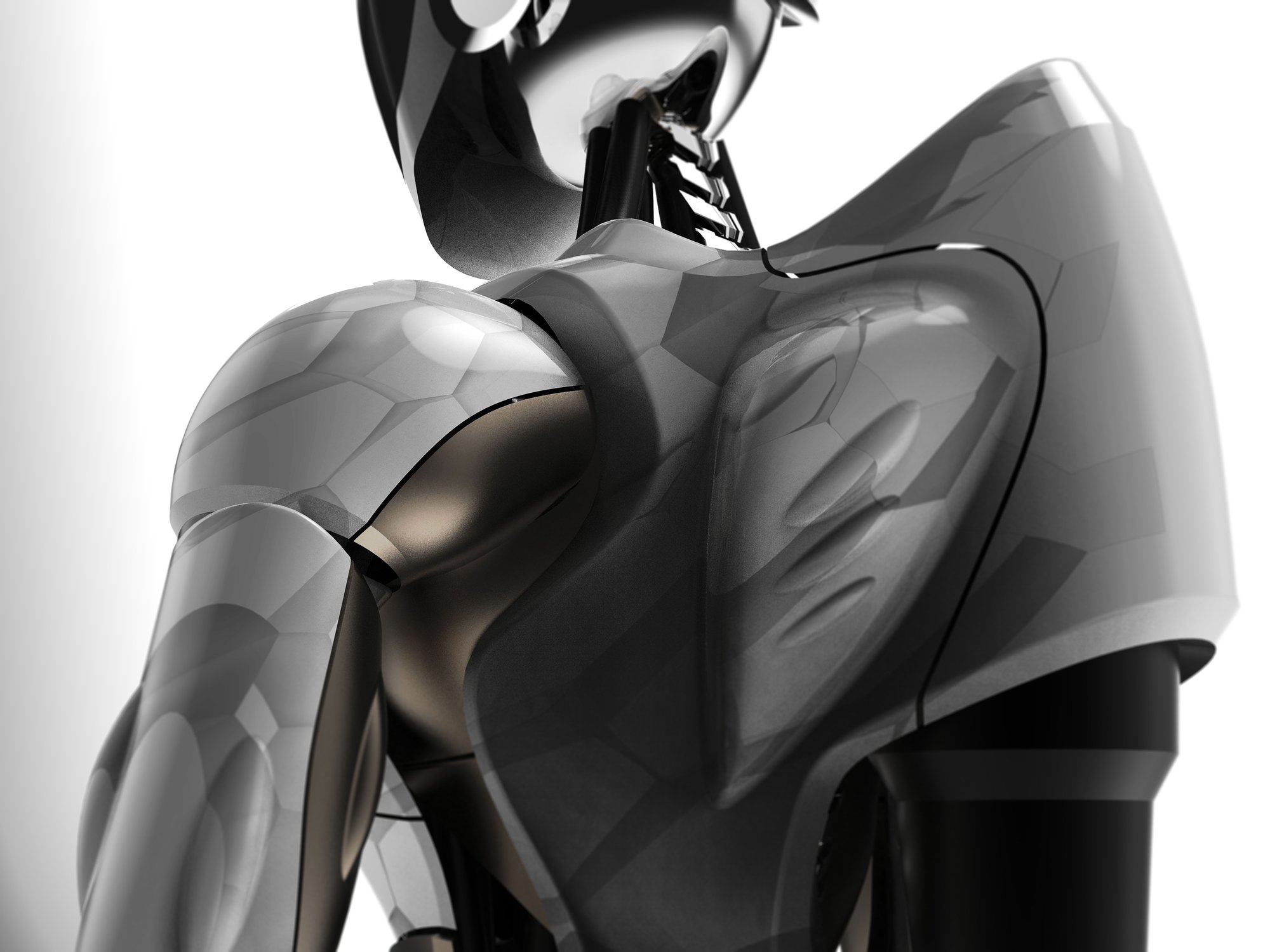
DETAIL · SHOULDER
A jet-assisted humanoid for the ICAO concept programme — a walking machine with thrusters at the forearms, hips and calves, so that the obstacle it cannot step over becomes something it simply flies past.
A humanoid robot is a compromise built for one reason: the world is already shaped for humans. Doors, ladders, aisles, cab controls — a machine with our proportions inherits all of it for free. What it also inherits is our limit. It cannot cross a gap, clear a wall, or reach a fourth-floor window.
Rocketbot keeps the humanoid contract and adds a second mode. Thrusters sit at the forearms, hips and calves — not one big engine, but small units distributed around the body, in the places a body already uses to balance. The same limbs that walk become the control surfaces: to change direction, the machine changes its posture, exactly as a skydiver does.
The design work is the form language. Ceramic-white armour panels over a dark structural core, split along the lines the body actually articulates on, so the shell reads as protection rather than as a costume. Every panel edge is a joint, a vent, or a nozzle. The head is a single visored volume — deliberately not a face.
Studio frames — the machine read in the round against a neutral ground, and one close pass over the shoulder and chest surfacing.
Three scenarios — the machine put back into the environments the concept was argued for.
Humanoid and service robotics — form language, surfacing and cinematic visualisation. Send a brief and we’ll come back within two working days.
Request a quote