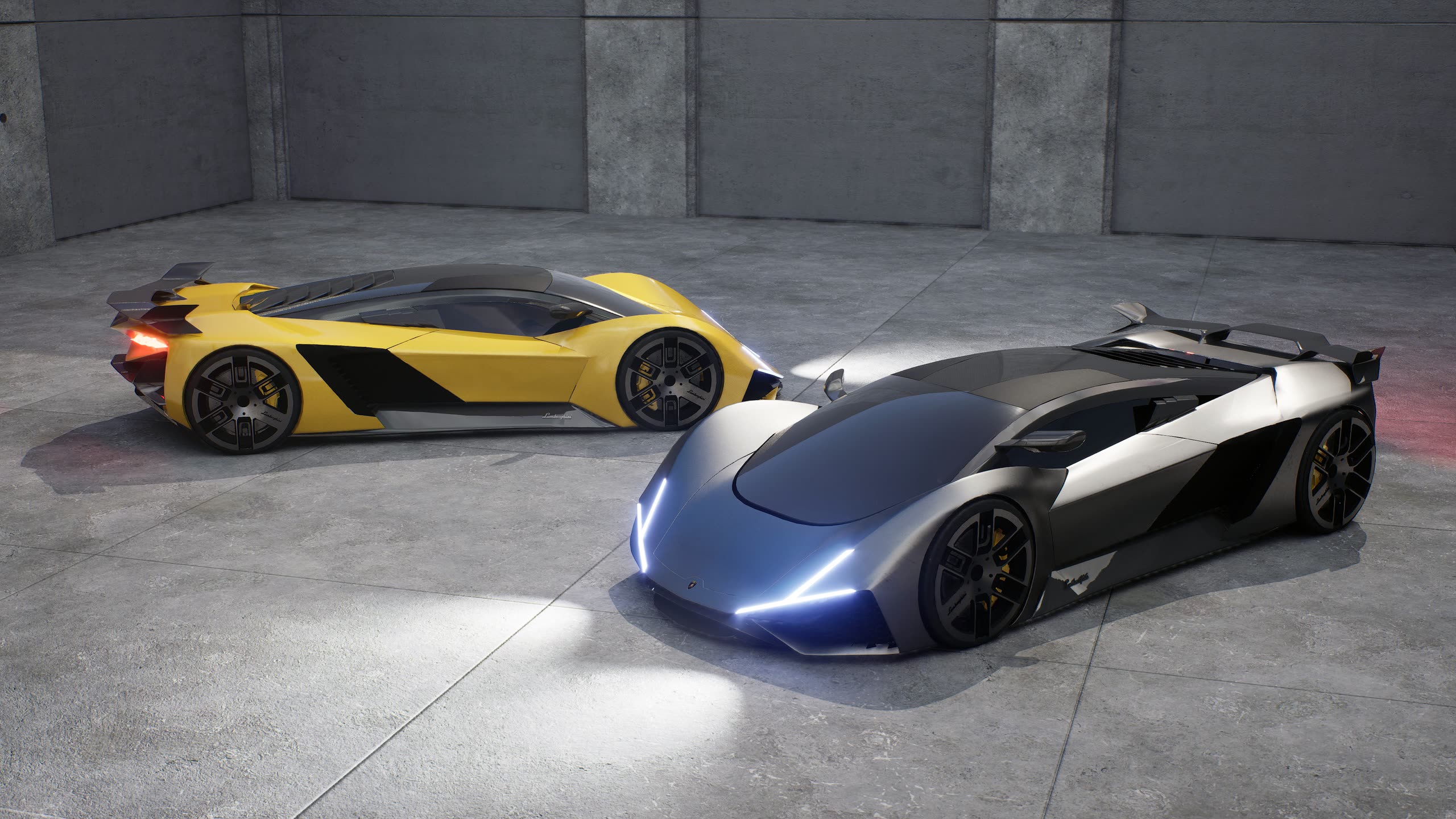
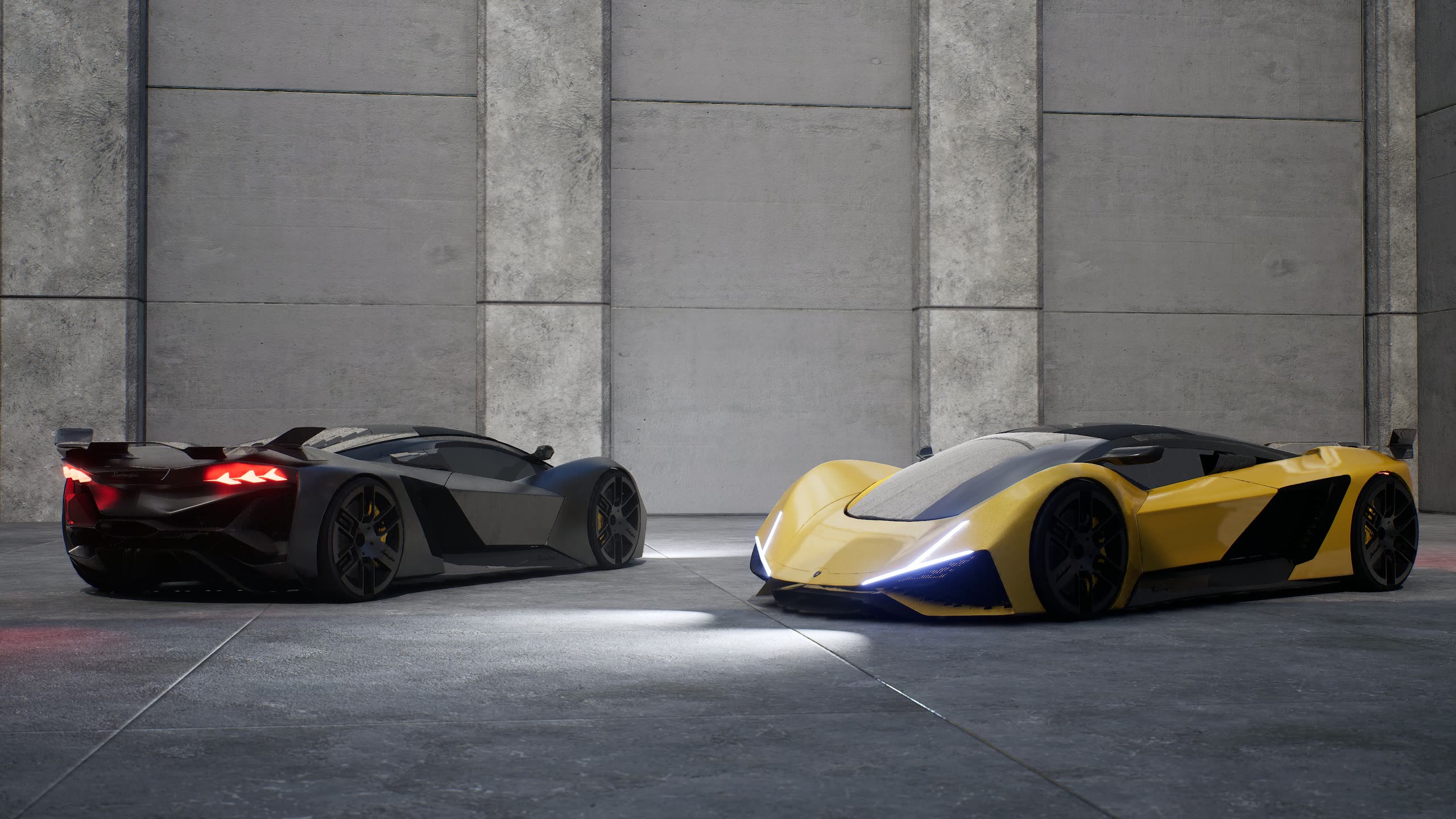
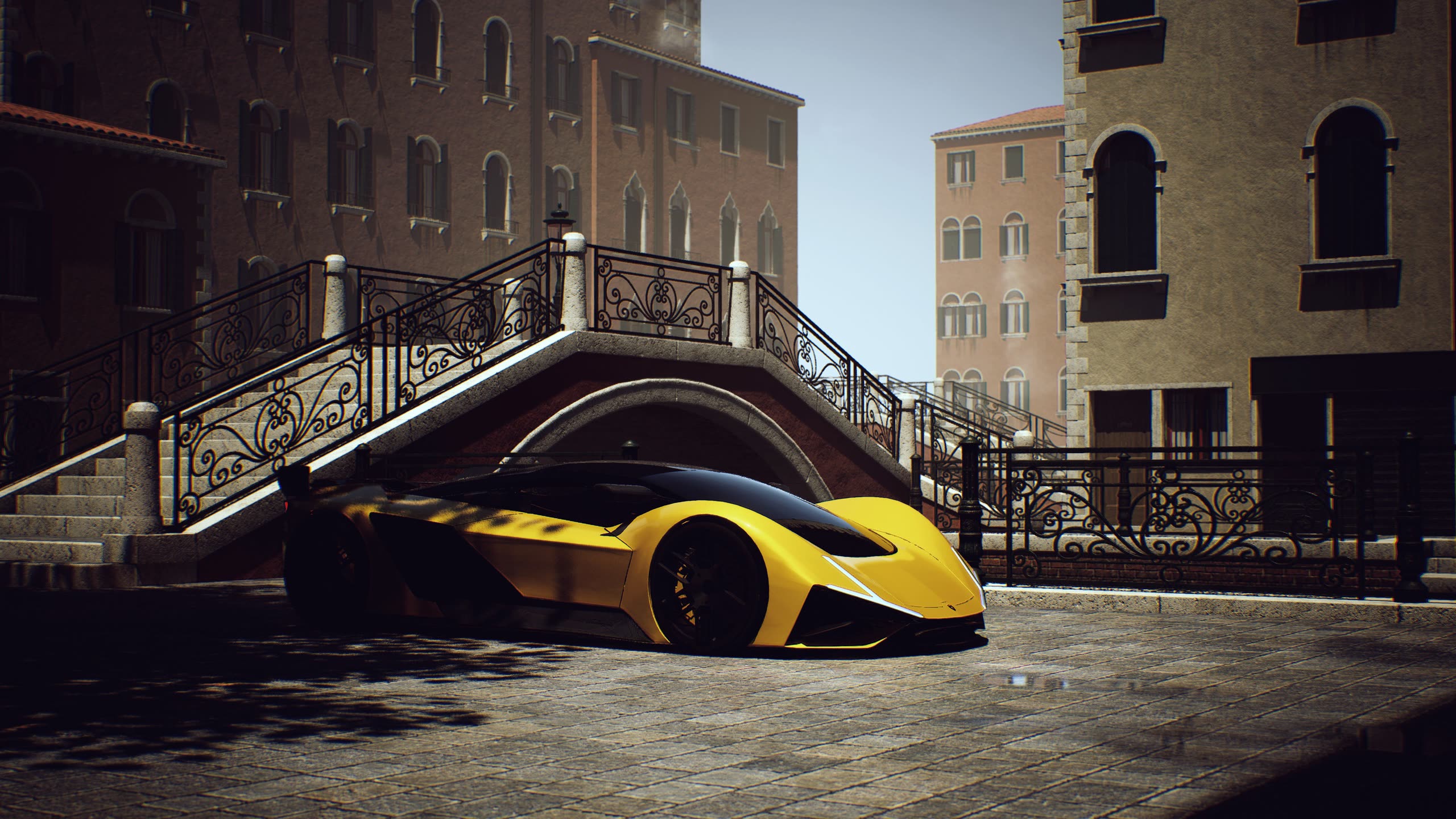
A hypercar concept exploring the next chapter of Sant'Agata's design language — sculpted in Rhinoceros, lit in Light Tracer Render, and brought into motion through Unreal Engine.
Sfumato — Italian for the painter's technique of blurring the boundary between forms — is a personal exploration of where Lamborghini's hard-edged design language might go next. The brief was self-imposed: keep the unmistakable wedge silhouette and the aggressive front signature, but let the surfaces breathe. Trade some of the origami creases for taut, sculpted volumes that resolve into one another rather than crashing.
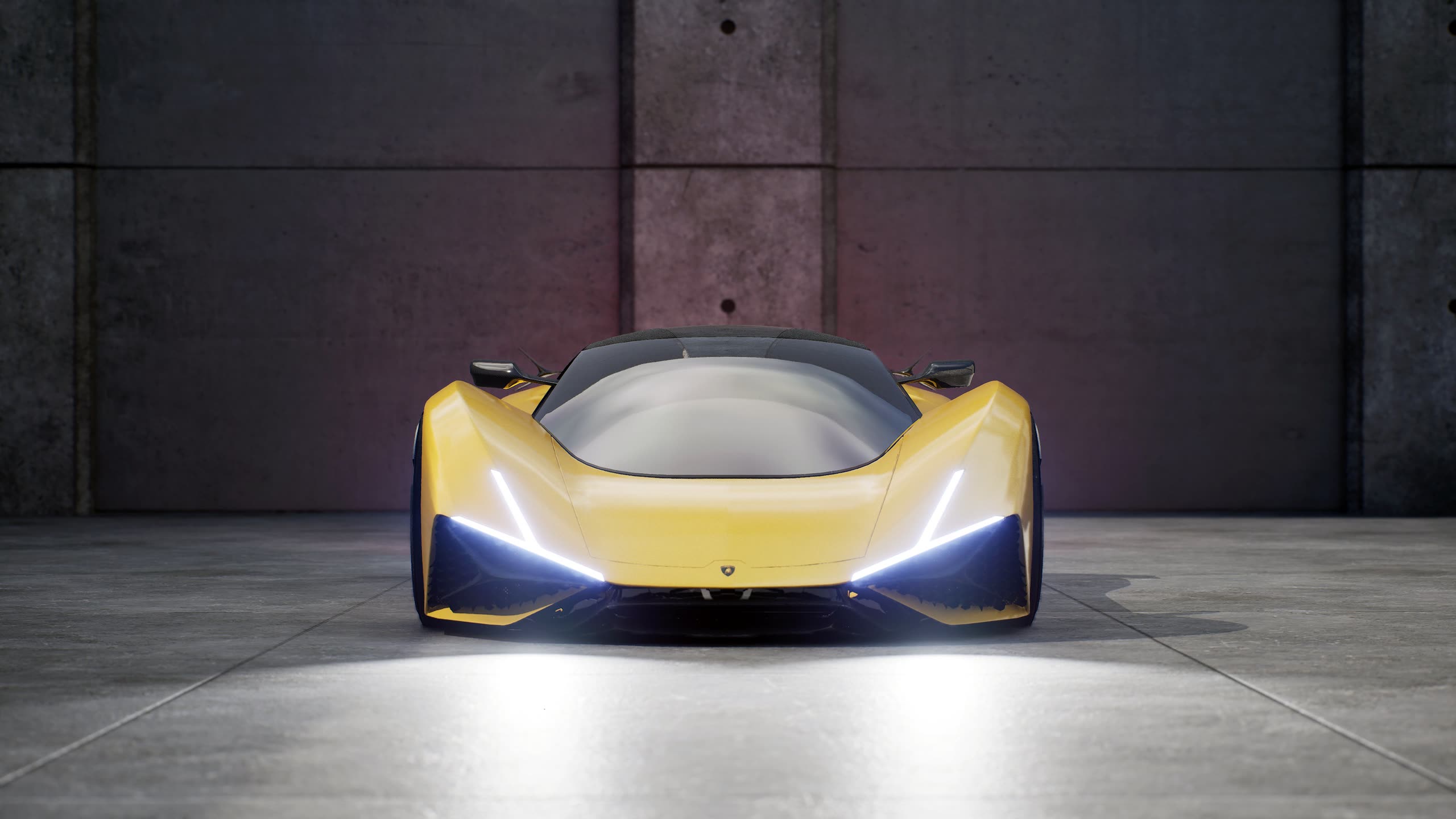
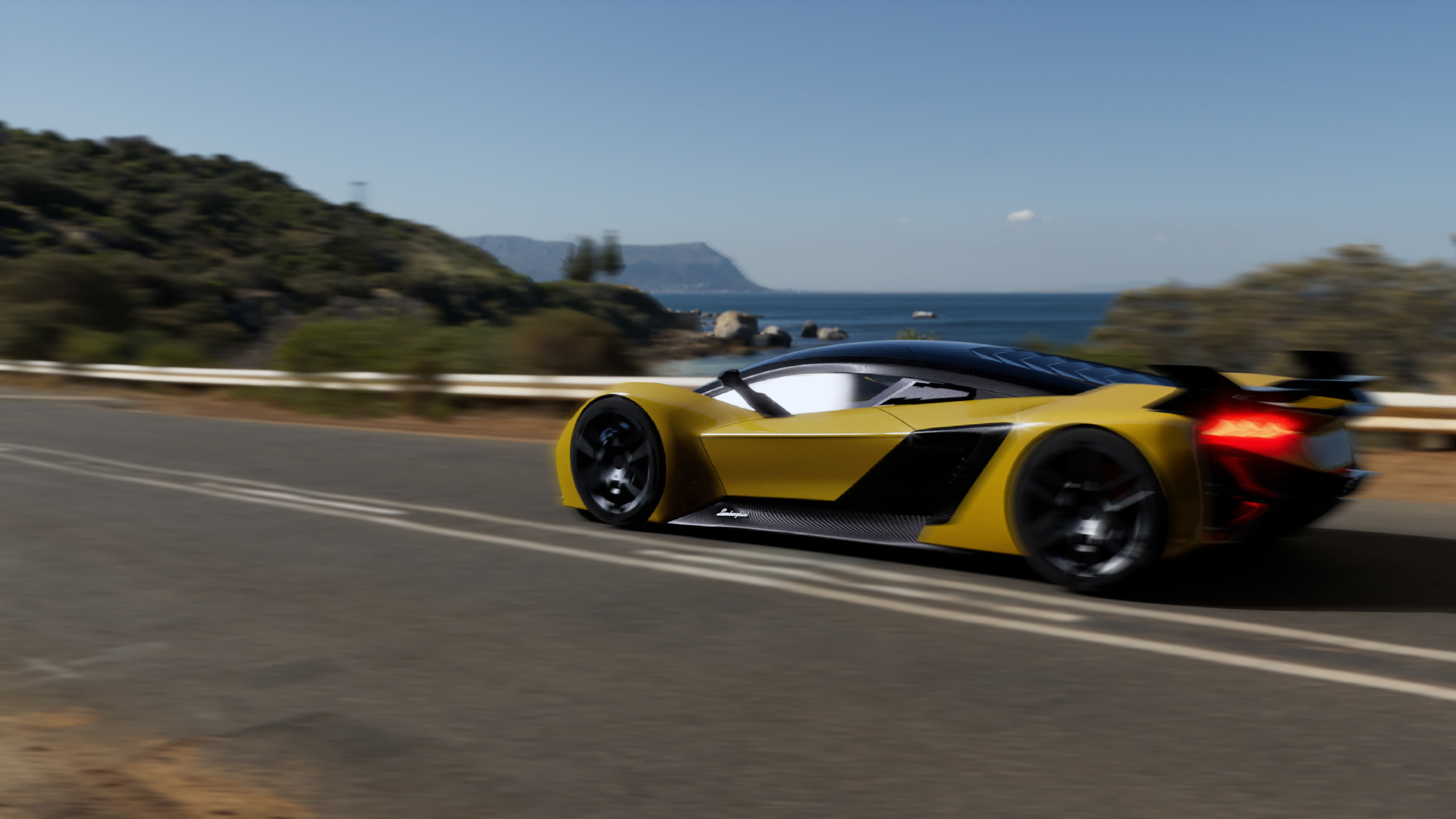
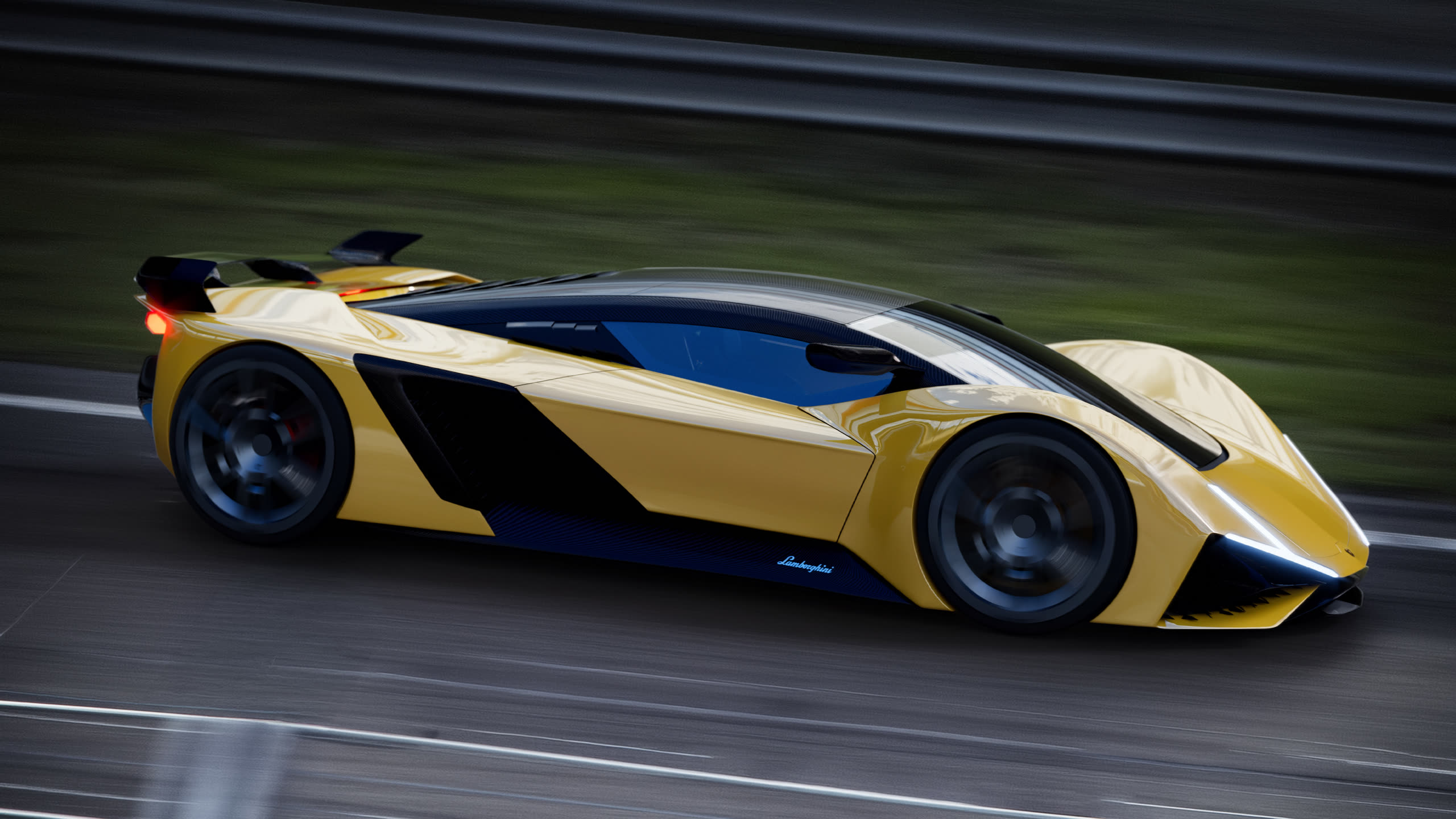
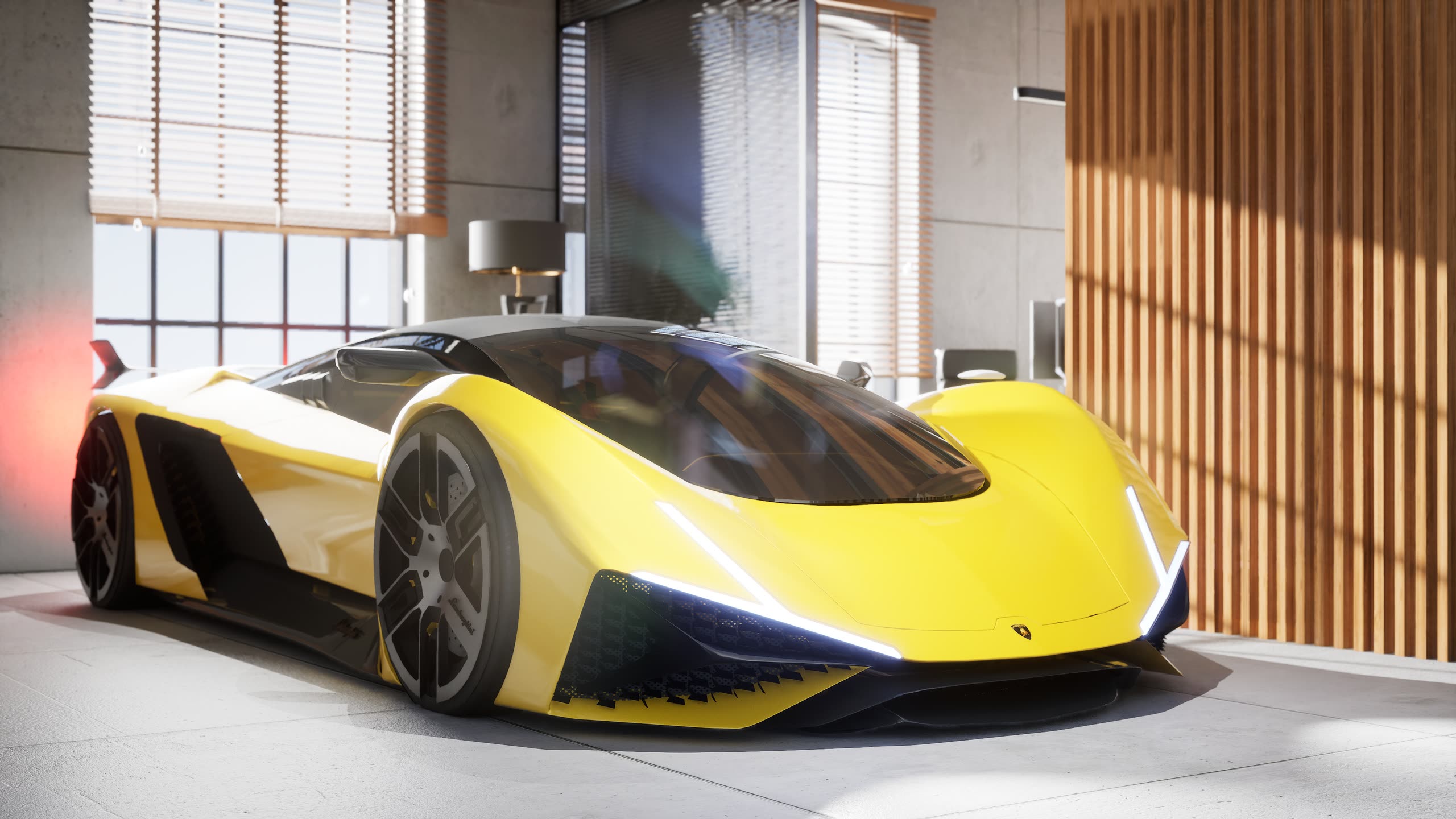
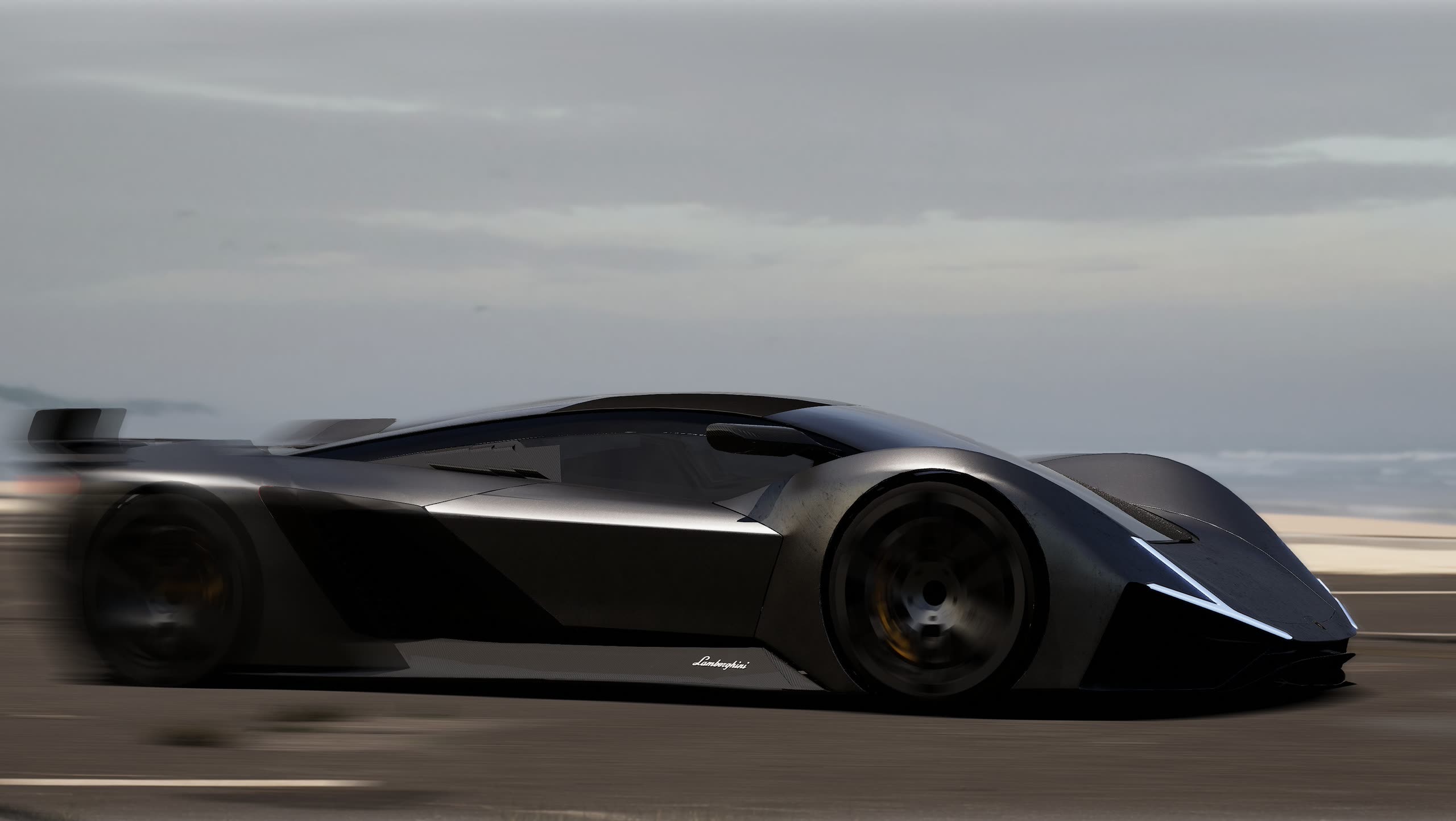
The result is a mid-engine hypercar built around a low, wide stance, deep side intakes channelling into a high-mounted rear wing, and a continuous canopy that flows from windshield to engine cover without an apparent break. Lighting is handled by slim Y-shaped LED graphics — a nod to the Terzo Millennio — punctuating an otherwise quiet front mask.
Fully 3D modelled in Rhinoceros using SubD and NURBS in combination, with main renders produced in Light Tracer Render for fast, physically accurate stills, and animated in Unreal Engine for cinematic motion sequences.
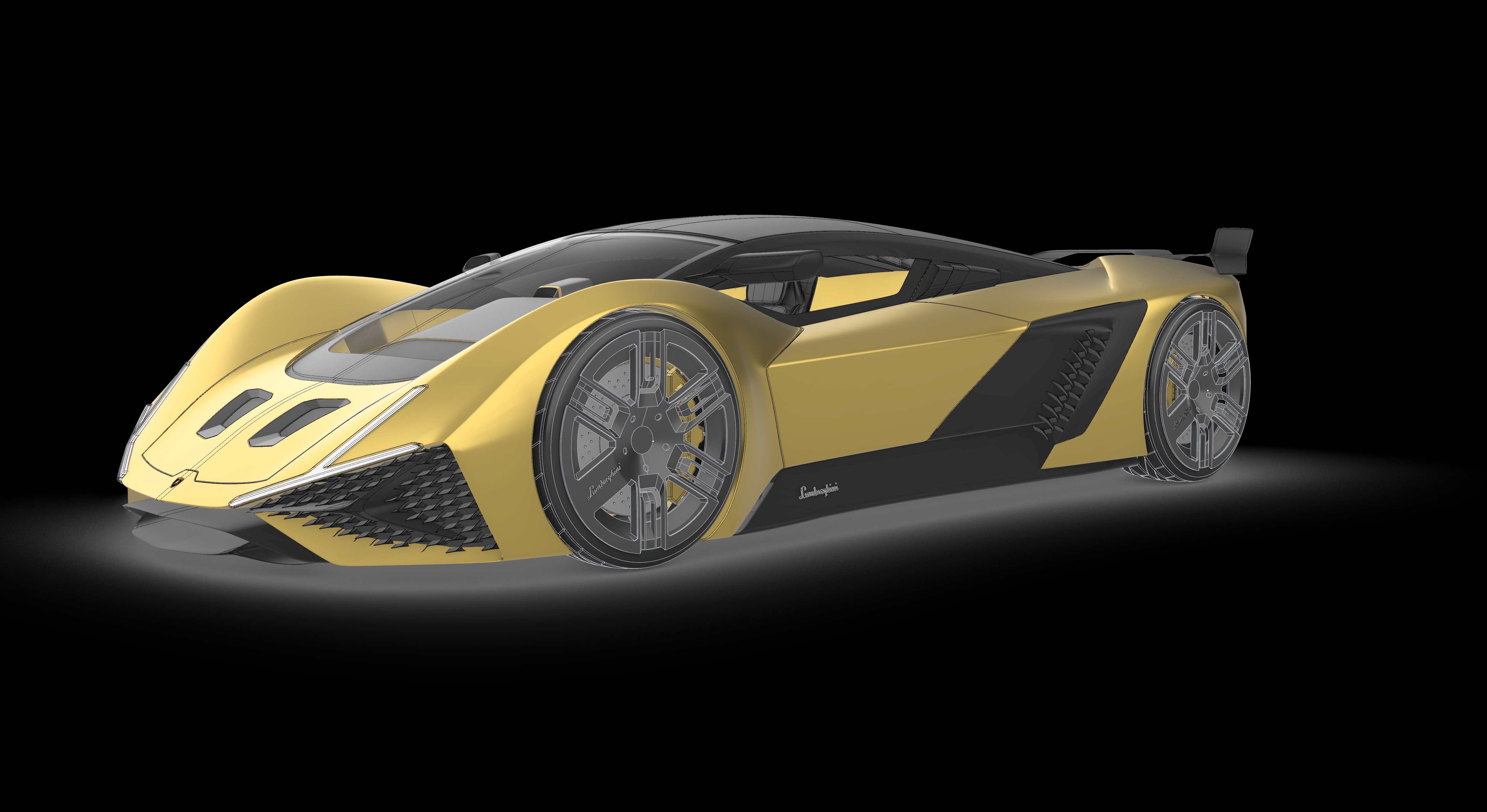
The complete vehicle was modelled inside Rhinoceros, blending NURBS surfaces for body panels with SubD for the more sculptural transitions. The capture below shows the working viewport — wireframes, the chassis tucked under the bodywork, and the rim geometry visible through the side cutout.
Light Tracer Render handles the main hero stills — a path-traced engine that takes the Rhino model directly and delivers physically correct lighting without leaving the modelling environment.
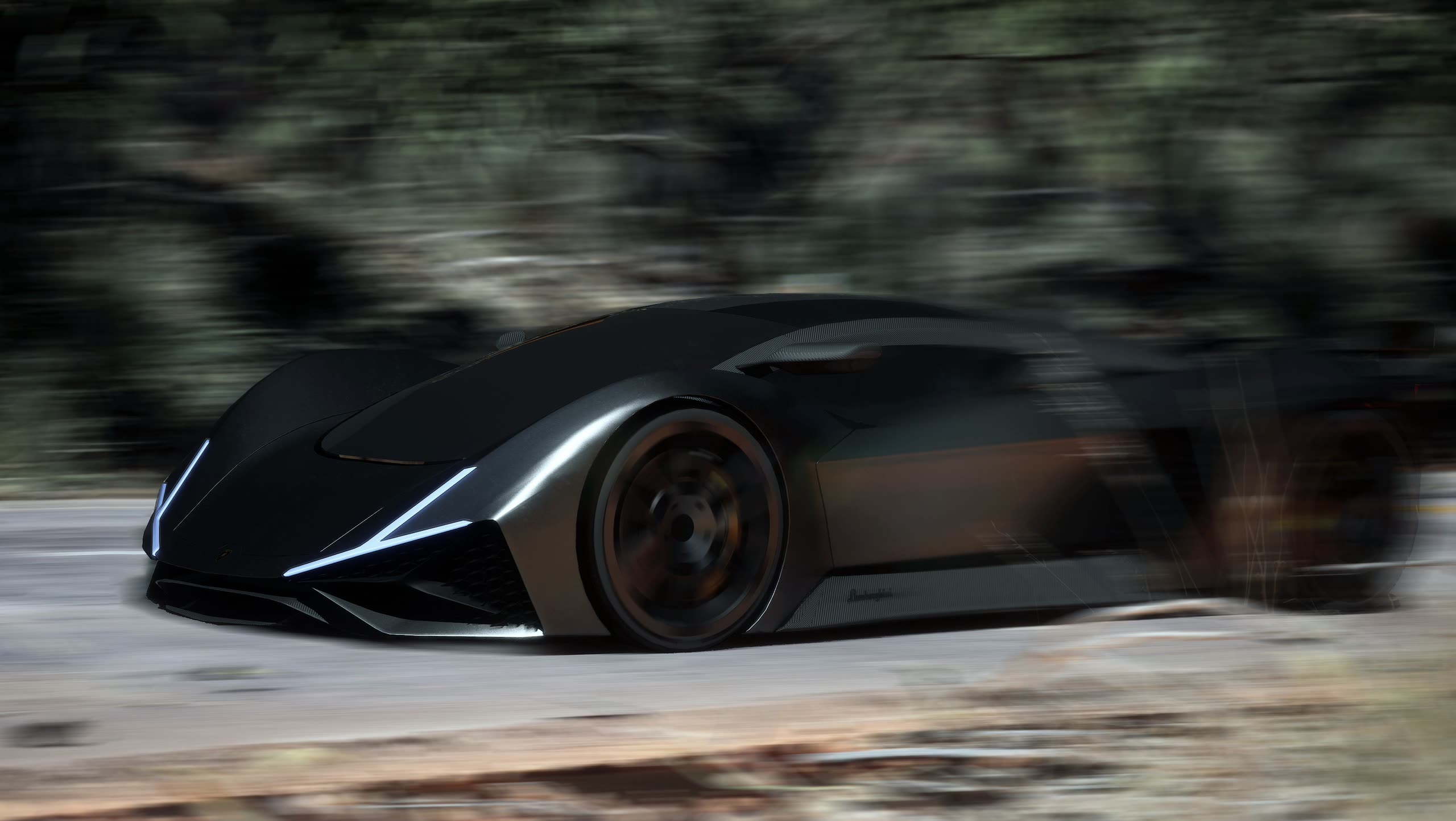
Motion lives in Unreal. The Rhino mesh and material data are pushed into a real-time scene where camera moves, environmental lighting, and atmospherics can be iterated in seconds rather than minutes — the same model that produced the stills above, now in motion.
A car's design is only as honest as the environments it survives. The same model was dropped into a range of contexts — coastal road, racetrack, urban canal, open desert — to see how the surfaces respond to different light and reflection conditions.
Rhinoceros — the entire car was modelled here, from initial proportion sketches in 3D to the final closed surface package. Both NURBS and SubD were used; SubD for fluid sculptural sections, NURBS for panels needing clean curvature for splits and shutlines.
Light Tracer Render — used for the main hero stills. It plugs directly into the Rhino viewport, which means the model never has to be exported or re-prepared for visualisation. Path-traced output, fast iteration, no DCC switching cost.
Unreal Engine — used for the animation sequences. The same Rhino model is brought across and re-lit in a real-time environment. Camera moves, lens behaviour, atmospheric haze and depth-of-field are all dialled in live.
If you're developing a sports car, hypercar or transportation programme — let's talk. Send a brief and we'll come back within two working days.
Request a quote